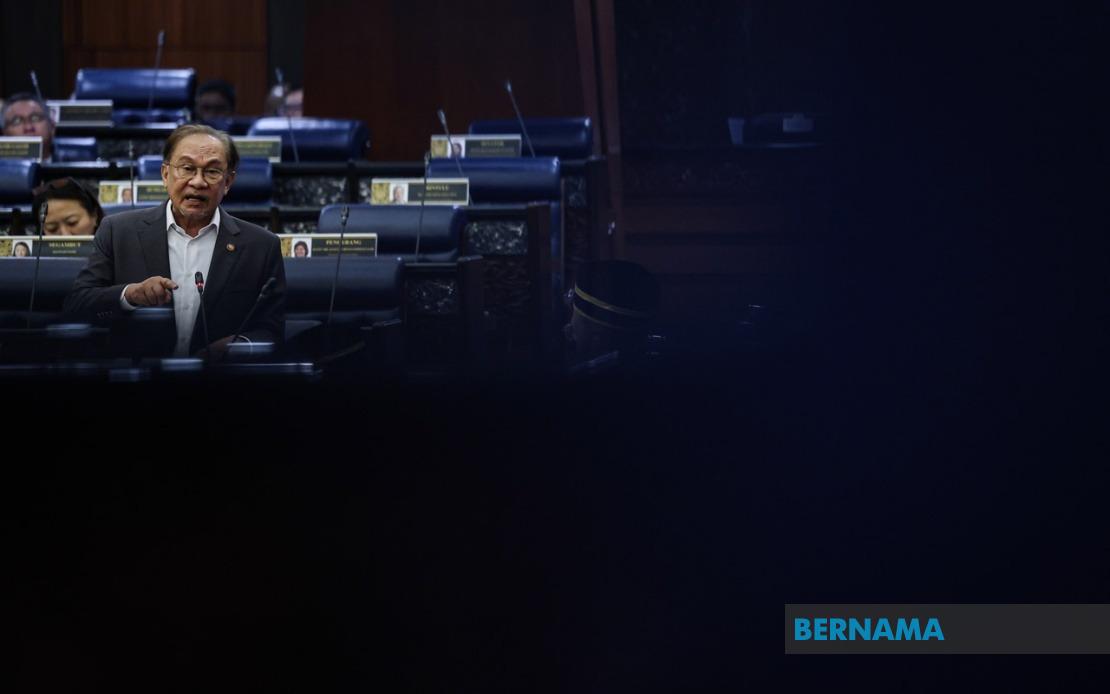
Prime Minister Datuk Seri Anwar Ibrahim has announced a significant shift in how the government handles complaints against journalists, introducing a mandatory screening process through the Malaysian Media Council (MMM) before any investigative or enforcement action can be initiated. The new mechanism represents an attempt to balance press freedom concerns with legitimate accountability, ensuring that media practitioners are not subject to arbitrary legal action simply because their reporting has drawn criticism from government departments or officials. Speaking during the Minister's Question Time in the Dewan Rakyat on July 7, Anwar underscored that the measure aims to create a fair, transparent and independent review process that protects journalists from unfounded prosecutions while maintaining necessary oversight of media conduct.
The establishment of this procedural safeguard addresses longstanding concerns about Malaysia's legal framework, which contains provisions that critics argue have been weaponised against journalists and media organisations. Laws including the Sedition Act 1948 and the Official Secrets Act 1972 have historically created a chilling effect on investigative reporting, with journalists sometimes facing legal jeopardy merely for reporting on matters deemed sensitive by authorities. By inserting the MMM as a mandatory intermediary, the government is attempting to demonstrate responsiveness to international pressure regarding media freedom whilst maintaining that some legal constraints on journalism are necessary and appropriate.
Anwar stressed that no journalist should face investigation or prosecution solely because a complaint has been lodged against them, emphasising that the existence of a grievance does not automatically trigger the enforcement machinery. This principle represents a departure from previous administrative practice, where complaints could rapidly escalate into formal investigations regardless of their merit or substantive basis. The Prime Minister's commitment to this threshold reflects recognition that media organisations require a degree of operational autonomy and protection from malicious or politically motivated complaints that could otherwise serve as tools of intimidation.
The Malaysian Media Council will now function as the primary gatekeeper in this revised system, tasked with conducting preliminary assessments of complaints to determine whether they warrant further investigation. This institutional positioning gives the MMM considerable power to filter cases, potentially dismissing frivolous claims before they can burden journalists or news organisations with the costs and psychological strain of formal proceedings. However, the effectiveness of this mechanism depends entirely on the council's independence, expertise and willingness to scrutinise complaints rigorously rather than rubber-stamping government concerns.
Anwar acknowledged the fundamental principle that press freedom is not absolute, noting that journalists, like all citizens and officials, operate within legal boundaries. This concession is important context for understanding the government's position: the administration is not suggesting that journalists should be immune from law, but rather that they should not be disproportionately vulnerable to prosecution compared with other professionals. The distinction between accountability and harassment is crucial, particularly in a regional context where several Southeast Asian countries have faced criticism for using broadly-worded laws to suppress critical journalism.
The timing of this announcement reflects broader political dynamics in Malaysia, where questions about media freedom intersect with debates about democratic governance and the rule of law. Anwar's government has positioned itself as more reform-minded than its predecessors on several fronts, and addressing complaints about press restrictions aligns with this narrative. However, implementation will reveal whether this represents genuine reform or primarily a rhetorical gesture. The degree to which the MMM actually protects journalists will depend on its composition, resources, decision-making processes and political insulation from executive pressure.
For Malaysian media organisations, this development offers some measure of procedural protection against reactive prosecution, though the underlying laws remain intact and potentially problematic. News outlets can now expect that complaints will undergo independent review rather than automatic escalation, theoretically creating breathing room for robust reporting. However, journalists should not assume complete immunity; the MMM may eventually refer cases to prosecutors, and the council itself could become a venue for political contestation if its membership reflects partisan interests.
The regional implications of Malaysia's approach merit consideration. Several Southeast Asian democracies struggle with balancing press freedom against legitimate concerns about media responsibility, and Malaysia's institutional innovation—using a media council as a filter before enforcement action—could serve as a model elsewhere in the region. Conversely, if the MMM becomes captured by political or business interests, it could demonstrate how safeguards can be undermined from within, offering cautionary lessons to neighbouring countries considering similar mechanisms.
Critics may argue that this approach, while procedurally better than automatic prosecution, fails to address the substantive problem: the existence of vaguely-worded laws that can chill legitimate journalism. The Sedition Act and Official Secrets Act remain on the books, and their continued availability means journalists operate under a persistent cloud of potential legal liability regardless of procedural protections. True press freedom reform would involve legislative amendment or repeal of the most restrictive provisions, not merely the insertion of procedural safeguards.
Moving forward, monitoring the MMM's actual functioning will be essential for assessing whether this mechanism represents meaningful progress. Key indicators include the council's rate of dismissing complaints without referral to prosecutors, the transparency of its decision-making, and whether journalists experience reduced legal harassment overall. Should the council prove genuine in its protective mandate, it could establish a valuable precedent; should it become a tool for filtering cases toward prosecution, it may simply add bureaucratic delay to an already problematic system. The success of this reform ultimately hinges on political will to resist pressuring the council toward predetermined outcomes.

