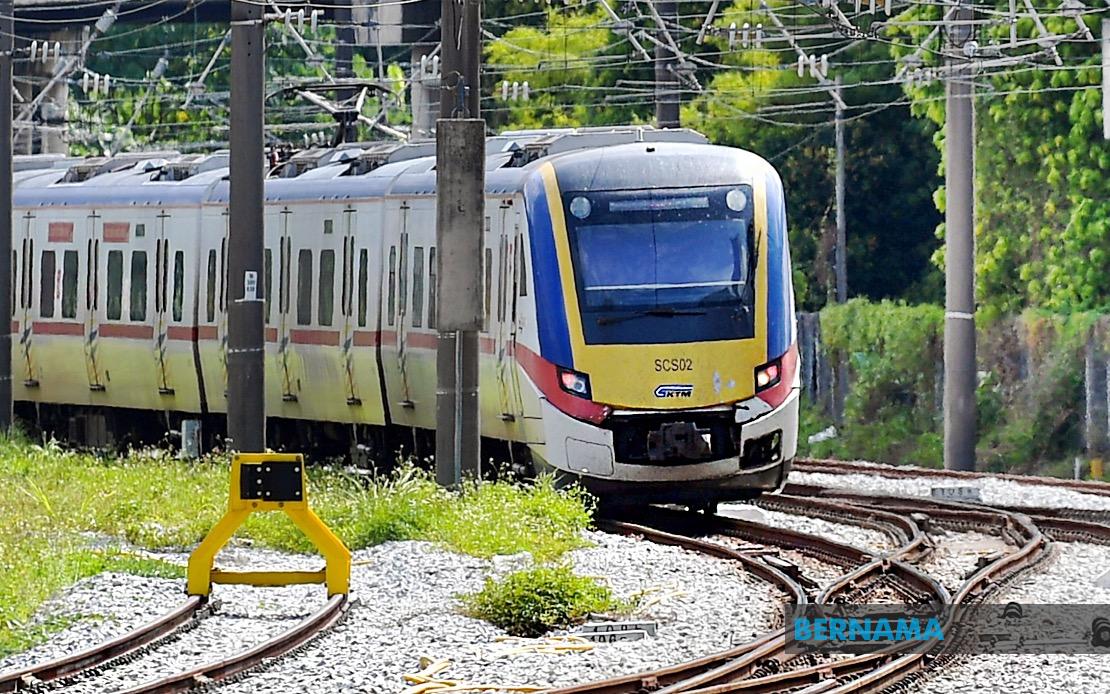
A construction structure collapse near Batang Benar station on July 23 brought disruption to thousands of commuters across the Klang Valley's rail network, as both KTM Komuter and Electric Train Service operations ground to a halt following damage to critical infrastructure. The wooden structure, which originated from a third-party construction site adjacent to the railway corridor, struck the overhead line system that powers trains operating between Batang Benar and Labu stations, immediately severing electrical supply to the affected stretch of track and rendering normal service impossible.
Keretapi Tanah Melayu Berhad moved quickly to contain the impact, implementing immediate operational adjustments that forced significant service reductions across the network. KTM Komuter services originating from Pulau Sebang bound for KL Sentral were terminated prematurely at Seremban Station, while trains heading to either KL Sentral or Batu Caves began operations exclusively from Bangi Station, effectively shortening service corridors in both directions. The most severely affected section saw complete suspension of KTM Komuter movement between Bangi and Seremban stations, leaving that segment entirely without rail service for the duration of the incident.
The operational disruption created an immediate challenge for commuters accustomed to reliable rail connectivity. Rather than allowing stranded passengers to absorb the inconvenience unsupported, KTMB deployed three shuttle buses to maintain some form of connection between the severed stations, with vehicles operating a circuit through Seremban, Tiroi, Batang Benar, Labu and Bangi to bridge the gap left by the interrupted rail service. The company also recognized that ETS passengers, who typically rely on express services for longer-distance travel, required separate accommodations, deploying a fleet of seven additional shuttle buses stationed at KL Sentral, Bandar Tasik Selatan, Kajang and Seremban to manage the displaced passenger flow.
Compounding the operational challenge was KTMB's commitment to passenger compensation amid the disruption. Rather than forcing ETS passengers to continue their journeys on alternative transport, the railway company offered full refunds to those who chose to abandon their trips at their original departure stations, recognizing that the disruption represented a fundamental breach of service expectations for premium express train passengers. This approach, while costly in the immediate term, reflected the company's assessment that passenger trust required more than mere rerouting onto buses.
The preliminary investigation into the incident's root cause revealed systemic failures in construction site management and safety compliance. The contractor engaged by the Public Works Department, working on what KTMB classified as a wayleave project, had not adhered to mandatory safety protocols governing work near active railway infrastructure. Most critically, the contractor failed to provide KTMB with a complete and detailed work schedule before commencing operations, and crucially did not communicate the actual timing of the bridge construction works being performed on the day of the incident—information that would have allowed railway operations to implement precautionary measures.
These oversights represent violations of established Site Entry Permit Standard Operating Procedures, which mandate that three separate KTMB technical representatives—drawn from the Regional Engineer, Signalling and Communications, and Electrification departments respectively—must maintain on-site presence during approved construction activities. The presence of these specialists serves as both a monitoring and coordination function, ensuring that third-party construction work remains within safe operational parameters and that railway personnel can respond immediately to emerging hazards. The contractor's failure to trigger this oversight mechanism left construction work proceeding without the protective layer of railway expertise that standard procedures require.
The incident underscores a broader vulnerability within Malaysia's rail infrastructure: the tension between expanding railway networks through capital development and maintaining operational safety during construction phases. Wayleave projects, which typically involve work on or near railway corridors, represent common operational scenarios where coordination failures can cascade into significant disruptions. The presence of third-party contractors brings expertise in construction and infrastructure development but also introduces complexity in ensuring that railway safety standards are understood and respected across multiple organizations with different operational cultures and priorities.
KTMB's technical teams commenced immediate remediation efforts focused on restoring the damaged overhead line system, recognizing that the power infrastructure damage represented the critical constraint on service resumption. Overhead line systems supporting electrified rail networks are complex engineering systems requiring precision repair and thorough testing before returning to service, as failures in this infrastructure can pose electrocution hazards to both workers and passengers. The railway company provided assurances that restoration work was proceeding with urgency while maintaining the technical rigor necessary to ensure safe operations upon service resumption.
The company issued a formal apology acknowledging that the incident, while arising from external contractor failure, ultimately represented a breakdown in the operational reliability that commuters depend upon. KTMB reiterated its commitment to passenger safety and operational excellence, positioning the incident as an aberration from normal standards rather than representative of systemic vulnerability. However, the company also implicitly acknowledged that despite having established safety procedures, the contractor's non-compliance had circumvented protective mechanisms, suggesting that enforcement and verification mechanisms may require strengthening.
For commuters navigating the disruption, KTMB directed passengers toward its official social media platforms and station staff as authoritative sources for service status updates, recognizing that real-time communication becomes critical during operational crises. This approach leverages modern digital channels to bypass traditional media delays, allowing the railway company to provide immediate updates as repair work progressed and service restoration timelines became clearer. The incident demonstrated that modern mass transit operations require both physical infrastructure and information infrastructure to function effectively during disruptions.
The broader implications for Malaysia's rail sector extend beyond this particular incident. As the country continues expanding electrified rail networks and upgrading existing corridors through capital projects, construction safety near active railway infrastructure must receive elevated attention from both regulatory authorities and operational companies. The incident suggests that while procedural frameworks exist—such as the Site Entry Permit SOP—their consistent application and enforcement across all contractors and construction sites may warrant review to prevent similar breaches.

