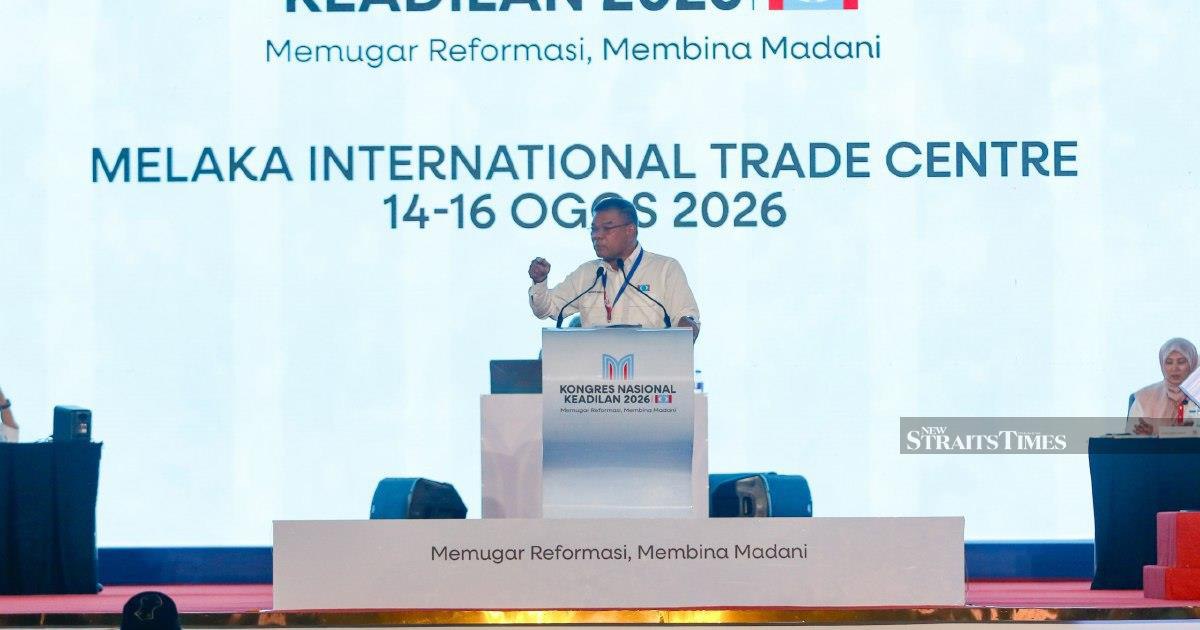
Datuk Seri Saifuddin Nasution Ismail, the vice-president of PKR, has urged Malaysians to approach the nation's fight against corruption as a fundamental question of governance and ethics rather than allowing it to become entangled with divisive identity politics. Speaking at an event in Ayer Keroh, the senior politician drew a distinction between tackling graft on principled grounds and allowing the issue to be weaponised to inflame communal tensions.
The statement reflects a growing concern among reform-minded policymakers that Malaysia's anti-corruption agenda risks being derailed or polarised if framed primarily through the lens of race or religion. Such framing, observers suggest, can distract from substantive institutional reforms needed to address systemic weaknesses that enable corrupt practices across all communities and sectors of society. By insisting on a governance-centred approach, Saifuddin is articulating a position increasingly embraced by civil society groups and international transparency watchdogs who argue that effective anti-corruption work requires broad-based consensus and cross-communal cooperation.
The context for Saifuddin's remarks is significant. Malaysia's history of high-profile corruption cases—from the 1Malaysia Development Berhad (1MDB) scandal to more recent prosecutions—has occasionally seen political actors attempt to characterise graft as endemic to particular ethnic or religious groups. Such narratives, while superficially persuasive, obscure the structural and institutional factors that permit corruption to flourish regardless of the identity of individual wrongdoers. International Transparency Index rankings consistently show that corruption remains a systemic challenge requiring comprehensive responses rather than identity-based blame-shifting.
Saifuddin's intervention also carries weight within PKR, which has positioned itself as a multiracial coalition committed to institutional reform and rule-of-law principles. By emphasising that the anti-corruption crusade transcends communal boundaries, he is reinforcing the party's philosophical commitment to inclusive governance. This messaging becomes particularly relevant in a political landscape where opposition parties and splinter movements have occasionally sought electoral advantage by framing governance failures in sectarian terms. Such approaches, as Saifuddin implicitly acknowledges, ultimately undermine the legitimacy and effectiveness of enforcement mechanisms.
The framing of corruption as a moral issue carries practical implications for Malaysia's institutional infrastructure. Anti-Corruption Commission (ACom) operations, prosecutorial strategies, and parliamentary oversight mechanisms function most effectively when they command public confidence across demographic groups. When corruption allegations become filtered through racial or religious prisms, enforcement loses credibility among communities perceived as being selectively targeted. Evidence from neighbouring jurisdictions demonstrates that anti-corruption agencies operating in deeply polarised contexts face reduced effectiveness and public cooperation, ultimately allowing wrongdoers to evade accountability.
Moreover, Saifuddin's position aligns with evolving international best practices on corruption suppression. The United Nations Convention Against Corruption and similar multilateral frameworks emphasise that effective graft-fighting requires institutional integrity rather than sectarian justice. Malaysia's standing in global governance indices depends partly on maintaining corruption-fighting mechanisms that operate transparently and equitably across all segments of society. Allowing anti-corruption efforts to become racialised creates international perception problems and can trigger foreign investor concerns about selective enforcement and rule-of-law reliability.
The implications for Malaysian business and civil society are considerable. Companies operating across communal lines, from the financial sector to manufacturing, require confidence that corruption allegations will be investigated impartially. When anti-graft enforcement becomes perceived as ethnically or religiously motivated, compliance and whistleblower participation decline. This structural reality means that Saifuddin's call for non-communal approaches has economic substance, not merely philosophical value. Investors and market participants increasingly screen governance quality, and jurisdictions perceived as having compromised anti-corruption mechanisms face capital allocation disadvantages.
Within the broader Southeast Asian context, Malaysia's approach to corruption carries regional implications. As a middle-income economy aspiring to higher development status, the country's governance trajectory influences how neighbouring governments calibrate their own institutional reform efforts. A demonstrated ability to conduct politically neutral anti-corruption campaigns—regardless of which communities are affected by enforcement actions—strengthens Malaysia's position as a regional governance exemplar. Conversely, allowing graft-fighting to become racialised creates spillover effects that can undermine confidence in institutions throughout the region.
Saifuddin's remarks also implicitly address a generational question about Malaysian governance. Younger voters, increasingly diverse in their lived experience and less attached to communal political frames, tend to evaluate political legitimacy based on institutional performance rather than identity credentials. Parties and leaders positioning corruption-fighting as a governance issue rather than a communal battleground position themselves to appeal to this emerging electorate. This demographic reality suggests that Saifuddin's framing reflects not merely principled commitment but also astute recognition of evolving political preferences among Malaysian voters.
The challenge ahead lies in institutionalising this principle across all Malaysian political actors. While Saifuddin's advocacy for non-communal anti-corruption campaigns represents a constructive position, translating rhetoric into consistent institutional practice requires buy-in from government agencies, law enforcement bodies, and competing political parties. Building political consensus around governance-centred approaches to graft requires deliberate effort to demonstrate that impartial enforcement protects all communities equally while strengthening national institutions. The stakes extend beyond abstract principles of justice to encompassing Malaysia's developmental trajectory and regional standing in an increasingly competitive Asian geopolitical and economic landscape.

