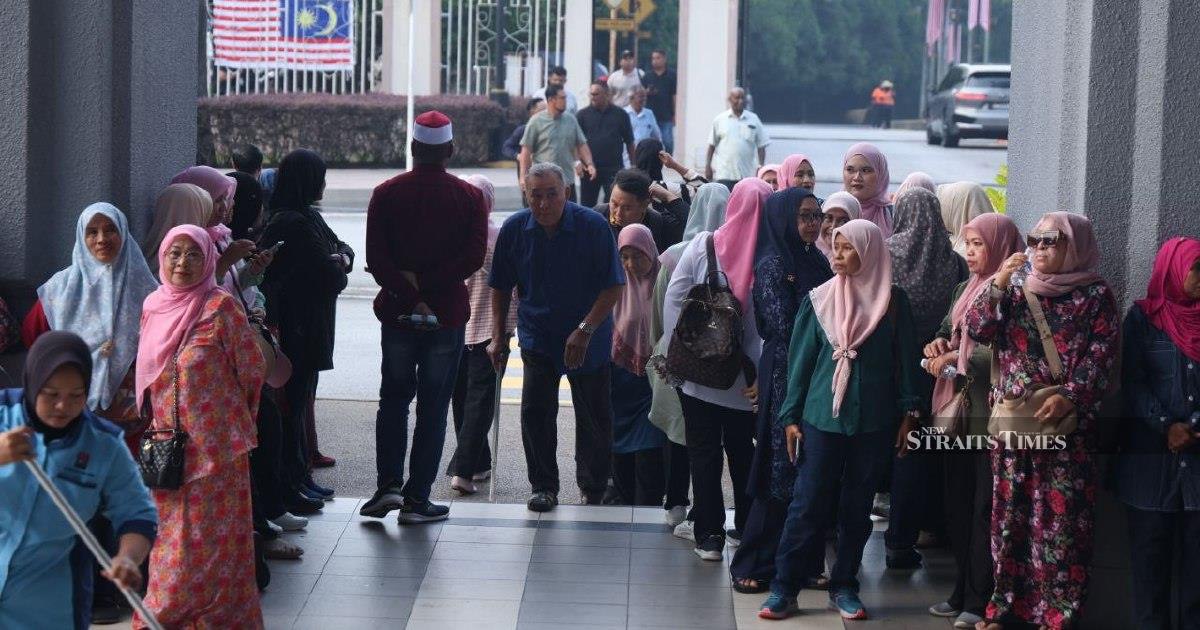
The Kuala Lumpur Court Complex braced for significant legal proceedings on Monday as former prime minister Datuk Seri Ismail Sabri Yaakob was expected to arrive for formal charging. The anticipation surrounding the event saw more than 30 media practitioners assembled in the lobby and surrounding areas, underscoring the high-profile nature of the case and its importance to the Malaysian public.
This development marks another chapter in what has become an intensifying legal scrutiny of Malaysia's recent political leadership. The gathering of such a substantial media presence reflects not merely routine court business but rather events that carry broader implications for the country's governance narrative and public accountability mechanisms. Ismail Sabri's tenure as prime minister, which lasted from August 2021 to November 2022, continues to generate significant public interest and media attention in the context of ongoing investigations into political and administrative matters.
The presence of so many journalists indicates the significance Malaysian news organisations place on documenting this proceeding. Court appearances by former heads of government remain relatively rare events in Malaysian legal history, making each instance noteworthy for both the political establishment and the general electorate seeking to understand the consequences of high-level governance decisions made during various administrations.
Ismail Sabri's brief tenure as the country's third prime minister during a particularly turbulent period in Malaysian politics has remained subject to public scrutiny. His appointment followed the resignation of Muhyiddin Yassin and represented an attempt by UMNO and its coalition partners to restore political stability following months of considerable uncertainty that had characterised the preceding administration.
The formal charging process represents a critical juncture in whatever legal matters authorities have been investigating regarding the former premier. Such proceedings typically occur after preliminary investigations have concluded and prosecutors have determined sufficient evidence exists to proceed with formal charges, indicating a significant progression in the legal process.
For Malaysian observers of political and judicial affairs, this moment encapsulates ongoing questions about accountability within the upper echelons of government and the functioning of independent institutions tasked with investigating potential misconduct by high-ranking officials. The judicial system's willingness to pursue charges against former office holders, regardless of their political standing, serves as a barometer for the health of democratic institutions and the rule of law in Malaysia.
The court complex itself, as the venue hosting this proceeding, becomes a focal point for national attention. These facilities, which handle cases ranging from routine matters to high-profile trials, occasionally host proceedings that transcend their purely legal function to become symbolic events reflecting broader societal concerns about governance and justice. The media congregation underscores how Malaysian journalism continues to prioritise documentation of such proceedings as essential to informed public discourse.
Regional observers of Malaysian politics have also watched developments affecting former leaders with considerable interest, given the precedent-setting implications for Southeast Asian democracies grappling with similar questions about post-tenure accountability and the balance between political continuity and investigative scrutiny. The appearance of a former prime minister in court carries symbolic weight beyond the specific charges involved, touching upon fundamental questions of governance standards and institutional integrity.
For the general public following developments through media reports, the court appearance represents an opportunity to observe the legal system addressing allegations involving the country's highest political offices. Public confidence in judicial processes depends significantly on visible demonstration that no individual, regardless of former status or political connections, remains beyond scrutiny when serious questions arise regarding their conduct.
The charging phase specifically marks the moment when specific allegations become formalised within the legal system, transitioning from investigative phases to the adversarial proceedings that characterise trial processes. This procedural step, while technical in nature, carries substantial meaning for the accused and sets the trajectory for subsequent legal proceedings that could extend months or years into the future.
The assembled media corps awaiting Ismail Sabri's arrival reflects the enduring public fascination with accountability mechanisms affecting Malaysia's political elite. In an era where governmental transparency and institutional independence have become increasingly important topics in Malaysian civic discourse, such proceedings attract justified attention from journalists committed to comprehensive coverage of events affecting national governance and the application of law.
As the legal process unfolds over coming weeks and months, the implications of these charges will likely continue generating significant discussion across Malaysian political circles, media outlets, and among the voting public evaluating broader questions about how the country's institutions address potential misconduct by its most senior officials.

