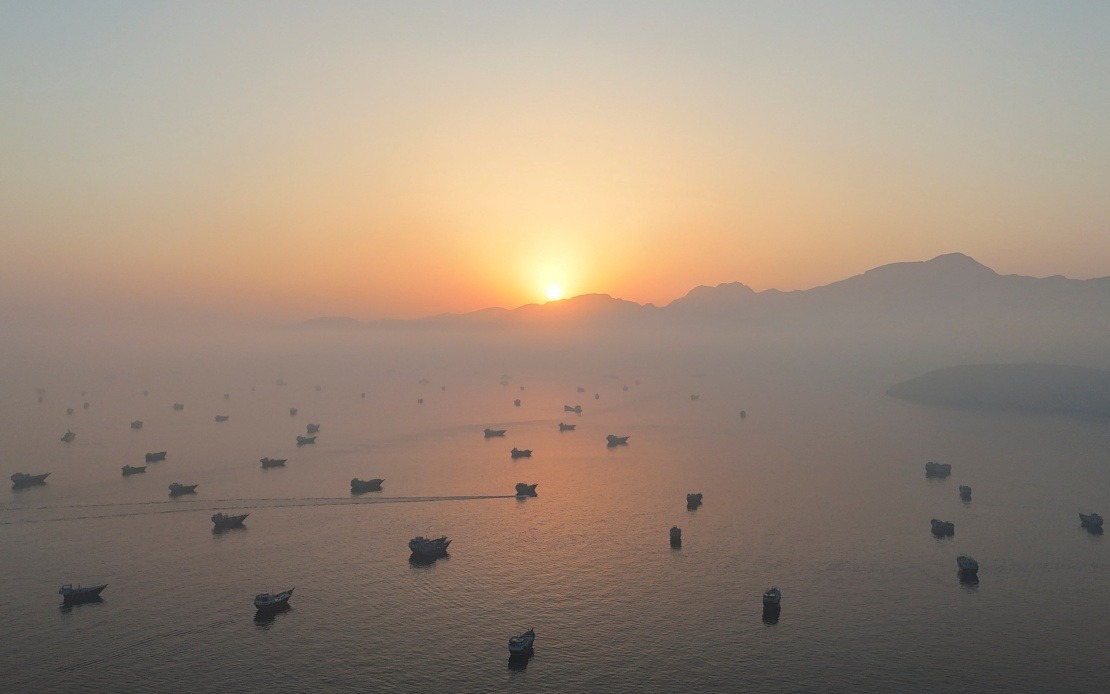
The twelve countries comprising the Comprehensive and Progressive Agreement for Trans-Pacific Partnership have expressed backing for the recent accord between the United States and Iran, particularly regarding efforts to restore unrestricted maritime passage through the Strait of Hormuz. This endorsement emerged from a virtual ministerial gathering held on Friday, with representatives from Australia, Brunei, Canada, Chile, Japan, Malaysia, Mexico, New Zealand, Peru, Singapore, the United Kingdom and Vietnam participating in the discussion. The collective statement underscores growing international anxiety about disruptions to critical energy transport routes and their cascading effects on global commerce and supply stability.
The trade bloc's formal statement places significant emphasis on the geopolitical and economic implications of maintaining secure sea lanes, particularly through one of the world's most strategically vital waterways. The Strait of Hormuz represents a chokepoint through which a substantial proportion of global oil shipments transit daily, making its security directly relevant to the economic interests of all twelve member nations. By framing the restoration of navigation through this corridor as essential to international trade, the CPTPP members signal their recognition that energy security is fundamentally intertwined with trade prosperity and economic stability across the Asia-Pacific region and beyond.
For Malaysia and other Southeast Asian economies within the bloc, the implications carry particular weight. The region's developing and developed nations alike depend heavily on reliable energy imports to sustain manufacturing, electricity generation, and transportation infrastructure. Any prolonged disruption to crude oil, petroleum products, natural gas, and petrochemical flows would directly threaten industrial output, power generation capacity, and ultimately consumer prices. The ministerial statement's acknowledgement of the importance of trade in fuel, energy products, crude oil, diesel, natural gas, petrochemicals and fertilisers reflects this shared vulnerability across member economies at different stages of development.
Central to the CPTPP position is an emphasis on rules-based international trade governed by established maritime law rather than unilateral action. The ministers explicitly referenced the United Nations Convention on the Law of the Sea, positioning their stance within the framework of international legal norms that have governed ocean commerce for decades. This invocation of UNCLOS carries particular resonance in Southeast Asia, where maritime disputes and competing territorial claims create ongoing sensitivity around freedom of navigation and the principle that no single power should unilaterally control critical shipping routes.
The trade bloc's commitment to minimising disruptions to energy flows through application of international law represents a deliberate counterweight to concerns about trade restrictions and supply chain weaponisation. Ministers reaffirmed their collective pledge to refrain from imposing unjustified trade-restrictive measures while calling on other nations to exercise similar restraint. This language appears designed to signal that the CPTPP members will resist protectionist impulses even amid energy security pressures, maintaining their philosophical commitment to open markets while acknowledging the legitimate concerns about stable energy supplies that drive nations toward more defensive trade postures.
Recognising that energy security extends beyond simple navigation concerns, the CPTPP members highlighted the value of regional initiatives designed to strengthen supply chain resilience. The Partnership On Wide Energy and Resources Resilience Asia, or POWERR Asia, exemplifies the type of collaborative framework that the bloc views as essential to addressing vulnerabilities. Such initiatives, which coordinate between energy-producing and energy-consuming nations within the region, offer a practical avenue for diversifying supply sources and reducing dependence on any single route or supplier. This represents an analytical shift from viewing energy security purely through a military or geopolitical lens toward comprehensive supply chain resilience.
Small island developing states, particularly in the Pacific, occupy a special category of vulnerability that the CPTPP acknowledged explicitly. These economies face acute energy security risks due to their geographic isolation, limited domestic energy resources, and dependence on maritime transport for nearly all external trade. The ministerial statement's recognition of their particular vulnerabilities suggests that energy security discussions within the bloc extend beyond the immediate concerns of major trading nations to encompass the needs of smaller and more marginalised members. The emphasis on trade diversification as a mechanism for reducing vulnerability offers a market-oriented policy response that aligns with CPTPP's broader free-trade philosophy.
The virtual ministerial meeting itself carries symbolic weight in demonstrating unity around energy security and rules-based trade even during periods of geopolitical tension. That representatives from countries with diverse foreign policy orientations—including those with different relationships to the United States and its strategic interests—could jointly issue a statement supporting the US-Iran agreement and maritime freedom reflects substantial consensus on these foundational trade principles. For Malaysian policymakers and business leaders, this demonstrates that energy security concerns transcend traditional geopolitical divisions within the trading bloc.
The broader context reveals how trade organisations increasingly grapple with issues traditionally considered foreign policy or military strategy. Energy security, supply chain resilience, and freedom of navigation have become central trade concerns because disruptions to these systems inflict direct economic damage on member economies. The CPTPP's willingness to address these issues reflects the reality that contemporary international commerce cannot be insulated from geopolitical risk or treated as purely technical trade policy.
Looking forward, the ministerial statement signals that CPTPP member nations will pursue energy security through multilateral coordination and rules-based frameworks rather than unilateral measures or confrontational postures. For Southeast Asian members like Malaysia, this alignment offers some reassurance that major trading partners prioritise stable energy access and open markets. However, it also reflects an underlying anxiety about the fragility of global supply chains and the persistent risk that geopolitical tensions could disrupt the energy flows upon which regional economies fundamentally depend. The bloc's reaffirmed commitment to collective crisis response and resilience-building suggests recognition that energy security in the interconnected modern economy requires sustained cooperation and adherence to international legal norms.

