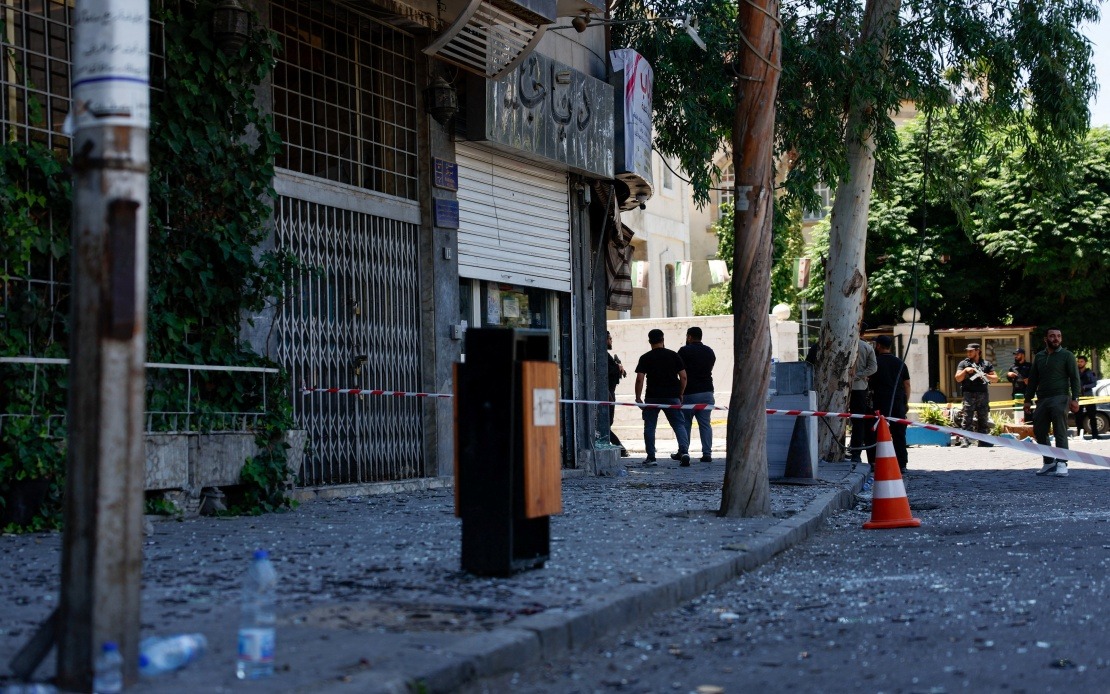
A pair of coordinated bomb blasts rocked the Syrian capital on Tuesday, injuring at least 18 people as French President Emmanuel Macron conducted what amounts to a politically significant diplomatic mission to the war-torn nation. Syria's Interior Ministry confirmed that two improvised explosive devices detonated in Damascus, with four of those wounded being members of the police force. The explosions sparked considerable concern among residents in a city that has witnessed repeated violence over the past decade, though the presidential palace swiftly reassured observers that Macron had escaped harm.
The incidents occurred in proximity to the hotel where Macron was lodged during his stay, according to the Syrian Observatory for Human Rights, a London-based organisation that monitors developments within Syria. Witnesses and monitoring groups described a sequence of detonations, with an initial explosion followed seconds later by a second, more substantial blast. The proximity to the French leader's accommodation underscored the security complexities surrounding high-level diplomatic visits to a country that remains fragile and occasionally volatile despite improvements in stability over recent years.
Macron's presence in Damascus represents a watershed moment for European engagement with Syria. His arrival on Monday evening marked the first visit by a sitting European Union leader to the country since 2010, a significant shift in diplomatic positioning that reflects changing calculations about Syria's reintegration into regional and international affairs. The French president's journey signals a tentative reopening of formal channels at the highest levels, a development that carries substantial implications for how Western powers approach their relationship with the Syrian government following years of international isolation and sanctions.
The blasts triggered an immediate security response, with emergency personnel and ambulances deploying rapidly to the affected areas. Syrian security forces cordoned off the vicinity, establishing perimeters around the explosion sites and beginning initial investigations into the incidents. The swift mobilisation of response teams underscored preparations that had been put in place ahead of Macron's visit, reflecting heightened security protocols typically associated with visits by foreign dignitaries to sensitive locations.
Despite the explosions occurring in close proximity to his hotel, Macron remained at the presidential palace, where he engaged in substantive discussions with Syrian officials. The French government's statement via the Élysée Palace confirmed his safety and indicated that the incidents would not disrupt the planned bilateral meetings. This continuation of formal dialogue, despite the security incident, conveyed a powerful message about the determined pursuit of normalisation efforts between France and Syria at a moment when regional dynamics are shifting.
The timing of these explosions during such a high-profile visit raises questions about potential actors seeking to disrupt normalisation attempts. Opposition groups, residual militant networks, and various non-state actors opposed to improved relations between Syria and Western powers all possess motive and in some cases capability to launch such attacks. The coordination between the two devices and their placement near Macron's accommodation suggests a level of planning rather than opportunistic violence, though responsibility remained unestablished in immediate aftermath reports.
For Malaysia and Southeast Asian observers, Macron's visit and the security concerns surrounding it offer instructive lessons about the complexities of diplomatic re-engagement with countries emerging from prolonged conflict. The region's own experience with terrorism, insurgency, and state fragility makes the parallels relevant. Damascus's current security environment, characterised by residual violence despite overall improvements, mirrors challenges that several Southeast Asian nations continue to navigate in their own conflict-affected zones.
The incident also illustrates how personal security for world leaders in unstable environments requires meticulous coordination and substantial resources. Malaysia, as a nation that hosts significant diplomatic traffic and occasional high-level visits from international figures, maintains considerable institutional knowledge about managing such security arrangements. The Syrian episode provides practical demonstration of how even well-planned protective measures cannot entirely eliminate risks when operating within volatile contexts.
France's persistence in pursuing diplomatic engagement despite the security disruption reflects broader European calculations about Syria's future. Whether through economic incentives, political recognition, or humanitarian engagement, Western powers increasingly view disengagement as counterproductive. This represents a pragmatic shift from the earlier phase of isolation and sanctions, suggesting that international approaches to addressing post-conflict situations continue to evolve.
The fact that 18 people sustained injuries, including members of the security forces, underscores how such incidents affect not only high-profile targets but also ordinary citizens and service personnel. Syrian civilians and security personnel bore the immediate human cost of the explosions, their injuries a reminder of how violence in such contexts inflicts broadest damage on those with least capacity to absorb it.
Macron's decision to proceed with substantive talks immediately following the security incident sends a calculated message: France views Syria's stabilisation as strategically important enough to warrant persisting through security challenges. This positioning may influence how other European nations approach future diplomatic engagement with Damascus, potentially accelerating a broader shift toward normalisation across the continent.

