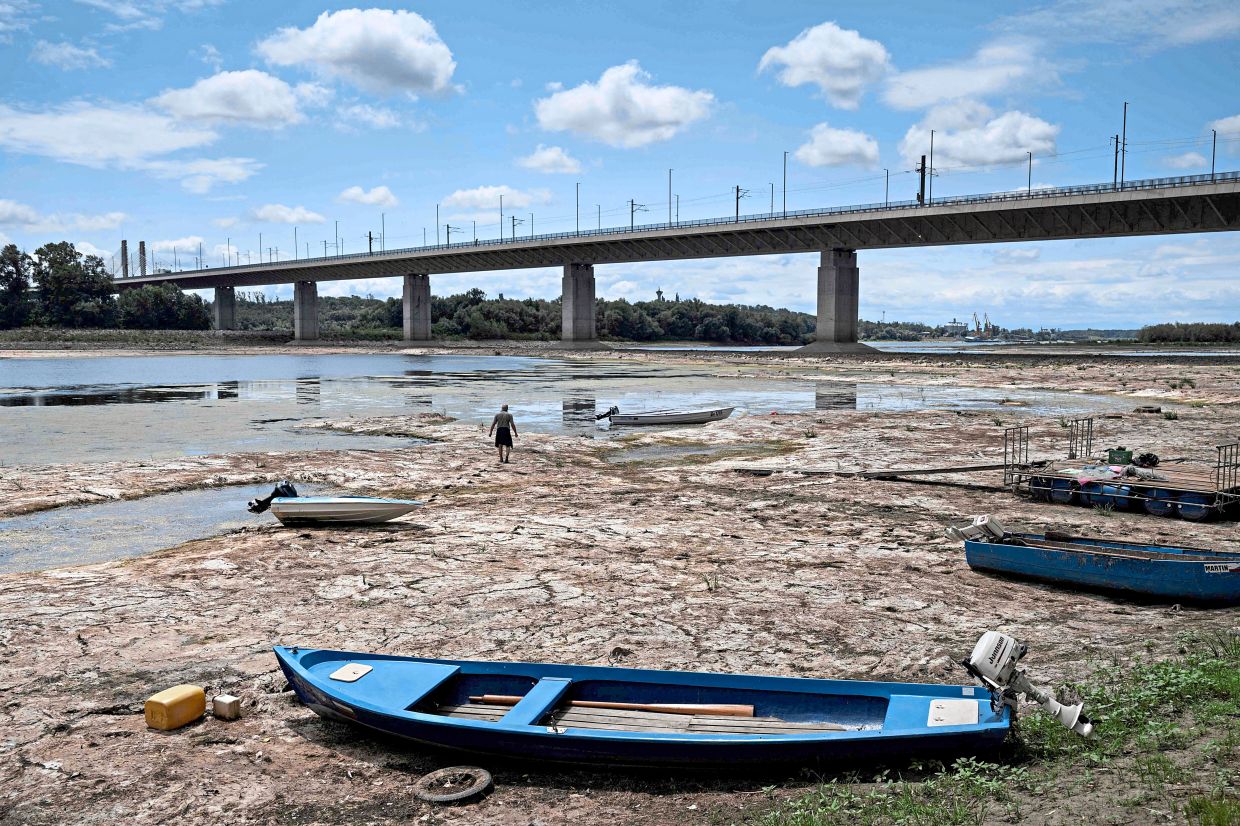
A severe drought gripping Central Europe has pushed the Danube River to its lowest recorded water levels in modern history, triggering cascading economic and environmental consequences across the 10 countries through which it flows. The crisis underscores how climate change is reshaping fundamental aspects of European infrastructure and daily life, with implications that extend far beyond the affected regions. For Malaysia and Southeast Asia, where water security remains a pressing regional challenge, the European situation offers cautionary lessons about long-term drought management and the interconnected vulnerabilities of energy, transport, and tourism systems dependent on adequate freshwater supplies.
On July 29, authorities in Budapest recorded a water depth of just 23 centimetres at the Hungarian capital's main monitoring station, obliterating the previous record low of 33 centimetres set in 2018. This dramatic decline reflects months of persistent drought conditions compounded by successive heat waves that have accelerated evaporation across the region. The Danube, stretching from southwestern Germany through Austria, Slovakia, Hungary, Serbia, Bulgaria, and Romania to the Black Sea, now exposes treacherous sandbars, jagged rocks, and skeletal remains of vessels long forgotten—visible reminders of water levels that prevailed decades past. Weather forecasters predict further deterioration, with no meaningful rainfall anticipated in coming weeks and temperatures expected to exceed 38°C, meaning the crisis shows no signs of abating in the immediate term.
The Hungarian Meteorological Service has documented that 90-day precipitation totals across the country fall between 80 and 130 millimetres below long-term seasonal averages across almost its entire landmass. This deficit represents a systematic failure of weather systems to deliver adequate moisture, a phenomenon increasingly attributed by climate scientists to broader atmospheric circulation patterns linked to global warming. Budapest photographer Gabor Kertesz has documented the jarring transformation, capturing images of Margaret Bridge's typically submerged base now standing exposed on dry ground. His observations capture a wider anxiety among Central European residents confronting visible proof that climatic conditions are shifting in real time, raising difficult questions about what future summers may bring and whether traditional agricultural, industrial, and tourism models remain viable.
The tourism sector has absorbed immediate damage from the crisis. Cruise operators accustomed to ferrying passengers through Budapest's renowned Danube corridor have been forced to dock vessels kilometres upstream, fundamentally altering the sightseeing experience and stranding some tourism operations in logistical paralysis. In one dramatic incident, the Viking Ullur cruise ship ran aground near Vidin in Bulgaria on July 28, leaving 186 passengers stranded without adequate food and water supplies after the vessel became unable to navigate shallow waters to reach port for resupply. Bulgarian police coordinated an emergency evacuation, though the vessel's 52 crew members remained aboard pending either refloating operations or extended supply runs, underlining how reduced water depths can transform routine transportation into emergency situations with remarkable speed.
Freight operations have virtually ceased across affected portions of the waterway. In Serbia near Novi Sad, hundreds of small boats and dozens of commercial cargo ships lie marooned on exposed riverbanks, their operators unable to navigate channels that have withdrawn 15 to 20 metres from their normal shorelines. Radovan Segrt, who operates a river excursion business, has effectively shuttered seasonal operations, describing the summer tourism season as effectively concluded due to insurmountable navigation challenges. For the broader Danube basin economy, which has historically relied on barge transport to move raw materials and finished goods across national borders, the water crisis threatens to impose significant supply chain disruptions and increased freight costs if operations cannot resume before autumn.
The energy sector faces potentially more serious disruptions. Nuclear power plants across Romania, Hungary, and other Danube-dependent nations routinely use river water for cooling reactor cores, and the crisis has already forced emergency shutdowns. Romania's Cernavoda facility shut down one reactor unit as water flow diminished to approximately 1,630 cubic metres per second—roughly one-third of typical July volumes—and announced plans for additional shutdowns. Hungary's Paks nuclear station, which generates nearly half the country's electricity supply, initiated power reductions on July 29 after two consecutive days of partial shutdowns driven by restricted cooling water availability. These interruptions risk creating energy shortages during peak summer demand and underscore how climate impacts can threaten the technological infrastructure that modern economies depend upon for basic functioning.
Beyond immediate economic disruption, the exposed riverbed presents hazards and historical complications. Hungarian authorities closed Margaret Bridge after discovering a World War II-era bomb exposed by receding waters at its foundation, requiring careful assessment before allowing public access. Metal detector enthusiasts like Zsolt Horvath have seized the opportunity to recover artifacts from exposed banks—old radios, ammunition casings, and other relics from the 20th century. While such treasure hunting provides historical insight and personal satisfaction, it also illustrates how environmental extremes can create unintended consequences requiring emergency response protocols and specialized expertise.
The Danube crisis carries broader implications for water security across Europe and globally. Climate models suggest that Central European precipitation patterns will become increasingly erratic in coming decades, with devastating droughts alternating with intense flooding events. For Malaysia and Southeast Asian policymakers, the European experience demonstrates how even wealthy, technologically advanced nations struggle to manage water systems under stress. River-dependent economies including Vietnam, Thailand, and Cambodia should consider how comparable droughts could disrupt hydroelectric generation, agricultural production, and transport networks. The Danube situation reveals that long-term planning must account for climatic instability that conventional historical averages no longer reliably predict.
Regional cooperation proves essential but remains incomplete. The Danube crosses multiple national boundaries, yet coordinated drought response mechanisms remain underdeveloped compared to integrated management systems for some other European watersheds. Upstream nations control water releases that affect downstream countries, creating potential for conflict unless frameworks for equitable sharing are strengthened. Southeast Asian river basins including the Mekong face comparable transboundary complexities, suggesting that the Danube's current crisis offers instructive—if sobering—lessons about the governance challenges that shared water resources present under climate stress. Without proactive management frameworks and international cooperation protocols, water scarcity can quickly become a source of diplomatic tension and economic disruption.
Looking ahead, the Danube situation encapsulates how climate change renders traditional infrastructure vulnerable in unexpected ways. Power plants designed with historical water availability assumptions now face operational constraints. Transport networks built around reliable water depths require contingency planning. Tourism economies dependent on water-based attractions must develop climate-adaptive business models. For policymakers across regions, including Malaysia's, the European example underscores the necessity of conducting comprehensive vulnerability assessments of water-dependent systems and developing resilience strategies before crises force reactive responses. The question now confronting Central European governments is whether the 2024 drought represents an unprecedented anomaly or a harbinger of the climatic conditions that residents must learn to navigate routinely.

