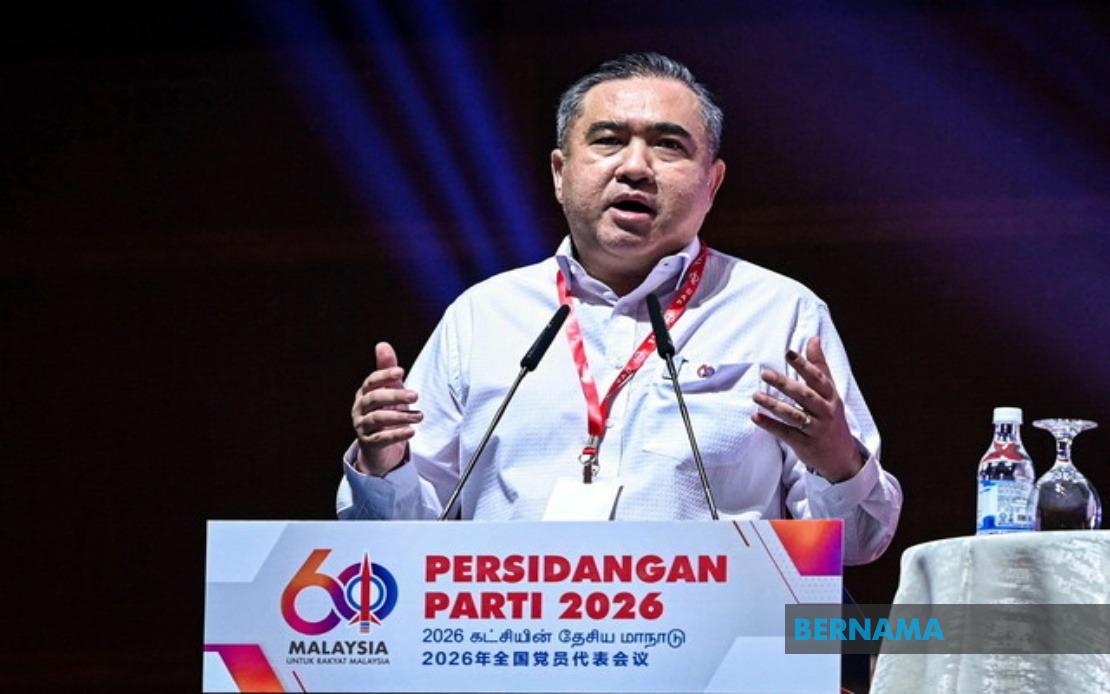
The Democratic Action Party has moved swiftly to endorse Prime Minister Datuk Seri Anwar Ibrahim's declaration that the government will dismantle the Universities and University Colleges Act, a half-century-old statutory framework that has long constrained campus activism and political engagement. Speaking at the party's 2026 National Conference in Putrajaya on August 16, DAP secretary-general Anthony Loke positioned the repeal as validation of decades of party advocacy, framing the development as evidence that the coalition administration remains committed to substantive institutional change rather than merely occupying ministerial positions.
The AUKU, first enacted in 1971, has functioned as the primary legislative instrument governing Malaysia's public university system, with particular provisions restricting student political participation and imposing disciplinary frameworks through university leadership. Loke's remarks underscore how the act has become emblematic of broader restrictions on democratic expression within tertiary education, with the party viewing its elimination as a watershed moment for campus freedoms. The secretary-general emphasised that DAP joined government not for administrative perquisites alone but to deliver on reform commitments that have defined its platform across multiple electoral cycles.
Anwar's announcement, made during the PKR 2026 National Congress, represents a significant policy shift with potential reverberations across the educational landscape. The Prime Minister cited pressure from student leaders and organisers who submitted memorandums outlining systemic grievances and requesting comprehensive legislative overhaul. Cabinet consideration of the repeal proposal is scheduled for the following Wednesday after his statement, indicating relatively expedited movement through the governmental approval process. This pace suggests buy-in from key coalition partners and reflects calculation that the measure enjoys sufficient political backing to navigate potential objections from conservative quarters.
The history of AUKU amendments provides crucial context for understanding why complete repeal marks such a meaningful departure. Since its 1971 introduction, the act has undergone seven revisions, most notably in 2012 when students gained permission to engage in political party activities beyond campus boundaries. This incremental liberalisation strategy reflected government responsiveness to sustained pressure from student movements and civil society advocates who argued that blanket restrictions on political participation contradicted Malaysia's constitutional framework. However, incremental change has consistently disappointed reformers who contend that the underlying architecture of the legislation remains fundamentally restrictive.
More recent amendments have chipped away at administrative discretion. A 2024 modification transferred student disciplinary authority from vice-chancellors to dedicated Student Disciplinary Committees, theoretically insulating decisions from individual administrators' preferences while establishing more formalised procedures. Another provision adjusted financial regulations to allow Student Representative Councils and campus organisations greater autonomy in fundraising and receiving contributions, subject to applicable regulations. These modifications suggest evolving recognition that the legislation required modernisation, yet proponents of complete repeal argue that piecemeal adjustments cannot substitute for wholesale legislative renewal.
Loke's remarks importantly transcend simple celebration of the AUKU repeal, instead leveraging the announcement as momentum for widened educational reform. He explicitly urged the government to extend the reformist spirit across higher education policy, particularly regarding equal access regardless of racial or ethnic background. This positioning reflects DAP's broader agenda regarding meritocratic education systems and affirmative action, issues that have generated persistent political controversy throughout Malaysia's post-independence history. By connecting the AUKU discussion to wider access questions, the party signals intention to sustain pressure on the administration to address systemic inequalities within tertiary institutions.
The implications for Malaysia's student movements warrant examination. Complete AUKU repeal would theoretically restore to students freedoms presently circumscribed by statutory language, including unfettered participation in political organising and campus-based activism. This represents reversal of the paternalistic governance model that has characterised Malaysian public universities for decades, wherein institutional administrators possessed extensive authority to regulate student behaviour and expression. Repeal would necessitate reconceptualisation of university leadership roles and potentially catalyse more vigorous campus political culture, with attendant challenges regarding institutional stability and academic focus.
Regionally, Malaysia's movement toward greater student freedoms follows broader trends across Southeast Asia. Several neighbouring countries have experienced intensified campus activism and student-led movements, with legislative frameworks either proving inadequate to contain activism or undergoing revision in recognition of democratic principles. Thailand's recent constitutional developments and Hong Kong's experience with student mobilisation demonstrate how tertiary institutions function as crucibles for political expression, particularly among younger cohorts shaping future electoral and civic participation patterns. Malaysia's policy shift aligns with global recognition that overly restrictive university governance ultimately proves counterproductive to institutional missions and social cohesion.
The political dimensions merit consideration alongside educational reform rationale. DAP's enthusiastic endorsement signals confidence that repeal serves coalition interests by appealing to younger demographics and urban constituencies that have consistently prioritised democratic liberalisation. The timing, occurring within a government that includes progressive elements alongside more traditional stakeholders, reflects calculated judgment that sufficient consensus exists to advance the measure. Conversely, potential opposition from conservative quarters within and beyond government requires navigation, suggesting that legislative implementation may encounter procedural obstacles despite apparent political commitment.
Anwar's announcement and DAP's backing represent culmination of sustained advocacy by student organisations, civil society groups, and political actors who have long contended that AUKU embodied outdated paternalism incompatible with modern democratic governance. The legislation's origins in post-independence Malaysia reflected prevailing concerns regarding campus stability and institutional control, yet successive decades witnessed evolution in both university maturity and broader democratic aspirations. Repeal would acknowledge that tertiary institutions can accommodate vibrant student political life without sacrificing academic rigour or institutional functionality, a proposition increasingly validated by international experience and domestic educational development.
Implementation challenges will likely emerge once legislative consideration commences. Questions regarding transitional arrangements, residual regulations governing student conduct, and coordination with institutional autonomy principles require careful drafting. Universities will require guidance regarding governance adjustments and disciplinary frameworks operating absent AUKU's statutory scaffolding. Student organisations themselves face responsibility for demonstrating that expanded freedoms translate into constructive civic engagement rather than permitting destructive behaviour, thereby sustaining political support for liberalisation among stakeholder constituencies potentially harbouring reservations. Success will hinge on whether genuine educational stakeholders genuinely embrace reformist principles or merely reluctantly accommodate legislative mandates.
Looking forward, the AUKU repeal decision may establish precedent for addressing other legislation that restrict civil liberties or constrain democratic participation. DAP's explicit reference to additional pending reforms suggests that the coalition government faces ongoing pressure from its progressive elements to advance comprehensive democratisation agenda. How effectively the administration pursues these additional initiatives will substantially determine whether the AUKU repeal represents genuine commitment to institutional renewal or merely symbolic gesture toward reformist constituencies. Students, educators, and civil society observers will scrutinise implementation with keen interest, viewing this legislative moment as indicator of coalition governance direction during its current mandate.

