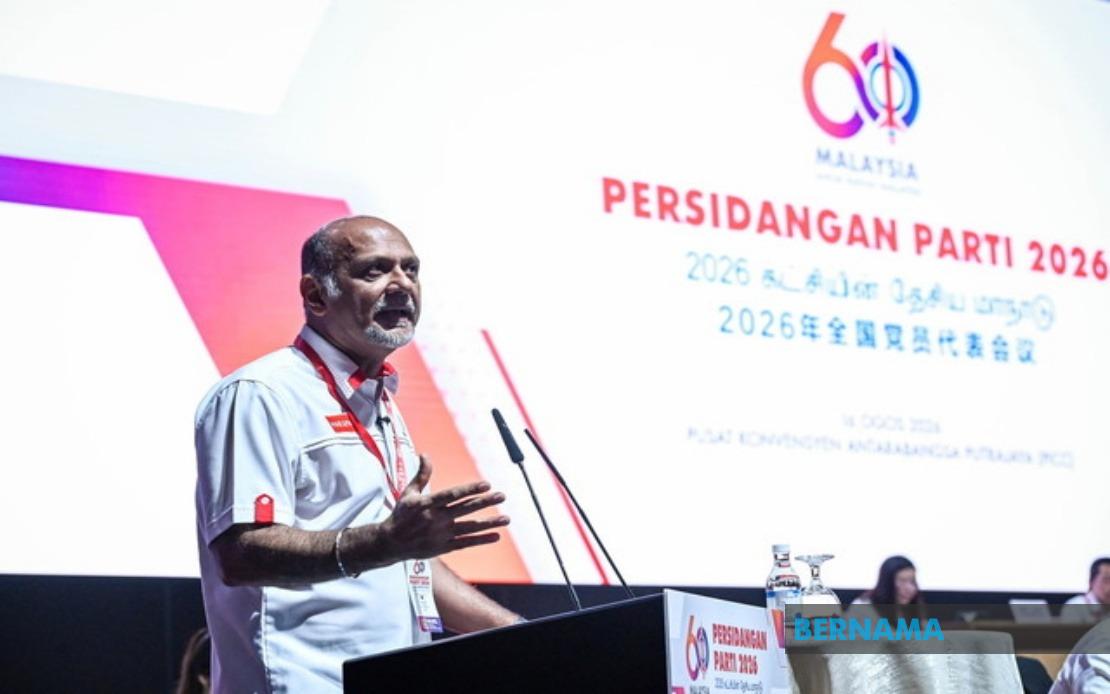
The Democratic Action Party held a critical moment of reflection at its annual conference in Putrajaya on August 16, with party leadership acknowledging that recent state election outcomes demand a fundamental reconsideration of strategy. National chairman Gobind Singh Deo used his opening remarks at the DAP Party Conference 2026, held at the Putrajaya International Convention Centre, to signal that the party must adapt its approach if it hopes to remain a significant force in Malaysia's increasingly complex political ecosystem. The electoral results, he indicated, serve as both a reality check and a catalyst for deeper soul-searching about the party's role and effectiveness within the broader political system.
After participating in the Unity Government coalition for three and a half years, DAP now faces the dual challenge of assessing what it has achieved while simultaneously determining whether its current strategic alliance remains the best vehicle for advancing its agenda. Gobind's framing of the moment was notably measured—the party would accept the voters' verdict, he said, but this acceptance did not preclude fundamental questions about how the organisation should position itself moving forward. This acknowledgment reflects growing tensions within DAP's base and leadership regarding the costs and benefits of coalition participation, tensions that will likely intensify as the party conference proceeds with its scheduled deliberations.
Central to Gobind's message was a clear recalibration of expectations about what DAP can realistically accomplish as part of a multi-party government. Rather than pushing for implementation of the party's comprehensive manifesto, which would require DAP to function as a governing majority rather than a coalition participant, Gobind advocated for a more pragmatic approach focused on identifying reforms that can secure agreement across the coalition's various components. This represents a notable shift in rhetoric from previous years when DAP frequently emphasised the bold transformation agenda that drove its participation in governance. The new framework essentially asks: what can be done with consensus, rather than what should be done according to party ideology.
Gobind's specific reform priorities signal where DAP intends to concentrate its limited political capital within the coalition framework. He called for a special parliamentary sitting to debate and pass amendments to several contentious laws, with particular emphasis on the Security Offences (Special Measures) Act 2012, commonly known as SOSMA. This statute has long been a focal point for civil liberties advocates concerned about detention without trial, making its reform a signature DAP issue. Alongside SOSMA, Gobind pointed to the Peaceful Assembly Act 2012 as requiring amendment—another symbolic priority for a party that has historically championed civil and political freedoms. The proposed separation of powers between the Attorney General and Public Prosecutor's office, plus constitutional limits on prime ministerial tenure, round out an institutional reform agenda that focuses on checks and balances rather than distributive or welfare policy.
These institutional reforms address concerns among Malaysia's democratic advocates about potential concentration of executive power, issues that resonate beyond DAP's traditional base. By prioritising structural changes to governance architecture over economic redistribution or social spending, Gobind positioned DAP as the coalition's custodian of democratic standards and institutional integrity. This messaging may help the party maintain credibility with urban, educated voters concerned about democratic backsliding, even if coalition constraints limit DAP's ability to deliver transformative outcomes. The emphasis on "transparent governance and prevent[ing] the abuse of power," as Gobind framed it, creates a defensible political position for a party trying to justify continued coalition participation to a potentially sceptical membership.
Economic concerns, however, loom large in the party's strategic calculus. Gobind acknowledged that the government must address material grievances among ordinary Malaysians, particularly regarding the rising cost of living and economic pressures that have intensified since 2023. His formulation—that policymakers need to "better understand the challenges faced by the people"—suggests DAP's recognition that its coalition partners may not fully appreciate the economic distress affecting working-class and middle-class households. This framing creates rhetorical space for DAP to claim it champions the underdog within the Unity Government, even as coalition constraints limit what can be implemented. The tension between institutional reform, which appeals to middle-class voters, and economic relief, which resonates with broader populations, will shape DAP's policy positioning going forward.
Crucially, Gobind linked Malaysia's economic performance to political stability, arguing that investor confidence depends on sustained governance coherence. This argument carries particular weight given the country's competitive position relative to regional alternatives and the need to attract capital to create employment. It also provides a rationale for DAP to remain in the coalition despite electoral disappointment—exit might trigger political instability that would harm the very economic interests most vocal about cost-of-living pressures. This circular logic may or may not convince the party's grassroots membership, particularly if upcoming quarters bring limited progress on inflation or employment creation.
The conference itself carries symbolic weight extending beyond DAP's immediate circumstances. Held in conjunction with the party's 60th anniversary, the gathering marks six decades of the Democratic Action Party's presence in Malaysian politics. DAP has evolved from a fringe party to a significant coalition partner, and this conference represents a moment of both pride in historical longevity and anxiety about current relevance. The presence of senior figures including secretary-general Anthony Loke and vice-chairmen representing various party factions underscores the breadth of internal stakeholders with different perspectives on the coalition question.
Particularly significant is the scheduled motion on whether DAP should remain in the Unity Government until the conclusion of the current parliamentary term. Party secretary-general Anthony Loke is expected to table this motion, which will be decided through secret ballot by approximately 4,264 delegates representing 1,704 party branches. The secret ballot format indicates party leadership's understanding that this decision carries emotional and strategic weight, and delegates should feel empowered to express genuine preferences rather than conform to perceived leadership expectations. The outcome of this ballot will substantially shape DAP's next chapter, determining whether the party doubles down on coalition participation with renewed focus on consensus-based reforms, or signals its readiness to rebuild as an opposition force.
DAP's position within the broader Pakatan Harapan coalition also factors into the party's strategic calculations. As one of three main component parties alongside PKR and Amanah, DAP must balance its particular institutional reform agenda with coalition-wide priorities and dynamics. If either PKR or Amanah faces its own internal crises or electoral vulnerabilities, this could affect DAP's calculations about the stability and viability of continued partnership. Regional contexts matter as well—DAP's fortunes in specific states, particularly Penang and Selangor where it holds significant influence, will shape perceptions of whether the coalition model serves the party's interests.
The broader implications for Malaysian politics extend beyond DAP's internal deliberations. A party that represents significant urban constituencies and remains committed to democratic strengthening and civil liberties could fundamentally reshape governance quality, depending on how much institutional influence it retains. If DAP pursues ambitious institutional reforms and makes modest progress, this could incrementally strengthen democratic guardrails. Conversely, if coalition constraints prevent even consensus-based reforms from advancing, DAP may struggle to justify continued participation to a membership increasingly questioning whether institutional reform and economic improvement can coexist within existing arrangements. The coming months will reveal whether Gobind's reframed approach can sustain both coalition discipline and party morale.

