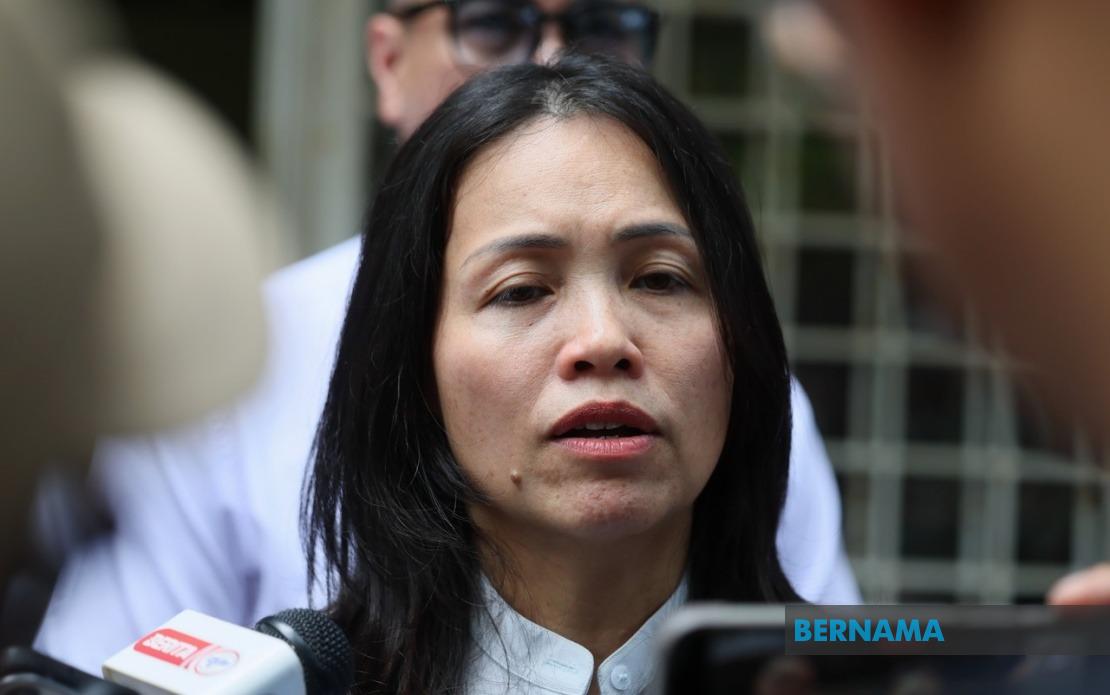
The Johor Democratic Action Party has sounded the alarm over a coordinated disinformation campaign involving the deliberate alteration of campaign materials, ahead of the state's June 27 nomination day and July 11 polling day. Johor DAP chairman Teo Nie Ching, who serves as Deputy Communications Minister, publicly denounced the tactic on June 17, calling on Malaysians across all communities to reject what she characterized as a desperate attempt to mislead voters through false representation of the party's candidates.
The manipulation strategy, according to Teo, involves the digitally edited posters portraying potential DAP candidates as Muslim women wearing headscarves improperly or in ways inconsistent with Islamic teachings. The calculated nature of this approach becomes apparent when examined through the lens of electoral psychology: by presenting DAP candidates in religious contexts that contradict factual reality, the architects of this campaign appear designed to trigger cognitive dissonance among the party's traditional support base, particularly in the Chinese community, whilst simultaneously attempting to portray DAP as religiously insensitive or misleading on matters of faith.
This tactics reflects a broader pattern observed in Malaysian electoral campaigns where religious imagery and sensitivities are weaponized to fracture multiethnic voting coalitions. By creating false associations between secular-leaning parties and religious identity manipulation, such operations exploit the intersection of religious sentiment and communal voting patterns that remain significant in Malaysian politics. The timing, mere days before nomination, suggests a last-minute strategy intended to generate rapid social media circulation and news coverage without allowing adequate time for systematic fact-checking or counter-messaging.
Teo emphasized that DAP, as a secular party within the Pakatan Harapan coalition, has consistently maintained respect for all religious traditions and communities. The party's historical positioning as a defender of minority rights and secular governance does not, she stressed, translate into disrespect for Islam or its practitioners. Instead, she framed the poster manipulation as an affront not only to DAP's integrity but to the dignity of women generally, suggesting that the campaign treats female candidates as interchangeable symbols to be dressed and presented according to whatever serves electoral advantage. This gendered dimension of the smear campaign adds another layer of concerning implications about the conduct of electoral competition.
Johor represents a critical battleground in Malaysian politics, with the state's 56 legislative seats distributed among multiple contenders. Before the dissolution of the State Legislative Assembly on June 1, Barisan Nasional dominated with 40 seats, whilst Pakatan Harapan held 12, Perikatan Nasional controlled three, and MUDA retained one. The configuration suggests a genuinely competitive contest in which multiple coalitions harbour realistic ambitions, creating heightened incentives for aggressive campaign tactics. Any gains Pakatan Harapan achieves in Johor would represent a meaningful expansion of the coalition's influence in a traditionally important state.
The appeal to voter judgment represents a strategic choice by Teo and DAP leadership. Rather than simply dismissing the doctored materials as beneath serious consideration, the party has chosen to directly engage with the phenomenon, treating it as a matter of sufficient importance to warrant public commentary from a senior figure. This approach risks amplifying awareness of the smear campaign but signals that DAP takes the threat seriously and intends to fight the narrative directly rather than permit it to circulate unchallenged. For Malaysian voters accustomed to seeing electoral disputes play out across social media and messaging platforms, the public statement serves as an explicit inoculation against the false imagery.
The broader implications of such campaigns extend beyond immediate electoral mathematics. When political actors resort to manipulated imagery and deliberate misrepresentation of opponents' candidates, they undermine the informational foundations upon which meaningful democratic choice depends. Voters cannot make genuinely informed decisions when confronted with fabricated evidence about candidates' identities or positions. The normalization of such tactics, even if unsuccessful in their immediate electoral objectives, gradually erodes public confidence in political communication and can contribute to wider cynicism about the authenticity of political discourse.
Teo's emphasis on harmony, unity, and peaceful electoral competition provides a counterweight to the divisive approach embedded in the poster campaign. Her invocation of these values appeals to a constituency that extends beyond DAP's traditional support base—to Malaysians of all backgrounds who recognize that electoral competition conducted through deception and identity manipulation ultimately weakens democratic institutions. By framing rejection of the smear campaign as consistent with broader values of national unity, she positions the issue as transcending partisan interest.
The Election Commission's scheduling of key electoral dates—June 27 for nominations and July 11 for polling—establishes a compressed timeframe in which such campaigns operate. The relatively brief window between nomination and voting means that false narratives circulated immediately before nominations can achieve maximum impact before correction. This temporal dynamic explains both the urgency of Teo's public warning and the calculated timing of the poster campaign itself. Political actors understand that news cycles and voter attention span in such compressed periods create vulnerabilities for rapid-circulation falsehoods.
The incident illustrates how Malaysian electoral contests have increasingly become battlegrounds of competing narratives and contested representations, with visual media and digital distribution allowing rapid proliferation of unverified claims. For voters in Johor and observers across Southeast Asia watching Malaysian political developments, the unfolding contest will test whether informed electorates can distinguish authentic candidate representations from doctored propaganda, and whether democratic institutions can maintain integrity when faced with deliberate misinformation campaigns designed to exploit communal sensitivities.