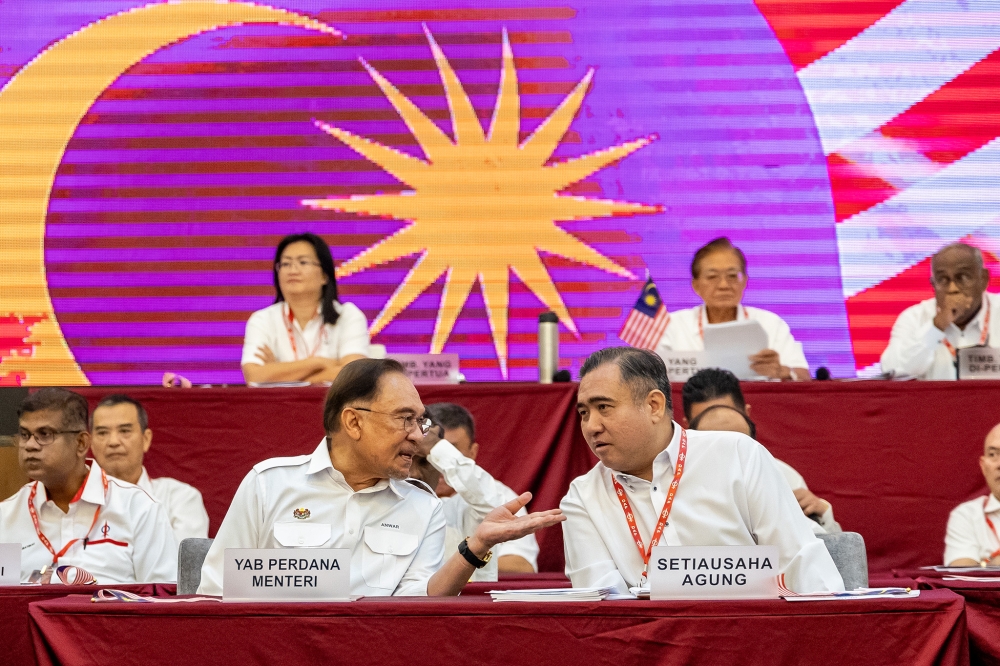
The Democratic Action Party will not abandon Prime Minister Datuk Seri Anwar Ibrahim's Pakatan Harapan administration, Transport Minister Loke Soo Kiang stated on July 17, effectively closing the door on speculation about the coalition's stability. Loke's reassurance comes at a time when tensions within the ruling bloc have periodically surfaced over ideological differences and the velocity of policy change, particularly following the inclusion of Barisan Nasional in the governing arrangement. His declaration represents a clear signal that despite internal disagreements, the party recognises the mathematical and political necessity of maintaining the coalition to preserve the current government structure.
The DAP politician's comments reflect a mature acceptance that administrative responsibility demands compromises absent in opposition politics. When a party transitions from scrutinising government to holding ministerial portfolios, the operational constraints of the civil service, parliamentary procedure, and coalition management inevitably temper the pace at which policy objectives materialise. Loke's positioning suggests the DAP leadership has internalised this reality and is communicating it to party members and supporters who may have harboured expectations of rapid transformative change following the 2022 general election and subsequent political realignments that brought Anwar to the Prime Minister's office.
The acknowledgment that slower reforms constitute an implicit cost of governance carries particular resonance within Malaysian political discourse. The DAP has historically positioned itself as a reform-minded force advocating for institutional accountability, reduction of political patronage, and more transparent administrative processes. The party's base expected tangible progress on these fronts once it became part of the executive, yet the realities of managing a coalition that includes Barisan Nasional—a party with institutional interests in preserving certain power structures—inevitably creates friction points where reform ambitions collide with political feasibility.
Loke's statement appears designed to manage internal party expectations while simultaneously reassuring other coalition partners that DAP's commitment to the PH project remains intact. The timing of such declarations often indicates that party machinery has been processing grievances from members dissatisfied with the pace of change or concerned about compromises perceived as abandoning core principles. By publicly affirming DAP's continued participation, Loke provides leadership with a tool to channel internal discontent while maintaining the facade of coalition unity that, however strained at moments, remains preferable to the alternative of government collapse and fresh elections.
The broader context involves Malaysia's complex coalition mathematics, where no single bloc commands sufficient parliamentary seats to govern independently following the fragmentation of traditional two-party politics. Anwar's administration represents a unprecedented marriage of convenience between ideologically disparate parties united primarily by the objective of preventing Barisan Nasional's unilateral return to power. Within this arrangement, the DAP functions as the intellectual and institutional reform vanguard, while Barisan Nasional elements provide crucial parliamentary numbers and maintain networks within the bureaucracy and security establishment. This structural reality means that any significant policy initiative requires negotiation and compromise, unavoidably slowing implementation compared to what individual parties might achieve with unchecked authority.
The implications for Malaysian governance extend beyond internal coalition management. Public confidence in the administration's ability to deliver substantive change rests partly on whether visible reform progresses at a pace that justifies the electoral upheaval and political recalibration of recent years. Citizens who supported Pakatan Harapan in 2018 and subsequent iterations have legitimate expectations of improved institutional standards, enhanced transparency mechanisms, and reduced corruption. When reforms advance sluggishly, frustration accumulates among the constituency that voted for change, potentially creating openings for oppositional narratives that the government lacks genuine commitment to transformation.
Loke's framing also touches on a fundamental governance truth often obscured in partisan political debate: the distinction between campaigning and administering. Opposition parties can advocate expansive reform agendas with minimal concern for implementation mechanics, fiscal constraints, or bureaucratic resistance. Governing parties must navigate these complexities constantly. Civil service traditions, institutional inertia, legal complexities, and competing budgetary pressures create genuine obstacles to rapid policy implementation, independent of political will. Loke's acknowledgment implicitly educates party supporters about these realities while justifying continued participation despite visible frustrations.
The statement carries strategic value in signalling to potential coalition partners and independent parliamentarians that the government remains stable and committed to continuity. In Malaysia's current fragmented political landscape, governments derive legitimacy partly from demonstrating they possess sufficient internal cohesion to function effectively and implement policy. Defections or public acrimony between coalition components suggest weakness and invite political opportunism. Loke's firm reiteration of DAP's commitment thus performs stabilisation work beyond the party's immediate boundaries, reassuring economic actors, foreign investors, and other stakeholders that the administration possesses sufficient durability to execute policy and maintain institutional continuity.
The tension between reformist ambitions and coalition governance inherent in Loke's statement will likely persist throughout Anwar's tenure. As the government approaches the midpoint of its term, the accumulation of unmet reform expectations may intensify pressure within DAP ranks, potentially manifesting in party conferences, internal forums, or public statements from senior figures balancing loyalty to coalition leadership against accountability to party members. How successfully the leadership manages this tension will significantly influence both the coalition's longevity and public perceptions of whether the government has genuinely delivered on the transformative promises that brought it to office. Loke's statement suggests confidence that DAP members will ultimately privilege stability over maximalist reform demands, though subsequent developments will test this calculation.

