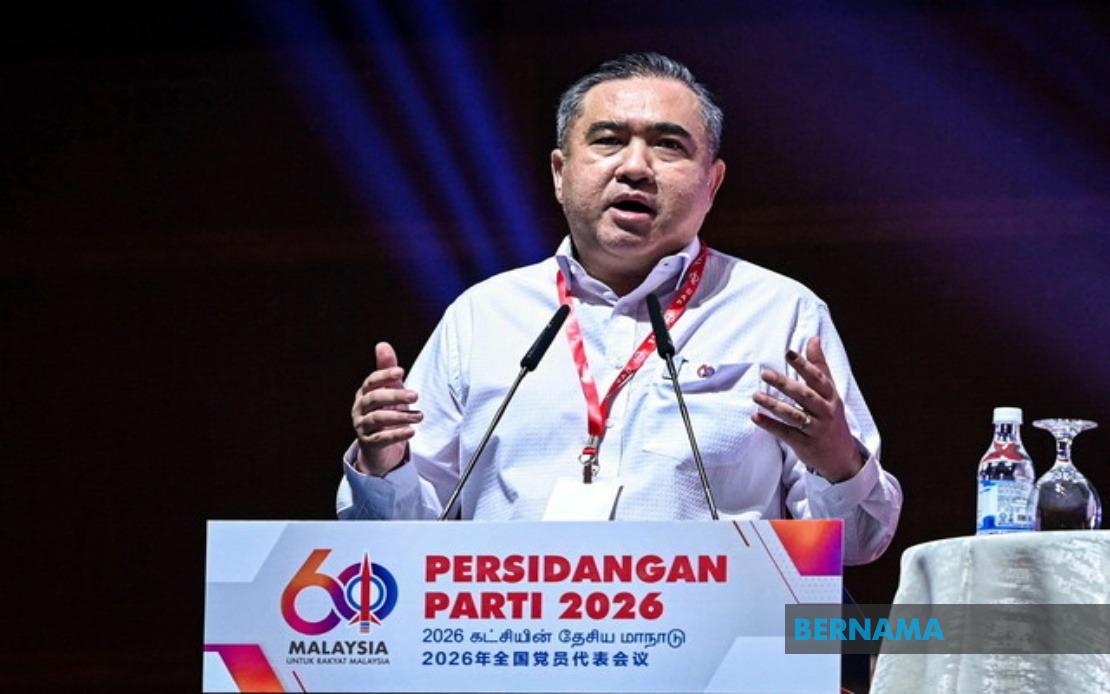
The Democratic Action Party has formally committed to maintaining its presence within Malaysia's federal government coalition through to the end of the current parliamentary cycle, following a decisive vote by party members at its 2026 conference. The decision, announced at the Putrajaya International Convention Centre, represents a significant show of unity within DAP leadership and signals the party's confidence in its partnership with other coalition members. Party secretary-general Anthony Loke brought the motion before delegates, who were granted the opportunity to determine DAP's political trajectory through to the expiration of the 15th Parliament's term.
The scale of delegate support underscores the strength of consensus within party ranks on this governance question. Of the 2,106 ballot papers distributed across the conference floor, 1,857 delegates voted affirmatively to continue the government arrangement, whilst 242 chose to withdraw from the coalition. Seven ballots were rendered invalid through spoilage, leaving the affirmative vote at 88.2 per cent of those physically present at the gathering. Conference Speaker Cha Kee Chin announced these figures, emphasizing that the voting exercise deployed secret ballot procedures rather than conventional voice or hand-raising methods, a procedural choice designed to maximize transparency and prevent undue influence on individual voter choices.
DAP's ministerial presence has become increasingly visible across the federal administration. The party currently holds five cabinet positions, with Anthony Loke serving as Transport Minister and four colleagues distributed across distinct portfolio areas including entrepreneurship development, digital infrastructure, housing policy, and the Prime Minister's Department. Beyond these senior appointments, seven additional DAP members occupy deputy ministerial ranks spanning sectors ranging from communications and agriculture through to youth and sports development. This institutional footprint represents substantial governmental influence for the party and explains partly why continued participation carries both material and symbolic weight within party calculations.
The breadth of DAP representation across multiple ministries reflects the party's expanded role within Malaysia's governing coalition architecture since its entry into the unity framework. Steven Sim manages entrepreneur and cooperatives development portfolios, while Gobind Singh Deo oversees digital matters. Nga Kor Ming directs housing and local government responsibilities, and Hannah Yeoh holds responsibility within the Prime Minister's Department focused on federal territories. Deputy ministers including Teo Nie Ching in communications and Datuk Chan Foong Hin in agriculture and food security maintain substantive policy influence across their respective domains.
The conference gathering itself demonstrated substantial party mobilization capacity. Organisers anticipated approximately 4,264 delegates representing 1,704 party branches from across the Malaysian peninsula would attend and participate in voting procedures. This nationwide representation structure ensures that the democratic mandate generated through the conference reflects grassroots party sentiment rather than merely leadership preference. The actual voting numbers, whilst slightly below initial projections, still commanded sufficient participation to lend legitimacy to the decision-making process and provide clear direction to party leadership regarding member expectations.
DAP's decision carries implications beyond internal party management and extends into the broader stability calculations of Malaysia's federal government arrangement. The unity government framework itself has required careful navigation between distinct political entities with sometimes divergent policy preferences and ideological orientations. DAP's formal commitment through the current parliamentary cycle provides a stabilizing element for coalition partners and reduces uncertainty regarding potential defections or tactical repositioning by the party. For the administration, this decision eliminates a significant variable from near-term political calculations.
The voting outcome also reflects DAP members' pragmatic assessment of contemporary Malaysian politics. Rather than pursue destabilization tactics that might generate short-term media attention, the party leadership has evidently convinced delegates that sustained participation within government offers superior strategic positioning for advancing party interests and policy objectives. This reflects maturation within DAP's strategic thinking, particularly regarding the party's trajectory in national-level governance following its earlier concentration upon state-level politics in Penang and Selangor.
The secret ballot voting methodology warrants particular attention as it represents evolving standards for intra-party democratic practice within Malaysian political organizations. By implementing confidential voting procedures, DAP insulated individual delegates from potential group pressure or leadership coercion, thereby generating voting results that authentically represent member preferences rather than merely reflecting hierarchical authority structures. This procedural innovation suggests that DAP places genuine value upon democratic legitimacy for consequential party decisions rather than treating internal voting as ceremonial confirmation of predetermined leadership positions.
The substantive policy implications of DAP's continued government participation extend across multiple governance domains where the party holds ministerial responsibility. Transport infrastructure development, digital economy initiatives, and housing policy implementation will proceed under DAP stewardship within currently established frameworks. For Malaysian consumers and citizens interacting with these portfolio areas, continuity of departmental leadership through the parliamentary cycle provides implementation predictability and reduces prospects for jarring policy reversals that might otherwise accompany ministerial rotations.
Regional observers and Southeast Asian political analysts have closely monitored Malaysia's unity government experiment as a potential model for coalition building across diverse political traditions. DAP's decision reinforces signals that this governance model has achieved sufficient stabilization to persist through foreseeable timeframes. Neighbouring democracies grappling with coalition mathematics and inter-party cooperation frameworks may draw relevant lessons from the Malaysian experience regarding mechanisms for sustaining multi-party arrangements across extended periods despite underlying ideological and programmatic differences.

