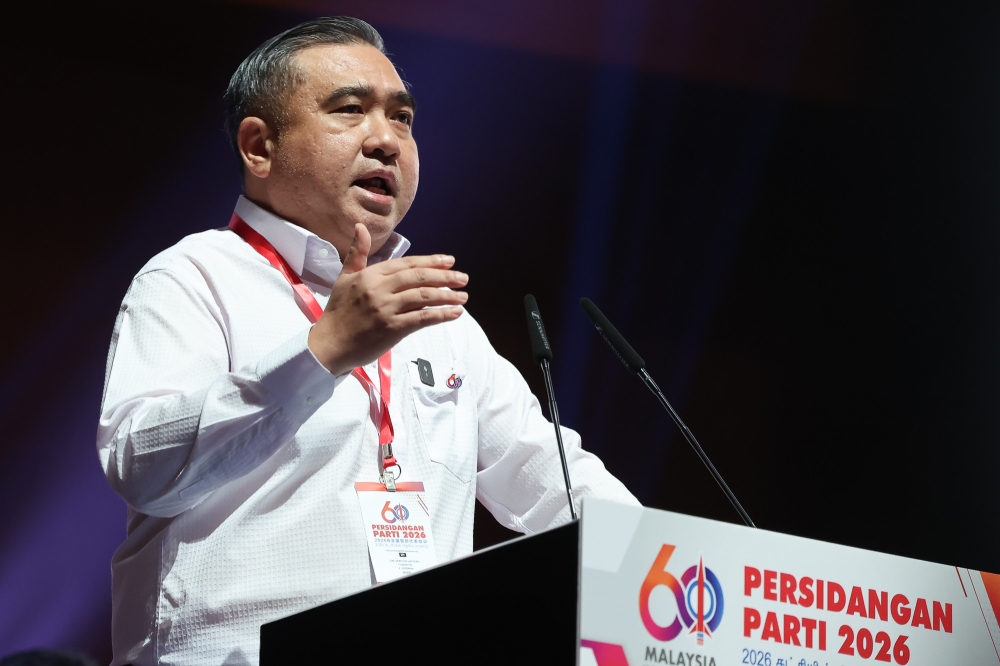
The Democratic Action Party declared unconditional support on Friday for Prime Minister Datuk Seri Anwar Ibrahim's intention to repeal the Universities and University Colleges Act, signalling that a key plank of the government's democratic reform platform remains on track. The statement came as coalition partners indicated the legislative agenda should encompass more sweeping changes to student freedoms and institutional autonomy, reflecting broader expectations within the ruling coalition for transformative rather than incremental adjustments to Malaysia's higher education governance.
Transport Minister Anthony Loke, representing DAP's position in Putrajaya, framed the party's support as total commitment to the repeal initiative while simultaneously staking out territory for more ambitious reforms. His remarks suggested that within government circles, there is recognition that simply abolishing AUKU—a piece of legislation dating back decades—may not fully address structural constraints on academic freedom and student activism. The dual messaging underscores the delicate balance ruling coalition members must maintain between delivering on campaign promises while navigating competing demands from their support bases.
The AUKU, which has governed university conduct and disciplinary matters for years, has long been contested by student groups, civil society organisations, and progressive political figures who view it as an instrument limiting democratic expression on campuses. For decades, the law has been deployed to regulate student associations, restrict campus political activity, and enforce university hierarchies that critics argue stifle intellectual inquiry. The coalition government's commitment to dismantle it represents a significant symbolic and practical shift from previous administrations' approaches to student autonomy.
Loke's additional call for reforms to go deeper reveals that DAP and potentially other coalition members see the AUKU repeal as opening a conversation rather than closing one. This positioning suggests coalition discussions are already underway about what legislative or policy framework should replace AUKU, and what additional measures might be necessary to create genuinely autonomous academic institutions. The implication is that abolishing a restrictive law alone does not automatically generate institutional cultures that embrace student participation or protect academic freedom—a nuance that reflects more sophisticated thinking about structural reform than simple legislative deletion.
For the broader regional context, Malaysia's approach to university governance sits within a contested landscape across Southeast Asia. While some countries have moved toward greater campus autonomy and student voice, others have maintained or tightened state controls. Malaysia's current trajectory, if the government follows through on these signals, could position it as a regional outlier willing to trust institutions and student bodies with greater self-determination. This carries implications not just for governance but for the character of knowledge production and intellectual debate within Malaysian universities.
The coalition's emphasis on going beyond mere repeal also reflects practical recognition of what students and academics have been articulating: that removing a prohibition does not automatically create the conditions for active participation. Universities require supportive regulatory frameworks, institutional cultures, resource allocation, and leadership commitment. DAP's framing suggests coalition members understand they must address these enabling conditions rather than assume that legal change alone will transform campuses into vibrant spaces of democratic engagement.
Anwar's personal investment in education policy and university governance has been evident throughout his political career. His administration's moves on AUKU align with a broader agenda around democratic accountability and civil liberties that has characterised his recent political messaging. The DAP's backing reflects both alignment with these values and strategic interest in positioning the coalition as genuinely committed to transformative reform rather than surface-level cosmetic changes that might satisfy rhetoric without shifting practice.
The timing of DAP's public reaffirmation also matters. By stating support at this juncture, the party stakes out ownership of a popular reform agenda and signals to its base—particularly younger, urban voters concerned with democratic freedoms—that the coalition government is delivering on undertakings made during election campaigns. This is particularly significant for DAP, which has built considerable support among university-educated, urban constituencies who place high value on civil liberties and institutional autonomy.
Looking forward, the question becomes what timeline the government envisages for AUKU repeal and what alternative regulatory frameworks it proposes. Will the process be rushed or carefully deliberated? Will there be genuine consultation with students, academics, administrators, and other stakeholders? How will the government manage the transition from a highly restrictive regime to one permitting greater freedom? These questions will determine whether the reform becomes substantive or merely performative.
The coalition's commitment also invites scrutiny from civil society and student groups who have long campaigned against AUKU. Having successfully pulled the repeal onto the government agenda, these constituencies will likely monitor implementation closely and will not accept indefinite delays or half-measures. The government's follow-through will shape perceptions of whether it is serious about democratic modernisation or merely using reform promises as political currency.
Regionally, Malaysia's higher education ecosystem influences student movements and intellectual discourse across Southeast Asia. If Malaysia's universities genuinely embrace greater autonomy and student participation, this could inspire similar demands elsewhere in the region. Conversely, if repeal proves cosmetic with constraints merely repackaged in different forms, it would reinforce scepticism about the earnestness of democratic reform efforts. The DAP's call for reforms to extend beyond AUKU suggests at least some coalition members understand these regional dimensions and their government's role as a potential model—for better or worse—for neighbouring countries grappling with similar tensions between state control and institutional autonomy.

