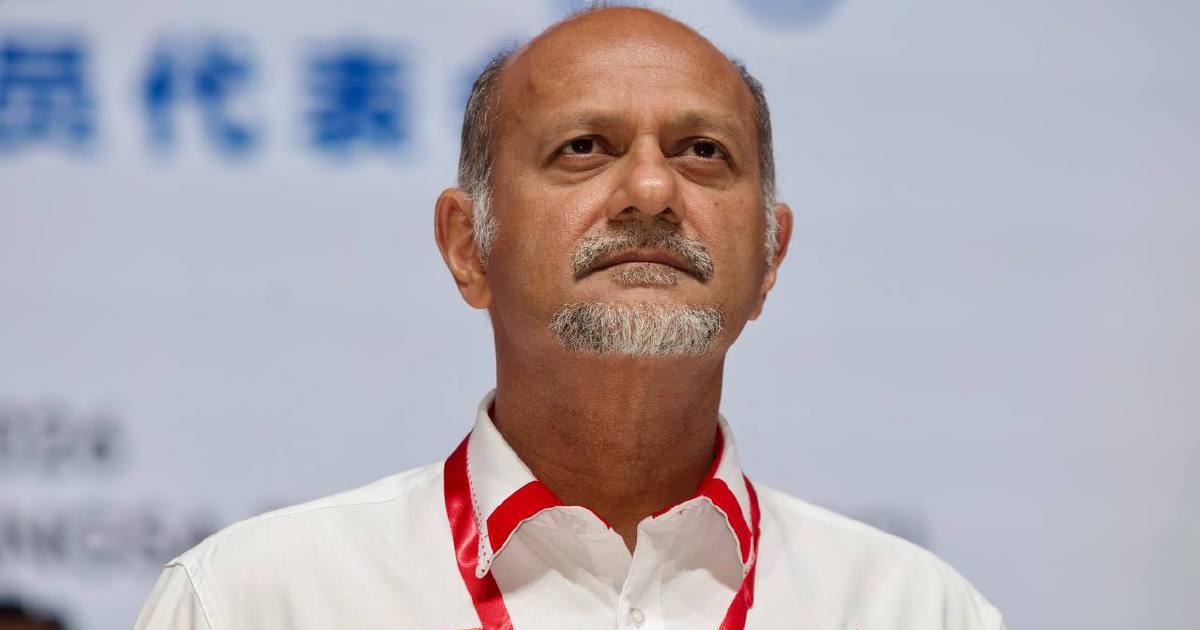
The Democratic Action Party has publicly urged Prime Minister Datuk Seri Anwar Ibrahim to accelerate the pace of institutional and economic reforms, with DAP national chairman Gobind Singh Deo making the appeal in Putrajaya as the unity administration enters its fourth year in office. The timing of the statement reflects mounting pressure within the coalition partnership to deliver more tangible results on policy transformation, particularly as Malaysia navigates persistent economic headwinds and public expectations for meaningful structural change.
Gobind's intervention suggests that the DAP, one of the coalition's key components and holder of critical ministerial portfolios, believes the government must shift into a higher gear on its reform agenda. Three and a half years into the unity government's tenure—roughly midway through a five-year parliamentary term—the party appears concerned that momentum on institutional restructuring and economic modernisation risks slowing without renewed political commitment. This represents a delicate balancing act within the coalition, where DAP must signal its independent voice while maintaining collaborative relationships with partners like UMNO and other component parties.
The call for stronger economic reform carries particular weight given Malaysia's current macroeconomic environment. The nation faces persistent inflationary pressures, moderating growth rates, and structural challenges in competitiveness that demand urgent policy attention. Unfinished business includes tax system modernisation, rationalisation of state-owned enterprises, streamlining of bureaucratic procedures, and enhancement of regulatory frameworks to support private sector dynamism. The DAP's emphasis on these areas reflects broader coalition anxiety about whether incremental improvements suffice or whether more comprehensive restructuring is necessary.
Institutional reform represents the complementary pillar of DAP's appeal. Malaysia's governance architecture, inherited from earlier administrations, contains redundancies, inefficiencies, and structural bottlenecks that constrain policy implementation. The party likely references reforms affecting the civil service, parliamentary procedures, local government strengthening, and anti-corruption mechanisms. The Prihatin and subsequent packages addressed immediate concerns but left deeper governance questions unresolved. A party focused on institutional quality and democratic standards naturally emphasises these longer-term structural improvements as essential to sustainable development.
The statement also carries internal coalition politics significance. DAP's high-profile ministers, including Finance Minister II Lim Guan Eng and other party members in economic portfolios, have stakes in demonstrating that their roles translate into meaningful policy impact. By publicly calling for accelerated reform, DAP simultaneously signals to its own base that the party remains committed to transformation principles while pressuring coalition partners to reciprocate political capital allocation toward reform agendas rather than rent-seeking or status quo preservation.
Anwar's unity government emerged from unprecedented political circumstances, bringing together parties with historically distinct ideological orientations and voter bases. Maintaining this coalition required significant compromises and diluted commitment to some reform priorities. However, as the administration matures and faces declining parliamentary honeymoon effects, parties naturally jockey for position and attempt to define the government's legacy. DAP's intervention suggests the party wants to ensure that when Malaysians evaluate the unity government's record, transformative economic and institutional changes feature prominently rather than political stability serving as the primary metric.
The economic reform agenda particularly resonates with DAP's urban, relatively affluent voter base and business community supporters. These constituencies expect government to facilitate competitive markets, reduce unnecessary bureaucratic friction, and enhance transparency in public procurement and regulation. Institutional reform appeals to DAP's concern with accountability mechanisms, democratic norms, and rule-of-law considerations. Together, these emphases define a particular vision of Malaysia's development trajectory—one prioritising growth through efficiency and integrity rather than through resource extraction or rent distribution.
For Malaysian business and investor communities, DAP's push for stronger reform efforts carries reassuring signals. Economic agents often worry that unity governments, despite political stability benefits, sometimes perpetuate inefficient status quo arrangements when component parties prefer minimal disruption to their respective interest networks. DAP's public pressure suggests at least one substantial coalition member remains committed to competitive market principles and efficiency improvements that support long-term productivity growth and foreign direct investment attraction.
Regionally, Malaysia's reform trajectory influences perceptions of Southeast Asian governance standards and economic performance. The nation competes with Indonesia, Thailand, and Vietnam for investment and talent. Deeper institutional and economic reforms would strengthen Malaysia's positioning in this regional competition while reinforcing its credentials as a functional market economy with reasonably transparent governance. DAP's intervention implicitly appeals to these broader regional and global audiences, not merely domestic coalition partners.
The challenge for Anwar lies in reconciling DAP's push for accelerated reform with the inherent conservatism of coalition partners, particularly UMNO and Malay-Muslim based parties often protective of existing patronage networks and institutional prerogatives. The Prime Minister must demonstrate responsiveness to DAP's concerns without fracturing coalition unity or alienating partners less enthusiastic about disruptive reform. This tension defines much of contemporary Malaysian coalition politics—the desire for transformative change perpetually constrained by political arithmetic requirements for maintaining governing majorities.
Looking forward, the next twelve to eighteen months will prove crucial for determining whether the unity government's reform trajectory accelerates or stalls. DAP's public intervention increases pressure on Anwar while simultaneously positioning the party for stronger performance in eventual electoral contests by emphasising its advocacy for substantive change. Other coalition members will likely respond, either embracing reform imperatives or articulating alternative priorities, further clarifying what the unity government ultimately represents for Malaysian governance and economic prospects.

