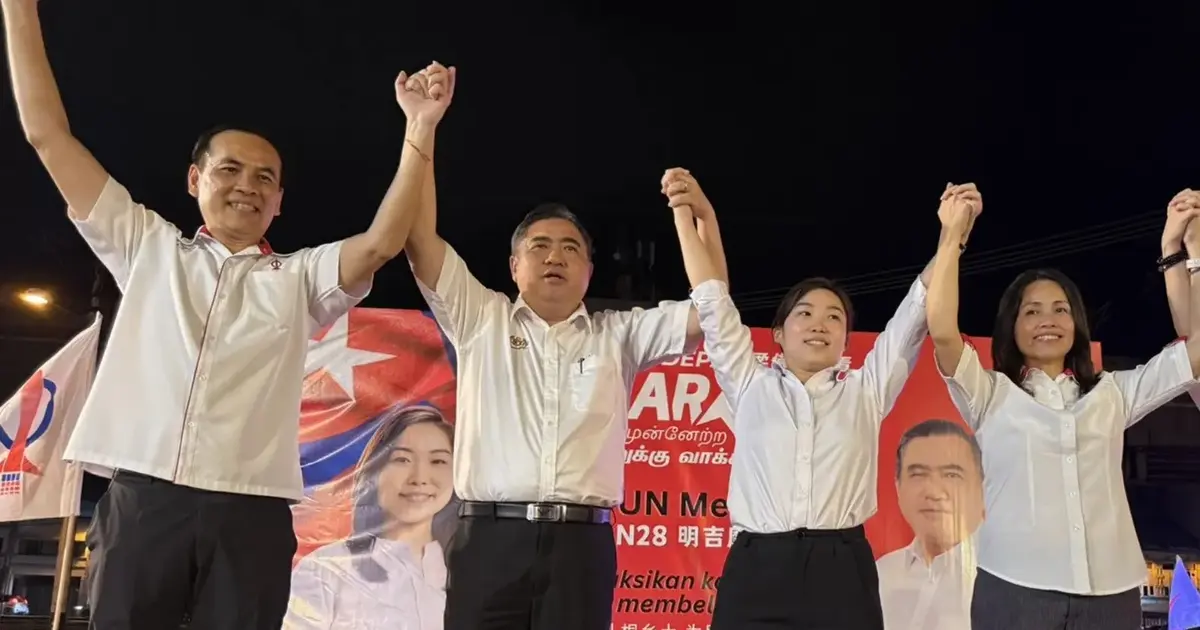
The Democratic Action Party will field a new face in the Mengkibol parliamentary constituency for the forthcoming general election, marking a significant shift in the party's strategy for the seat. Party Secretary-General Loke Siew Fook unveiled the decision to field lawyer Chu Poh Yee as the DAP candidate, effectively replacing the two-term incumbent who has represented the constituency in the previous two election cycles. The announcement reflects internal deliberations within the party about candidate positioning and electoral competitiveness in the crucial parliamentary seat.
Chu Poh Yee brings legal expertise to the candidacy, with a background in law practice that the DAP evidently believes will resonate with voters in Mengkibol. The selection of a legal professional aligns with the party's historical preference for candidates with professional credentials and tertiary qualifications, a trend observed across DAP's candidate selections in urban and semi-urban constituencies. Her legal acumen could prove advantageous in addressing constituent grievances and parliamentary matters requiring detailed legislative scrutiny.
The decision to replace an incumbent member after two terms suggests the DAP is undertaking fresh evaluation of constituency representation. While two consecutive electoral victories might ordinarily secure a candidate's position, the party's leadership has determined that a change of representative could strengthen its position in Mengkibol. This strategic recalibration indicates confidence in the swing constituency's continued support for the DAP brand, even with a new face representing party interests.
Mengkibol has demonstrated fluid electoral patterns in recent cycles, with constituencies in this category often pivotal to overall parliamentary outcomes. The DAP's proactive candidate refresh in such a seat underscores the party's recognition that maintaining electoral dominance requires continuous evolution of representation and responsiveness to constituent expectations. By introducing Chu Poh Yee, the party signals readiness to refresh its approach while maintaining institutional continuity through party leadership and organisational machinery.
The announcement by Loke Siew Fook carries particular weight given his position as party secretary-general, the administrative apex of DAP's internal hierarchy. His personal announcement of the Mengkibol candidacy suggests the party leadership views this constituency as sufficiently important to warrant senior-level validation. This ceremonial dimension underscores both the strategic importance of Mengkibol and the party's formal commitment to supporting Chu Poh Yee's electoral efforts.
For Malaysian voters in Mengkibol, the transition represents an opportunity to assess a new representative's vision and policy commitments without the incumbency advantage protecting an established member. Voters can evaluate Chu Poh Yee's independent merits and policy proposals against rival candidates without the structural advantage of an entrenched sitting member. This dynamic potentially reinvigorates public discourse in the constituency around substantive issues rather than routine incumbency politics.
The DAP's move also reflects broader patterns within Malaysian political parties regarding generational renewal and candidate diversification. Opposition parties in particular have faced scrutiny about whether they maintain sufficient organisational dynamism to remain competitive against Better-resourced ruling coalitions. By cycling in new candidates like Chu Poh Yee, the DAP demonstrates commitment to institutional rejuvenation and demonstrates that even successful incumbents remain subject to party evaluation mechanisms.
From a Southeast Asian perspective, Malaysia's electoral system allows ruling coalitions substantial advantages in resource allocation and media access that opposition parties must overcome through superior ground organisation and constituent relations. The DAP's decision-making on candidate selection in crucial seats like Mengkibol thus reflects sophisticated calculations about where party resources and energy can generate maximum electoral returns. Replacing a two-term incumbent signals confidence in the constituency's partisan alignment with the DAP while signalling openness to renewal.
The nomination of Chu Poh Yee also carries implications for the legal profession's broader engagement with parliamentary representation. Malaysian parliament contains significant numbers of lawyers and legal professionals across party lines, reflecting the profession's traditional involvement in political affairs. Chu Poh Yee's candidacy continues this tradition while potentially bringing specific legal policy expertise to parliamentary deliberation on matters including access to justice, constitutional interpretation, and administrative law.
The DAP's candidacy announcement simultaneously demonstrates party discipline and internal decision-making processes that have historically differentiated it from rival Malaysian political organisations. The party operates relatively transparent candidate selection mechanisms subject to leadership ratification, as evidenced by Loke Siew Fook's public announcement. This institutional visibility contrasts with some rival parties where candidate selection remains opaque or subject to factional contestation.
For Malaysian politics more broadly, the Mengkibol constituency selection illustrates ongoing competition for parliamentary seats even among parties holding substantial voter support. Rather than assuming continued support, the DAP's leadership evidently conducts periodic evaluations of constituency representation. This competitive self-assessment suggests sophisticated political management and recognition that electoral support requires continuous renewal and constituent responsiveness rather than taking voter bases for granted.
As the general election cycle progresses, voters will assess whether Chu Poh Yee's candidacy reinvigorates DAP support in Mengkibol or whether the incumbent's replacement generates voter dissatisfaction. Constituency-level electoral dynamics frequently turn on personal relationships between representatives and voters, meaning Chu Poh Yee's success will depend substantially on her ability to build constituent confidence and deliver tangible political results beyond her legal credentials and party affiliation.

