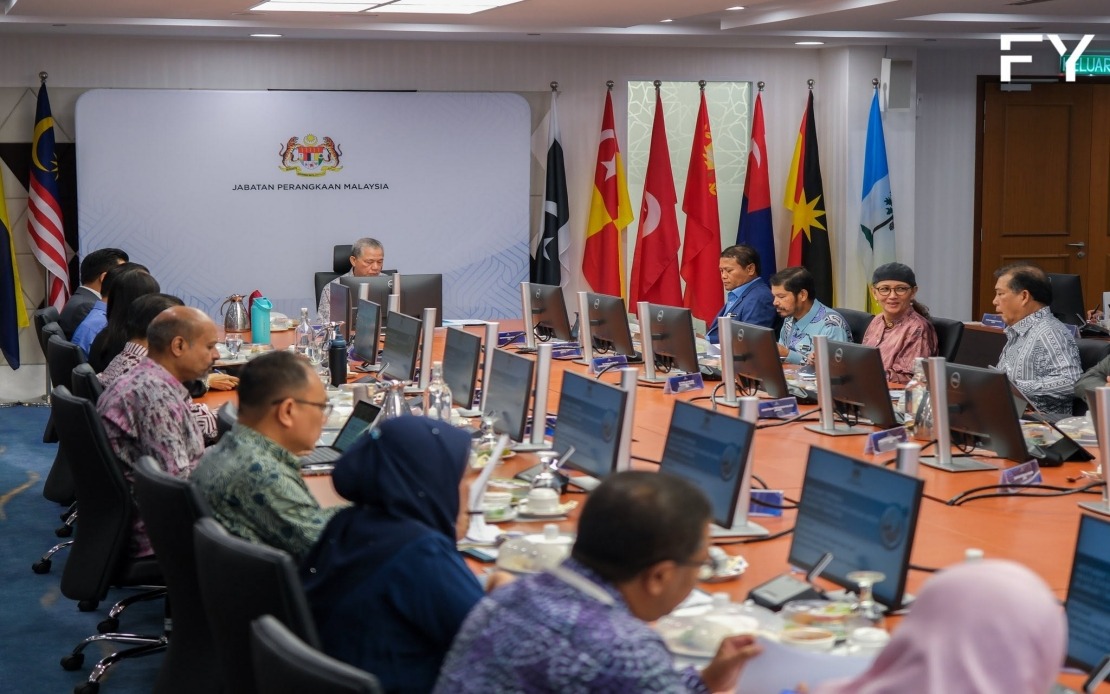
Malaysia's government is prioritising a comprehensive data and artificial intelligence strategy to underpin the 13th Malaysia Plan (13MP) 2026-2030, with Deputy Prime Minister Datuk Seri Fadillah Yusof stressing that robust information systems and technological capabilities will determine whether the plan achieves its development objectives. Speaking after chairing a meeting of the National Statistics and Data Council (MSDN), Fadillah framed data and official statistics as strategic national assets rather than mere informational resources, positioning them as essential infrastructure for effective governance and public service delivery in an increasingly complex global environment.
The urgency of this pivot reflects Malaysia's recognition that contemporary policymaking cannot succeed without solid empirical foundations. Economic uncertainties stemming from international market volatility, geopolitical tensions affecting regional trade, the accelerating pace of digital transformation, and the mounting pressures of climate change all demand sophisticated analytical capacity. Fadillah's emphasis on data integrity and timeliness suggests the government understands that poor-quality information or delayed statistics can lead to misaligned policies with costly consequences for development outcomes. The 13MP framework itself depends on evidence-based planning, implementation monitoring, and rigorous evaluation to demonstrate genuine impact on ordinary Malaysians rather than merely fulfilling targets on paper.
Currently, Malaysia's macroeconomic indicators provide some encouragement for the data-driven approach. The nation recorded gross domestic product expansion of 5.4 per cent in the first quarter of 2026, a performance the government attributes to policies formulated using robust statistical evidence. This real-world success story strengthens the case for institutional investment in the National Statistical System (NSS), demonstrating that methodical information gathering and analysis can translate into tangible economic results. However, maintaining and extending such performance requires continuous refinement of data collection methods, analytical techniques, and technological infrastructure rather than relying on past successes.
The Strengthening of the National Statistical System (SNSS) initiative outlined by Fadillah represents a multi-stakeholder approach that acknowledges no single institution can monopolise data competence. Strategic collaboration among federal ministries, state governments, the private sector, academic institutions, and research bodies creates a distributed ecosystem where information flows across traditional bureaucratic silos. This architectural approach addresses a perennial weakness in developing nations where statistical capacity remains fragmented, with different agencies operating incompatible systems that prevent comprehensive analysis. By fostering integration among these diverse entities, Malaysia aims to construct a coherent national information infrastructure capable of supporting complex, cross-cutting policy challenges.
The emphasis on data integration and secure handling reflects contemporary global anxieties about data governance in the artificial intelligence age. Fadillah explicitly highlighted the importance of combining information from multiple sources while maintaining security and ethical standards, acknowledging the tension between data accessibility and privacy protection. For Malaysian citizens and businesses, this commitment signals awareness that data-driven governance cannot proceed through invasive surveillance or unethical exploitation of personal information. The government must navigate between enabling AI systems that require substantial datasets and protecting individual rights—a balance that rigorous data governance frameworks attempt to strike. How effectively Malaysia implements these safeguards will influence public confidence in AI-enabled government services.
Particular strategic sectors identified by Fadillah as requiring comprehensive data support indicate where the 13MP will concentrate effort and resources. Energy transition, a critical component of Malaysia's climate commitments and economic diversification, depends on granular data about energy consumption patterns, renewable resource availability, infrastructure capabilities, and market dynamics. The water sector similarly demands detailed hydrological, consumption, and quality data to manage this scarce resource efficiently. Climate change adaptation and mitigation require long-term environmental datasets unavailable from conventional statistical surveys. Sustainable development across social, economic, and environmental dimensions cannot be properly assessed without coordinated information collection. These sectors represent precisely where artificial intelligence and advanced analytics can add substantive value beyond traditional statistical reporting.
The development of integrated databases and enhanced big data analytics capabilities addresses Malaysia's need to move beyond siloed departmental databases toward unified systems serving multiple policy purposes simultaneously. Administrative data collected for routine governance functions—tax records, welfare payments, health services utilisation—contains immense analytical potential when properly anonymised and integrated. Rather than treating information gathered for one purpose as inaccessible to other policy domains, modern data systems allow researchers and policymakers to identify patterns, gaps, and opportunities across interconnected areas of governance. This integration requires substantial technical investment and careful institutional redesign to overcome departmental resistance and ensure appropriate access controls, but the analytical returns justify the effort.
The science, technology and innovation talent database initiative reflects recognition that Malaysia's competitiveness depends on developing, attracting, and retaining highly skilled personnel in emerging fields. Without systematic information about talent distribution, skill gaps, training pipeline capacity, and labour market demands, workforce development efforts operate on guesswork. Similarly, the youth development data focus acknowledges that younger Malaysians face distinct challenges and opportunities requiring targeted understanding rather than generalised policy approaches. These targeted databases demonstrate how data infrastructure supports not merely macroeconomic management but granular attention to demographic groups whose prospects shape national social stability and future competitiveness.
Managing national road asset data represents a more prosaic but equally important dimension of strategic data management. Transportation infrastructure underpins economic activity, and comprehensive information about road conditions, usage patterns, maintenance requirements, and capacity utilisation enables efficient investment allocation. Artificial intelligence applied to this data can optimise maintenance scheduling, predict infrastructure failures before they occur, and improve traffic flow management. For ordinary Malaysians, better-maintained roads and smoother traffic represent tangible improvements in daily life quality, demonstrating how data-driven governance produces practical benefits beyond abstract policy targets.
The standardisation of official statistical standards mentioned by Fadillah addresses a technical but fundamental challenge in comparative analysis and policy evaluation. Without consistent definitions, measurement methodologies, and data quality standards applied across agencies and time periods, statistics become difficult to interpret and compare. Standardisation enables meaningful trend analysis, benchmarking across states and sectors, and verification that policy interventions produce intended results. This technical groundwork often receives insufficient political attention despite its importance for genuine accountability and evidence-based governance.
Fadillah's positioning of data governance as integral to government resilience in uncertain times reflects a shift in how developing nations conceptualise strategic advantage. Rather than viewing statistical systems as administrative overhead or luxury afforded only by wealthy countries, Malaysia increasingly recognises information capacity as foundational infrastructure equivalent to physical infrastructure like roads and electricity networks. Weak information systems leave governments unable to detect emerging problems, respond to crises, or adapt policies to changing circumstances. The 13MP's success depends on this informational foundation as much as on budgetary resources and political commitment, making investment in the National Statistical System simultaneously an investment in governance effectiveness and national resilience.
Implementing this ambitious data agenda requires sustained funding, technical expertise, and organisational changes that extend well beyond statistical agencies. Government ministries must develop data literacy among staff, establish protocols for secure information sharing, and integrate analytical insights into decision-making processes rather than treating data reports as optional appendices. The private sector and academic partners must see participation in the national data ecosystem as contributing to broader development goals rather than merely extracting commercial advantage. Citizens must trust that their information, necessarily gathered for policy purposes, is protected and used ethically. Building this ecosystem represents years of incremental institutional development rather than a transformation that can occur through ministerial directives alone, yet Fadillah's emphasis indicates the government recognises both the necessity and the challenge.

