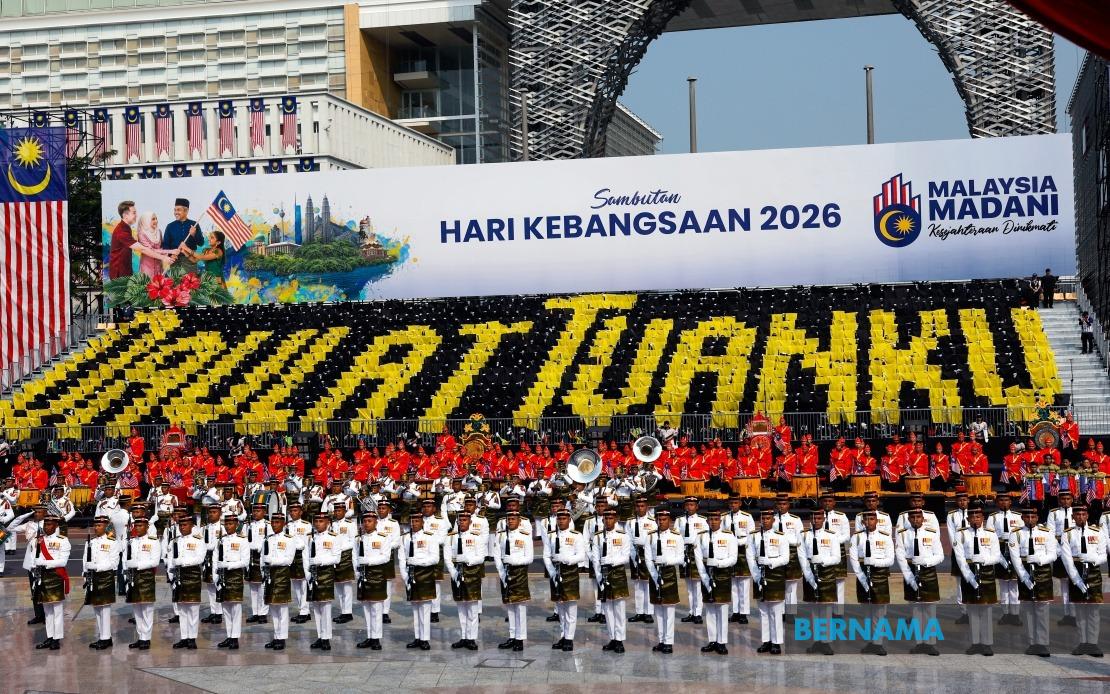
Dataran Putrajaya will transform into a showcase of Malaysian pride tomorrow as the nation prepares for its 69th National Day celebration, with organisers orchestrating an elaborate event designed to stir patriotic sentiment across thousands of attendees. The ceremonial gathering, commencing at 8:00 am, will welcome His Majesty Sultan Ibrahim, King of Malaysia, and Her Majesty Raja Zarith Sofiah, Queen of Malaysia, alongside Prime Minister Datuk Seri Anwar Ibrahim and Cabinet members. The scale of the undertaking reflects the significance accorded to the occasion, with comprehensive planning to manage logistics spanning the entire administrative capital.
This year's celebration adopts the theme "Malaysia MADANI: Kesejahteraan Dinikmati", positioning shared prosperity and collective wellbeing as central to the nation's independence narrative. The thematic direction signals a departure from purely ceremonial observance towards emphasising tangible benefits and inclusive development that resonate with ordinary Malaysians. By framing National Day around the MADANI concept—which has become the government's overarching policy framework—organisers attempt to connect constitutional celebration with contemporary governance priorities, creating cohesion between historical reflection and present-day policy direction.
The parade mechanics are staggering in scope. Approximately 10,819 participants will march across 76 separate contingents, supported by 22 marching bands that will provide rhythmic accompaniment throughout the proceedings. The display will incorporate 11 specially designed float vehicles, 328 land, naval, and air assets drawn from Malaysia's defence establishment, 112 working animals contributing to the pageantry, and notably, 22 electric vehicles reflecting the nation's environmental commitments. This fusion of traditional ceremonial elements with contemporary sustainability messaging illustrates how modern national celebrations attempt to balance heritage with forward-looking initiatives relevant to younger audiences.
The opening sequence features "Gema Inovasi MADANI", a performance orchestrated by the National Department for Culture and Arts under the Ministry of Tourism, Arts and Culture. This artistic presentation merges traditional percussion heritage with contemporary innovation, deploying 150 musical instruments and 700 traditional and modern kompang (frame drums) representing Malaysia's primary ethnic communities. The symbolic deployment of diverse percussion traditions serves multiple functions simultaneously—demonstrating cultural pluralism, emphasising harmony among different groups, and positioning Malaysia's multicultural identity as foundational to national wellbeing. For Southeast Asian observers, such inclusive representation carries particular significance in a region grappling with identity politics and communal tensions.
Structurally, the parade unfolds through distinct thematic components addressing statehood, wellbeing, public order, and national security. The statehood segment includes a prominent Jalur Gemilang-bearing contingent accompanied by military cadets from the National Resilience Leadership Academy and National Defence University of Malaysia, alongside participants from the National Service Training Programme. This sequencing prioritises symbols of state continuity and youth leadership preparation, messaging that the nation's institutional infrastructure and emerging generation remain central to independence commemorations. The inclusion of uniformed services and youth organisations reinforces state authority and social order narratives integral to official National Day discourse.
The sports wellbeing component will showcase national athletes and medallists from the Glasgow 2026 Commonwealth Games, leveraging sporting achievement as metaphor for national excellence. This approach reflects broader global trends wherein sports figures increasingly serve as patriotic symbols, their international successes translated into national prestige. For Malaysian audiences, the explicit connection between athletic performance and national identity carries particular resonance given Malaysia's regional sporting profile and aspirations for international recognition. The strategic positioning of athletes within the national narrative effectively mobilises their symbolic capital in service of broader patriotic messaging.
Public sector and private sector participation creates a hybrid representation of national capability. Service providers and commercial entities including Munchy's Malaysia, ZUS Coffee, and various industry associations march alongside government agencies such as the Malaysia Civil Defence Force, Road Transport Department, and Malaysian Fire and Rescue Department. This public-private integration suggests that national wellbeing emerges through coordinated effort across institutional boundaries, a messaging strategy that validates both state apparatus and market-driven economic activity. For Malaysian business observers, such visibility in national celebration ceremonies provides corporate brands with patriotic association and legitimacy, while signalling government comfort with private sector prominence in public affairs.
The Johor Military Force participates as Malaysia's oldest military unit, embodying institutional continuity and regional military heritage. Tourism promotion floats will display state icons, flora, fauna, regional traditional attire, and musical instruments from Malaysia's diverse communities, positioning the nation as a cohesive collection of distinct but harmonious regional identities. Strategic participation by Malaysia Airlines, AirAsia, Batik Air, and Air Borneo extends the aviation sector's visibility, while Les' Copaque's deployment of animated characters Upin and Ipin targets younger demographics and families, recognising that contemporary national celebrations require multi-generational engagement through varied cultural forms.
A human graphics performance involving 1,500 students from 36 Selangor schools will execute synchronised formations and visual configurations responding to musical accompaniment. This labour-intensive choreography demonstrates the investments required to produce contemporary ceremonial spectacle while simultaneously mobilising youth participation in state-sanctioned patriotic expression. The scale of student involvement raises questions about voluntary participation frameworks and educational institutions' roles in facilitating attendance at government-organised celebrations, patterns not uncommon across the region but worthy of critical attention regarding institutional autonomy and student agency.
The celebration culminates with a Royal Malaysian Air Force fighter jet display, a climactic demonstration of military capability that has become standard across National Day observances. Such aerial performances invoke national defence prowess while providing dramatic visual spectacle, though environmental and safety considerations surrounding military aviation increasingly prompt regional discussion regarding resource allocation and ceremonial justifications for military asset deployment. The final musical note comes via "Aku Berjanji", the National and Malaysia Day 2026 theme song composed and performed by Faizal Tahir, concluding the approximately two-hour event at 10:00 am with a contemporary musical benediction.
Practical health considerations have prompted authorities to advise attendance wearing N95 face masks given persistent regional haze conditions, with organisers distributing masks to over 10,000 parade participants. This public health integration reflects how environmental challenges increasingly intersect with ceremonial planning, requiring adaptation of traditional practices to accommodate air quality realities affecting Southeast Asian cities throughout the dry season. The Ministry of Home Affairs has advised comprehensive public transport utilisation given full closure of Putrajaya's Core Island area from August 30 at 5:00 am through August 31 at 6:00 pm, encompassing five major bridges and surrounding routes. Such infrastructure disruptions, while manageable at administrative capitals, illustrate the resource intensiveness of large-scale ceremonial gatherings and the coordination demands they impose on urban management systems across the region.

