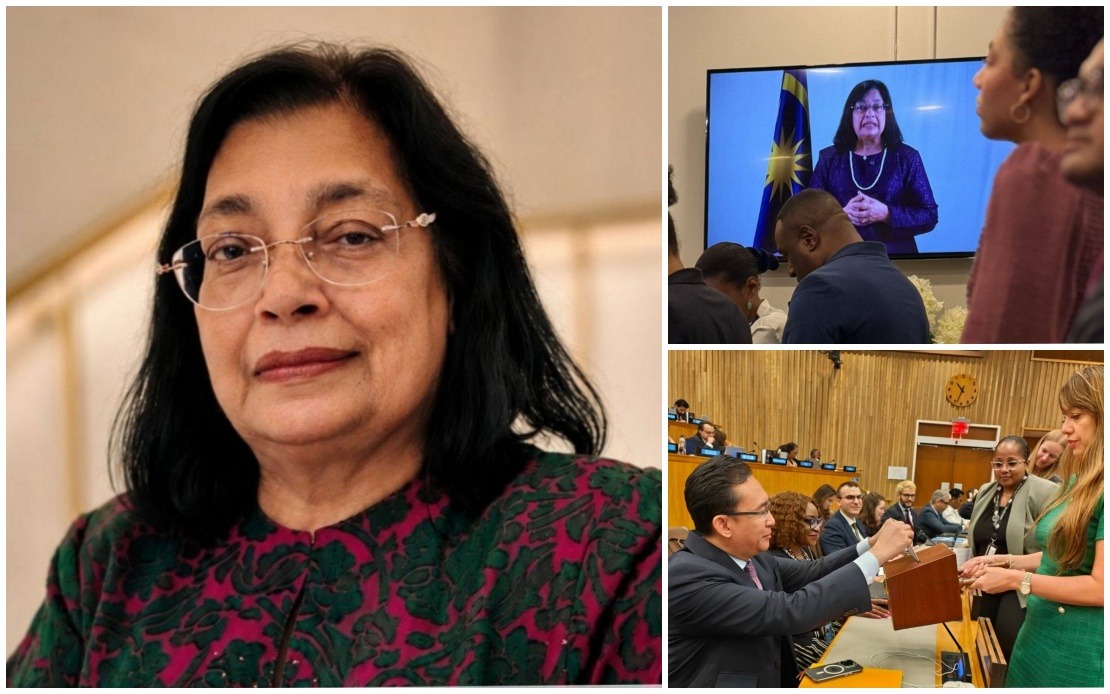
Malaysia has secured significant international recognition in the field of child welfare advocacy following the election of Datuk Yasmeen Muhamad Shariff to the United Nations Committee on the Rights of the Child for the 2027–2031 term. The vote took place on Tuesday at UN Headquarters in New York during the 21st Meeting of States Parties to the Convention on the Rights of the Child, with Yasmeen receiving 136 votes from the 189 States Parties present and voting—a commanding majority that reflected her standing among the international community.
The Foreign Ministry's announcement of this achievement underscores the significance of the appointment for Malaysia's international standing and its demonstrated commitment to advancing children's protections globally. Yasmeen's election represents more than a routine diplomatic appointment; it signals that her peers across the world view her as a trusted custodian of child welfare standards and principles. The fact that she garnered the highest number of votes in the election demonstrates the breadth of international confidence placed in her individual expertise and professional conduct.
This appointment carries particular weight given that Yasmeen has already served on the committee during the 2013–2017 term, making her re-election a testament to her effectiveness and the respect she has earned through her previous work. The decision by States Parties to return her to the committee suggests that her contributions during her first stint were sufficiently valued to justify a second five-year mandate. In global governance bodies, such continuity is rare and typically reserved for individuals whose prior performance has been exemplary.
As a committee member, Yasmeen will function in her personal capacity as an independent expert, a distinction that emphasizes her individual qualifications rather than representing Malaysia's government interests directly. Her responsibilities will encompass monitoring how countries implement the Convention on the Rights of the Child, engaging in constructive dialogue with States Parties to address implementation gaps, and promoting a rights-based approach to global challenges affecting children. This role carries substantial responsibility for shaping international discourse on child protection and development.
The significance of this appointment extends beyond the individual honor to reflect Malaysia's broader positioning on the international stage regarding human rights and child welfare. The Foreign Ministry characterized the election result as evidence of international confidence in Malaysia's expertise and dedication to advancing children's rights and wellbeing. This framing positions the country as a responsible actor in global governance rather than merely a participant, suggesting that Malaysia's voice carries weight in international discussions about child protection standards.
Malaysia's commitment to children's rights operates through multiple channels, including inclusive policy frameworks, legal reforms, and targeted programs designed to enable every child to achieve their full potential. The Foreign Ministry's emphasis on these efforts in response to Yasmeen's election indicates that the government views her appointment as validation of its domestic agenda in this area. By linking her international role to Malaysia's internal initiatives, the ministry sought to demonstrate coherence between national policy and global engagement.
The Foreign Ministry also highlighted the ministry's role in securing this outcome, particularly emphasizing the cooperation and support provided by the Ministry of Women, Family and Community Development. This interagency acknowledgment reflects how Malaysia's government structures its approach to international commitments related to social development and human rights. The prominence given to the women and family ministry in the statement suggests that child welfare advocacy is integrated into broader social policy rather than treated as an isolated concern.
The committee's work occurs against a backdrop of increasingly intricate global challenges affecting children, ranging from climate change and digital safety to armed conflict and economic inequality. The Foreign Ministry's observation that the committee's role remains crucial in safeguarding children's rights, dignity, and future speaks to the evolving nature of child protection concerns in the contemporary world. Yasmeen's appointment positions her at the intersection of these complex issues, requiring expertise that adapts to emerging threats to child welfare.
For Malaysia specifically, the appointment reinforces the country's reputation as a constructive participant in multilateral institutions focused on human rights and social development. In a region where government accountability on human rights issues frequently comes under scrutiny, Malaysia's success in securing a respected position for one of its citizens on a UN committee focused on rights protection can serve as a platform for demonstrating commitment to international standards. The appointment also provides Malaysia with a channel for influencing discussions about child rights implementation across diverse national contexts.
Yasmeen's election also carries implications for Southeast Asia more broadly, as it represents the region securing representation on a key UN governance body. The committee's composition influences how child protection standards are interpreted and promoted globally, and having representation from this region ensures that Asian perspectives and experiences inform the committee's work. This geographic representation matters because child welfare concerns and implementation challenges differ significantly across regions, and committees without adequate regional diversity risk producing recommendations that do not account for local contexts.
Looking forward, Yasmeen's five-year term from 2027 to 2031 will likely focus on addressing emerging challenges in children's rights, including questions about digital safety, climate change impacts on youth, and pandemic-related disruptions to education and development. Her experience from her previous committee tenure, combined with her expertise, positions her to contribute meaningfully to discussions about how international standards should evolve to address these contemporary concerns. Her appointment suggests that Malaysia is committed to active participation in shaping the future of global child welfare policy rather than remaining a passive observer in these discussions.

