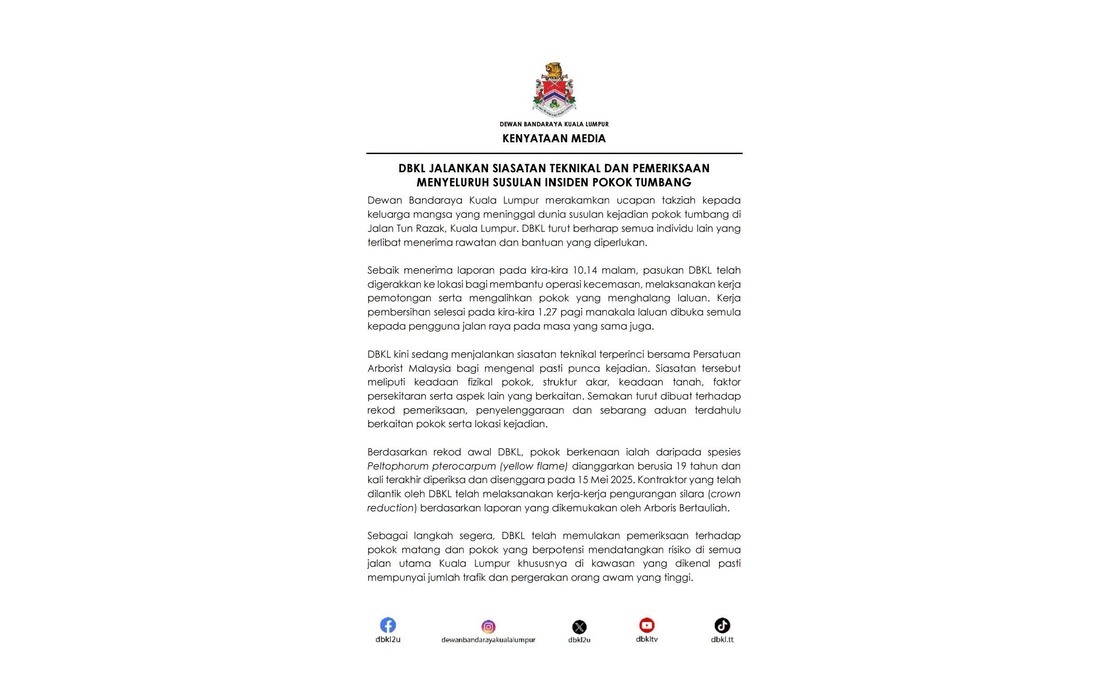
A tragic incident on Jalan Tun Razak in Kuala Lumpur has prompted Kuala Lumpur City Hall (DBKL) to launch a comprehensive investigation into the circumstances surrounding a fatal tree fall that claimed a life. The 19-year-old Peltophorum pterocarpum tree, commonly known as the Yellow Flame variety, toppled late on the evening of July 18, with emergency responders reaching the scene at 10.14 pm. The collaborative examination, conducted jointly between DBKL and the Malaysian Society of Arborist, represents a methodical effort to understand the multiple factors that may have contributed to the structural failure of the tree.
The investigation encompasses far more than a simple visual assessment of the fallen timber. Technical experts are examining the tree's overall physical condition, scrutinising the integrity of its root system, evaluating the composition and stability of the surrounding soil, and analysing environmental variables that could have stressed the specimen. Beyond immediate observations, investigators are pulling historical records to review every inspection carried out on the tree, maintenance work performed, and any previous complaints lodged by members of the public concerning the tree or its location. This multi-layered approach acknowledges that tree failures rarely stem from a single cause but rather result from the convergence of various structural and environmental pressures over time.
DBKL has extended formal condolences to the victim's family while pledging full cooperation with police and other relevant government agencies as the investigation unfolds. The city authority emphasised its commitment to providing necessary support and treatment to those affected by the incident. From a governance perspective, this response signals that DBKL recognises both the emotional weight of the tragedy and the broader public safety implications that ripple through the capital's urban landscape.
The tree in question had last undergone formal inspection and maintenance on May 15, just two months before its collapse. According to DBKL's statement, the appointed contractor had previously executed crown reduction works—a pruning technique intended to reduce the overall canopy weight and wind resistance—on the basis of a certified arborist's assessment. This detail is significant because it suggests that professional horticultural management had been applied to the specimen, raising questions about whether the pruning was executed appropriately or whether factors beyond the scope of crown reduction work contributed to the eventual failure.
The immediate response to the incident demonstrates operational preparedness within the city authority. An emergency team mobilised swiftly upon receiving the report and worked to clear the obstruction and reopen the roadway, achieving full restoration of traffic flow by 1.27 am. However, the incident has galvanised DBKL into a broader preventive posture that extends well beyond addressing the single fallen tree on Jalan Tun Razak. Recognising the potential for similar incidents across the capital, the authority has launched emergency inspections of mature trees and specimens classified as carrying elevated risk factors along all major thoroughfares in Kuala Lumpur, with particular focus on corridors characterised by high traffic volumes and dense public foot traffic.
These initial inspections target trees along prominent routes including Jalan Ampang, Jalan Sultan Ismail, Jalan Raja Laut, and Jalan Datuk Keramat, alongside additional sections of Jalan Tun Razak itself. DBKL has allocated a ten-week window for completing this assessment phase, deploying eight teams to the task—five of which comprise certified arborists capable of rendering expert judgement on specimen health. This represents a significant mobilisation of municipal resources, underscoring the seriousness with which city management views the threat posed by unstable trees in high-density urban areas where human exposure is greatest.
Looking beyond the immediate inspection campaign, DBKL is pursuing a medium-term technological solution to mitigate future incidents. The authority is currently awaiting approval from SIRIM—Malaysia's national standards and quality body—to deploy approximately 400 specialised tree sensors across high-risk locations throughout Kuala Lumpur. These devices represent a shift toward predictive asset management rather than reactive intervention. The sensors are designed to monitor the real-time condition of trees and furnish early warning indicators of changes that could compromise structural stability. The parameters they track include soil conditions, moisture levels within the trunk and root systems, microscopic structural movement, and the trees' responses to adverse weather phenomena such as heavy rainfall and flooding events.
The phased installation programme will initially concentrate on four strategically selected locations: Jalan Bangsar, Dataran Merdeka, Jalan Ampang, and Jalan Raja Chulan. This staged approach allows DBKL to evaluate sensor performance, refine data interpretation protocols, and establish baseline measurements before rolling out the broader network. For Malaysian readers and municipal authorities nationwide, this initiative exemplifies how urban management can integrate modern technology to enhance public safety in densely populated environments where tree-related incidents pose genuine risks.
The tree collapse on Jalan Tun Razak reflects a challenge facing urban centres across Southeast Asia as cities grapple with the dual imperatives of preserving green infrastructure and ensuring public safety. Mature trees provide invaluable environmental and aesthetic benefits to urban residents, but they also accumulate structural vulnerabilities over decades. DBKL's multifaceted response—combining immediate investigation, extensive auditing of existing specimens, and the adoption of monitoring technology—demonstrates a recognition that effective urban forestry requires sustained vigilance and continuous investment in assessment capabilities.
For the broader Malaysian context, the incident and the resulting policy response carry implications for how other local authorities manage their tree assets. The emphasis on regular inspection, professional assessment, and preventive maintenance offers a template that might be adapted across the country's municipalities. Additionally, the planned deployment of sensor technology positions Kuala Lumpur as an early adopter of data-driven approaches to urban infrastructure management, a shift that could influence practices in other Malaysian cities facing similar challenges with aging tree populations in high-density zones.
The investigation by DBKL and the Malaysian Society of Arborist will ultimately provide valuable insights into whether the Jalan Tun Razak collapse resulted from disease, structural defect, inadequate maintenance, environmental stress, or some combination thereof. These findings will inform refinements to inspection protocols, maintenance schedules, and risk assessment methodologies across the city's tree management operations. Until the technical investigation concludes, the emergency inspections and sensor deployment represent prudent precautionary measures intended to identify and address potential hazards before they translate into further loss of life.

