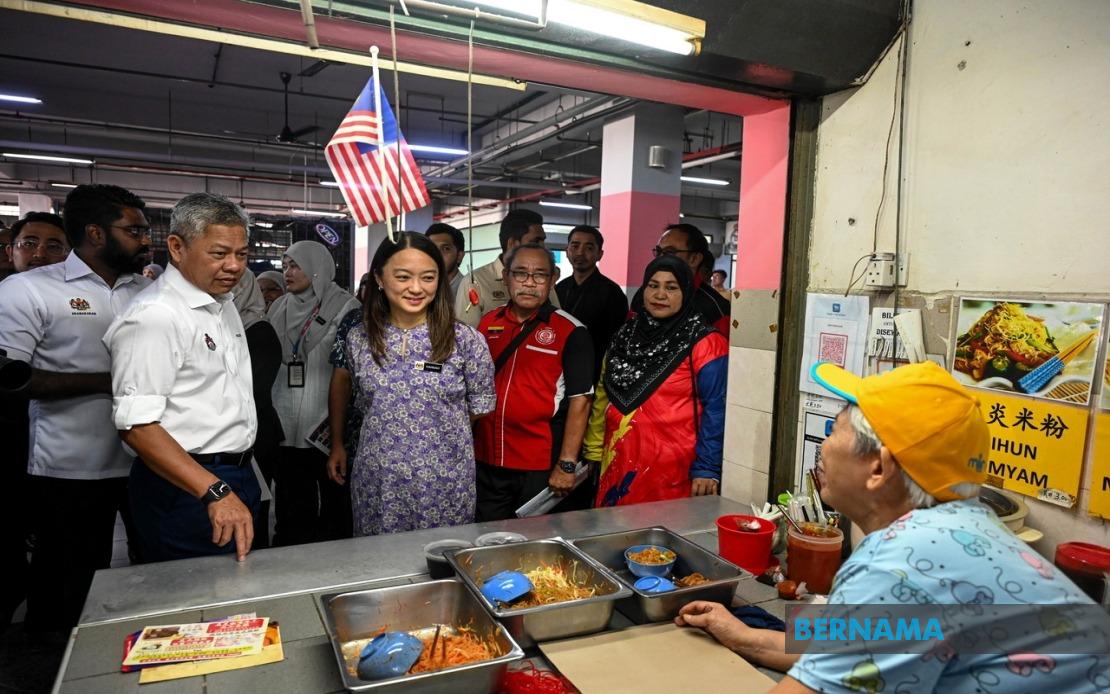
The Kuala Lumpur City Hall (DBKL) is committing RM200 million towards a comprehensive transformation of the city's hawker sector, targeting 287 trading sites across the capital as part of its ambitious Lestari Niaga @ Kuala Lumpur 2026 initiative. The large-scale modernisation effort will directly improve conditions for more than 11,000 small traders and hawkers, creating safer and more professionally organised operating environments that align with contemporary urban development standards.
Minister in the Prime Minister's Department (Federal Territories) Hannah Yeoh framed the initiative as evidence of the government's commitment to balancing the needs of multiple stakeholders when reshaping the informal economy. She emphasised that DBKL's approach to relocation and upgrading programmes incorporates feedback from residents concerned about traffic management, traders seeking better facilities, and building operators pursuing their own commercial interests. This multi-perspective methodology reflects the complexity of managing hawker areas in densely populated urban centres, where competing interests often create tension between modernisation goals and operational continuity.
The UTC Sentul project exemplifies the government's investment strategy. This RM1.6 million component will replace conventional structures with 20 modern modular kiosks, scheduled for completion within three months by early October. The project gained public attention recently, prompting DBKL to conduct stakeholder engagement sessions to address concerns and shape redevelopment plans according to feedback received. Rather than displacing traders, officials positioned the initiative as an enhancement of their operational capacity and work environment.
A notable feature of the programme is financial support for affected traders during construction periods. DBKL is introducing unprecedented monthly financial assistance of RM1,500 for the 20 active traders temporarily unable to operate at UTC Sentul. Kuala Lumpur Mayor Datuk Seri Fadlun Mak Ujud argued that direct cash assistance proves more efficient than establishing temporary trading sites, which typically involve higher operational costs and suboptimal locations that discourage customer traffic. This pragmatic approach reflects evolving thinking about trader welfare during urban renewal projects.
The UTC Sentul model will expand to multiple locations simultaneously, with identical financial incentives supporting traders through construction phases. Planned expansion sites include Jalan Dato Senu, Pudu Ulu, and Bandar Tun Razak, establishing a replicable framework for managing large-scale hawker sector transformation across the city. These coordinated projects represent a shift towards systematic, well-funded approaches to informal economy integration rather than ad-hoc or piecemeal interventions.
The broader Lestari Niaga programme encompasses diverse hawker categories under DBKL's jurisdiction, organised in staged implementation phases. The initial phase focuses on 224 locations representing various hawker setups. Within this framework, over 4,000 operate as street hawkers, approximately 5,000 conduct business from spaces classified as mayoral assets, and roughly 1,000 are categorised as reapplication cases—traders seeking formalised status within the municipal system. This comprehensive classification demonstrates the complexity of Malaysia's informal trading sector and the administrative challenge of formal integration.
For regional observers, DBKL's strategy offers insights into contemporary Southeast Asian urban management. Kuala Lumpur faces similar pressures as other regional capitals—balancing heritage food culture and informal livelihoods against modernisation imperatives and regulated urban spaces. The RM200 million allocation signals serious financial commitment rather than symbolic gestures, potentially setting precedents for how municipal authorities approach trader welfare during infrastructure transformation.
The Lestari Niaga initiative also carries implications for informal economy formalisation across Malaysia. By investing substantially in facility upgrades while providing temporary income support, DBKL addresses persistent concerns that modernisation primarily benefits landlords and authorities while marginalising working-class traders. This approach could influence how other Malaysian municipalities handle similar programmes, particularly in secondary cities experiencing rapid development.
However, the success of such programmes ultimately depends on implementation quality and trader adaptation. While purpose-built kiosks offer improved sanitation and safety, traders require operational support to succeed in modernised environments. Training programmes, business development services, and market analysis for relocated sites become crucial complements to physical infrastructure upgrades. Malaysian policymakers and urban planners increasingly recognise that facility improvement alone cannot sustain informal livelihoods without accompanying economic support mechanisms.
The initiative also reflects broader DBKL governance philosophy emphasising stakeholder consultation over top-down implementation. By conducting engagement sessions and incorporating resident and trader feedback, municipal authorities attempt to build legitimacy for urban renewal projects that historically generated resistance. This consultative model, though time-consuming and sometimes complicated by competing interests, may ultimately produce more resilient and community-accepted outcomes than authoritarian approaches.
The Lestari Niaga programme's emphasis on fairness to all involved parties—residents, traders, and building operators—acknowledges that successful urban centres depend on inclusive development. Hawker sectors contribute significantly to Kuala Lumpur's cultural identity and provide livelihoods for thousands; their systematic marginalisation would impoverish urban life. By investing RM200 million in modernisation while protecting trader incomes, DBKL attempts to achieve development that strengthens rather than diminishes the city's informal economy.
As implementation progresses across the 287 sites, monitoring trader outcomes—income levels, customer satisfaction, operational challenges—will prove essential. Early assessments from UTC Sentul and other initial locations will likely influence programme adjustments and provide valuable data for replication across Malaysia's municipalities. The initiative therefore represents not merely a Kuala Lumpur project but a potential model for how Malaysian cities can modernise their hawker sectors while maintaining socioeconomic inclusion and cultural vibrancy.

