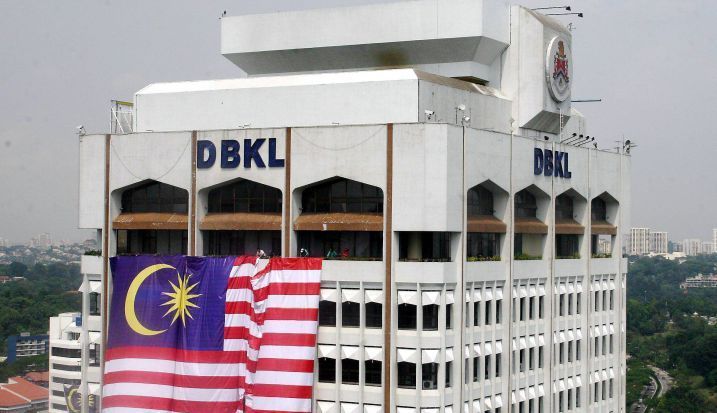
Kuala Lumpur City Hall (DBKL) has escalated its enforcement action against the Taman Desa Phase 1 Residents Association, imposing a two-week deadline for the removal of facial-recognition scanning equipment and boom gates that were installed on public thoroughfares without municipal authorisation. The move represents a significant turning point in a protracted dispute over gated-community access controls that has divided residents and raised questions about the limits of residents' associations in restricting public roads.
Enforcement officers from DBKL descended on the neighbourhood on Thursday, August 27, posting red notices on the facial-recognition scanners stationed at Guard Posts 1 and 4. The officials also secured the equipment with yellow DBKL enforcement tape to signal that the installations were subject to removal proceedings. The notices explicitly cited the structures' lack of approval from the Kuala Lumpur mayor and referenced Section 70 of the Street, Drainage and Building Act 1974, the legal foundation for DBKL's authority to regulate structures on public land.
According to a DBKL spokesperson, City Hall's legal department reviewed the matter before the enforcement action was taken. The two-week window, which commenced from the date of notice posting, provides the association with a defined opportunity to comply voluntarily. Should the residents' association fail to act, DBKL has signalled its intention to undertake removal itself, underscoring the municipality's determination to reassert control over public infrastructure. This measured approach—offering compliance opportunity before forced removal—reflects standard municipal enforcement practice but also indicates the seriousness with which DBKL views the situation.
The latest intervention culminates a long-standing friction over road closures and access-restriction mechanisms implemented by TDP1RA under what the association describes as a guarded-neighbourhood security scheme. On August 17, following an inspection, DBKL discovered that the association had not adequately addressed the city hall's requirements despite receiving an extension of 30 additional days to rectify the situation. The August 18 letter from DBKL specifically ordered complete reopening of Posts 2, 5, and 6 to vehicular traffic, mandated removal of unapproved structures, and demanded restoration of public road access in affected areas.
The regulatory breaches extend back further than the recent notices suggest. In a March 5 letter, DBKL had already flagged that the closed-circuit television cameras and facial-recognition system were installed without municipal consent. The existence of these earlier communications demonstrates that DBKL's current enforcement action follows repeated unsuccessful attempts to resolve the matter administratively, suggesting that voluntary compliance from TDP1RA has been inconsistent or insufficient.
The dispute has crystallised around Gate 5 on Jalan Desa Ria, where access restrictions have imposed practical consequences for residents. On August 24, over 40 residents—predominantly individuals aged 50 and older—staged a protest highlighting their grievances with the permanent vehicular closure and the restricted pedestrian access that remains locked until 6am. These early-hour restrictions have reportedly forced residents who walk regularly to navigate a longer, more hazardous route along a busy thoroughfare to reach a public park, raising questions about whether security measures inadvertently compromise public safety and accessibility.
Beyond the inconvenience of restricted access, residents have articulated broader concerns about the facial-recognition technology itself. Many view the scanning system as an unwarranted intrusion into personal privacy within what remains technically public space. Additionally, residents have raised a critical public-safety argument: the access-control barriers could potentially impede emergency vehicles—ambulances, fire trucks, and police units—during critical response situations, a consideration that transcends the security-versus-convenience calculus that typically dominates such debates.
The residents' association has defended its actions by asserting compliance with required procedures and citing resident support. TDP1RA president Frank Yeh has previously stated that the association obtained backing from 81 percent of residents in the area, implying substantial community consensus for the security measures. This assertion raises a fundamental question about governance: whether a supermajority within a residents' association possesses the legitimate authority to restrict access to roads that, under Malaysian municipal law, remain classified as public thoroughfares. Even with overwhelming resident support, the association cannot unilaterally override regulatory frameworks governing public land.
The Taman Desa situation exemplifies a tension increasingly visible across Malaysian residential communities, particularly in urban areas where safety concerns drive demand for restricted-access schemes. Residents' associations frequently operate with significant autonomy in managing estates and common areas, yet this autonomy has definable limits when it comes to public infrastructure. DBKL's enforcement action signals that municipal authorities will not defer to residents' associations when those organisations attempt to impose permanent restrictions on public roads, regardless of internal voting outcomes.
For property owners and residents in gated or semi-gated communities throughout the Klang Valley and other major Malaysian urban centres, this case carries practical implications. It clarifies that facial-recognition technology and physical barriers cannot simply be deployed on public roads without formal municipal approval, even when residents' associations believe such measures enhance community security. The precedent suggests that future attempts to implement similar systems will require genuine collaboration with local authorities rather than unilateral installation followed by after-the-fact regulatory engagement.
The two-week compliance window now becomes a critical juncture. Should TDP1RA capitulate and remove the equipment, the matter may be resolved, though residual tensions within the community seem likely to persist. Alternatively, if the association resists or delays compliance, DBKL's stated willingness to undertake forced removal will test whether the municipal authority can follow through on its enforcement threat. Either outcome will influence how residents' associations nationwide approach access-control initiatives and their relationship with municipal regulatory frameworks.
This episode also underscores the broader governance challenge facing Malaysian local authorities: balancing residents' legitimate safety aspirations against the public nature of municipal infrastructure and citizens' rights to unimpeded movement through their neighbourhoods. While gated communities provide genuine security benefits, the case illustrates why those benefits cannot be purchased at the expense of restricting public roads or deploying surveillance technology without transparent regulatory approval. The resolution of the Taman Desa dispute will likely influence how municipalities and residents' associations negotiate similar conflicts in coming years.

