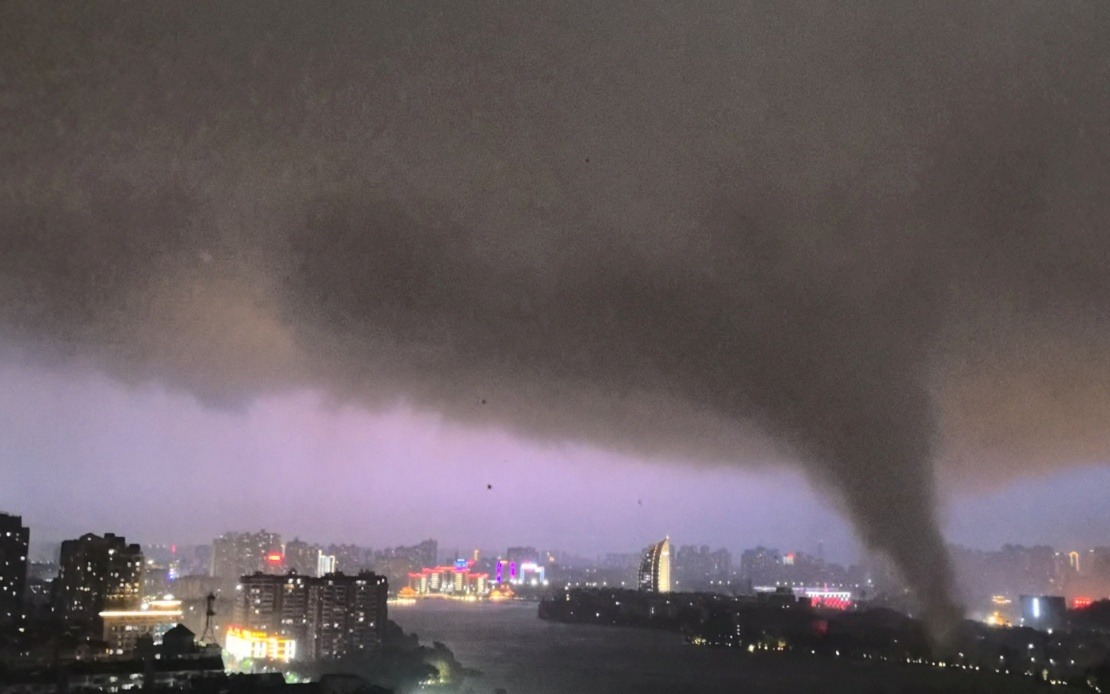
A devastating bout of severe convective weather struck the eastern portions of Hubei Province in central China on Monday night, leaving a trail of destruction across multiple urban centres. According to provincial authorities cited by Xinhua, the incident has claimed 11 lives, with one person still unaccounted for as rescue operations continue. The thunderstorms and powerful gales descended on the region between 7 pm and 11 pm, affecting the cities of Huangshi, Huanggang, Ezhou, and Xianning with particular ferocity.
The intensity of the weather event was underscored by wind speeds that reached level 13 in at least two townships, indicative of typhoon-force gusts capable of causing severe structural damage. Local authorities confirmed that certain areas experienced tornadoes in addition to the thunderstorms and gales, compounding the danger faced by residents and elevating the complexity of emergency response operations. The combination of high winds, torrential rainfall, and rotating vortices created a perfect storm scenario that left communities scrambling to seek shelter and safety.
The physical toll on the built environment proved substantial. Preliminary damage assessments indicate that 22 buildings were completely demolished by the extreme winds, while another 4,855 structures sustained varying degrees of damage ranging from minor roof damage to partial structural compromise. This scale of building damage suggests the storms affected both urban and rural areas across a broad geographic footprint, with many communities grappling with homelessness and displacement in the immediate aftermath.
Beyond the fatal casualties, the storms injured a significant number of residents. Official counts place the injured at 331 people, many of whom required medical attention for trauma ranging from minor injuries to more serious wounds inflicted by flying debris and structural collapse. Hospitals in the affected cities were overwhelmed with patients, straining local healthcare capacity during a critical period when resources were already stretched by rescue and recovery operations.
The scope of destruction reflects a broader pattern of extreme weather events becoming increasingly common across central China during the summer monsoon season. Hubei Province, situated along the Yangtze River and exposed to moisture-laden air masses from the Pacific, has historically been vulnerable to severe convective storms. However, the frequency and intensity of such events have raised concerns among meteorologists and climate scientists about changing atmospheric conditions in the region.
Provincial authorities moved swiftly to mobilize comprehensive rescue and relief operations across all affected cities. Emergency responders including firefighters, police, and military personnel were deployed to search through collapsed buildings, locate missing persons, and provide immediate assistance to trapped or injured residents. The focus on rapid response reflected lessons learned from previous disaster situations in China, where the critical window for finding survivors beneath rubble typically closes within the first 48 to 72 hours.
Beyond immediate rescue efforts, provincial officials prioritized preventing secondary disasters that often emerge in the aftermath of natural calamities. These downstream hazards can include disease outbreaks related to contaminated water supplies, structural collapses of already-weakened buildings, gas leaks, and electrical hazards from downed power lines. Authorities established temporary shelters, distributed emergency supplies, and implemented public health monitoring to mitigate these compounding risks.
The incident carries implications for broader regional disaster preparedness frameworks across Southeast Asia and East Asia. As extreme weather events intensify with climate change, neighbouring nations including Malaysia, Thailand, and Vietnam face similar vulnerabilities to sudden-onset meteorological hazards. The response mechanisms employed by Hubei authorities, including rapid mobilization of provincial resources and inter-city coordination, offer valuable lessons for emergency management protocols in the region.
Infrastructure resilience has emerged as a critical policy concern following the storms. Many of the damaged structures in Hubei were older buildings or informal settlements vulnerable to high winds. The disaster underscores the importance of building code enforcement, structural retrofitting programmes, and urban planning strategies that account for extreme weather scenarios. Chinese authorities have pledged to review construction standards in affected areas to reduce future vulnerability.
Recovery and reconstruction will likely extend for weeks or months depending on the severity of damage in individual communities. Beyond immediate physical reconstruction, authorities must address the psychological trauma experienced by survivors, particularly children who witnessed the violence of the storms. Mental health support services and community counselling programmes have been deployed to address these non-physical dimensions of disaster recovery.
The incident also highlights the unpredictable nature of severe convective systems that can develop and intensify rapidly with minimal warning. While meteorological forecasting has improved significantly, the local intensity and precise track of such systems remain difficult to predict with high confidence. This underscores the continued importance of public education on storm safety protocols and maintaining robust early warning systems that alert residents to imminent hazards.

