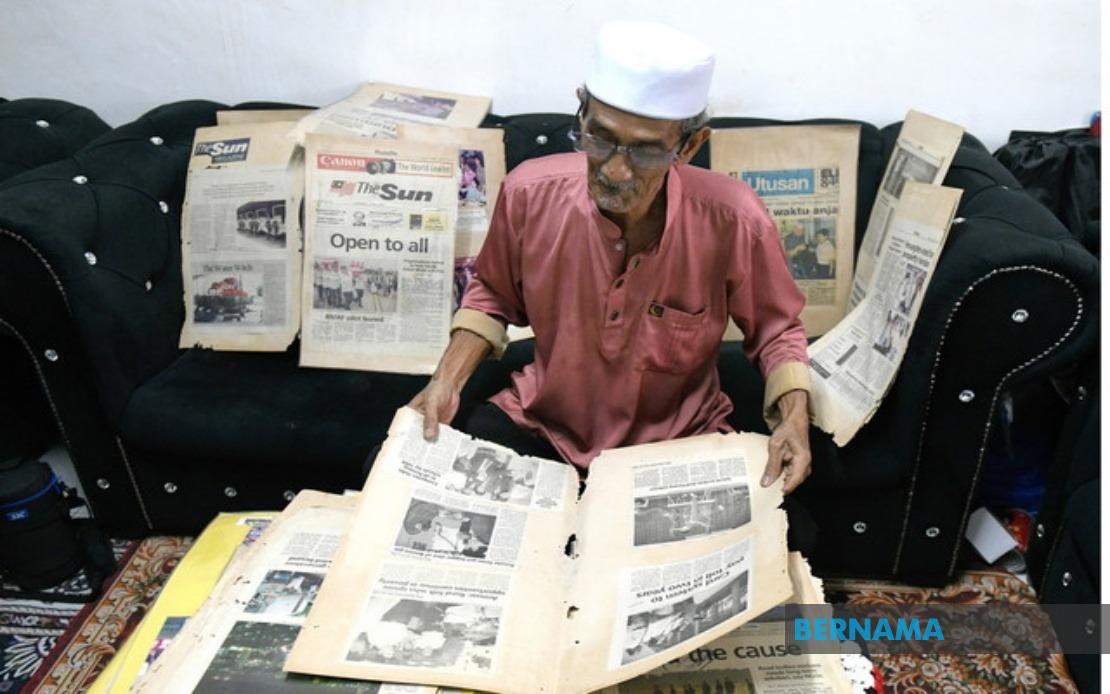
Azmi Sapiei has endured physical assaults and countless professional challenges throughout his more than three decades working as a photographer and cameraman in Malaysia's media landscape. The 64-year-old recalls being kicked and spat upon by a suspect while on assignment around 2001, an incident that remains vivid in his memory despite the passage of time. Such encounters, he acknowledges, form part of the price journalists and visual media professionals pay when documenting events that matter to the public, particularly during sensitive court proceedings and law enforcement operations.
The veteran's career trajectory reflects the dramatic transformation of Malaysia's media industry over the past four decades. Beginning in the mid-1980s with factory work before transitioning to freelance photography, Sapiei eventually joined Bernama in 1993, where he remained for nearly three years. During this formative period at the national news agency, he developed the technical skills and editorial discipline that would define his subsequent work across multiple media platforms, including The Sun newspaper, Bernama TV, and ultimately RTM Penang, where he worked part-time until retiring in mid-2020.
Among his most significant professional achievements was securing exclusive photographs of Shamsiah Fakeh's return from China in July 1994. The former Malayan Communist Party member was arriving at her nephew's residence in Gombak, and only Sapiei and his accompanying journalist managed to gain access by arriving ahead of the area's closure to media. This early-career coup demonstrated the resourcefulness required to break important stories, a lesson that shaped his approach to news gathering throughout his career. The incident also revealed the exacting standards of editorial judgment in his era—his editor initially dismissed three rolls of film as excessive, yet upon development, every major newspaper in Malaysia ran his photographs the following day.
Working during the analogue era presented fundamentally different challenges compared to contemporary digital journalism. Every photograph required film, developing facilities, and careful caption writing before editors could evaluate its news value. Sapiei had no instant digital preview or immediate feedback; instead, hours might pass before his work could be assessed. This uncertainty demanded both technical proficiency and editorial intuition—photographers had to anticipate what images would matter, knowing they could not verify their shots until much later. The discipline imposed by these constraints shaped a generation of visual journalists who learned to think critically about composition, timing, and narrative value before pressing the shutter.
The transition from newspaper photography to television work introduced physical demands that extended beyond technical skill. When Sapiei joined Bernama TV as a cameraman, the equipment standard was the Betacam camera, affectionately derided as "junk iron" by those who carried it. Weighing approximately 12 kilogrammes, the camera had to be hoisted onto the shoulder for extended periods during coverage of events across Penang. The cumulative physical toll of carrying such weight, combined with the mental concentration required to maintain steady shots and frame moving subjects, separated professional broadcasters from casual enthusiasts. This experience equipped him with the resilience necessary for field work that extended far beyond sitting at a desk.
Sapiei's career intersected with pivotal moments in Malaysian history and current affairs. His work at Bernama exposed him to significant national events that shaped public understanding of governance, politics, and social issues. The agency functioned as what he describes as a "school" for photographers—an institution that imposed standards not merely for technical accuracy but for genuine news value and editorial integrity. These values, instilled during his tenure, remained central to his professional identity even as he moved to different organizations and confronted the particular pressures of working in an increasingly competitive media environment.
The recognition of his contributions came through the 2006 Penang State Media Award in the visual electronic media category, validating decades of commitment to his craft. However, Sapiei's most significant legacy may lie not in awards but in the example he set for the next generation. His second son, Muhammad Syafiq, now 30 years old, works as a cameraman with Media Prima Television Network, having inherited his father's passion for visual storytelling. The younger Sapiei's interest in cameras crystallized during childhood, watching his father bring broadcasting equipment home, and developed through hands-on experience on assignment locations after completing his Sijil Pelajaran Malaysia in 2016.
The mentorship relationship between father and son illustrates how technical knowledge and professional values transmit through generations in journalism. Muhammad Syafiq credits his father not merely as a parent but as a comprehensive mentor who imparted filming techniques, visual composition principles, and work discipline. In Malaysian media, where family involvement in journalism remains common, such intergenerational knowledge transfer helps preserve institutional memory and professional standards even as technological change accelerates. The younger generation benefits from understanding not just contemporary tools but the foundational principles that made their predecessors effective.
Sapiei's career narrative carries particular relevance for Malaysian readers contemplating media careers or seeking to understand how journalism has evolved. The profession he entered in the 1980s required different skills than those demanded today, yet certain fundamentals remained constant—the capacity to remain calm under pressure, the judgment to recognize newsworthy moments, and the discipline to produce accurate work despite challenging circumstances. His experience being assaulted while on duty underscores the physical risks that journalists encounter, a reality that distinguishes their profession from many other occupations and deserves greater public recognition.
The transition from analogue to digital journalism that occurred during Sapiei's later career years represents one of the most significant technological shifts in media history. Photographers and cameramen who trained in the film era had to adapt rapidly to digital workflows, instant feedback systems, and the expectation of immediate delivery. Sapiei navigated this transformation while maintaining the editorial principles learned in an earlier era, demonstrating the flexibility required of professionals working through major industry disruption. His retirement in mid-2020 coincided with the COVID-19 pandemic, which itself triggered another seismic shift in how Malaysian media operated, including increased reliance on remote work and digital distribution.
The broader context of Sapiei's career illuminates how Malaysian journalism has professionalized and become increasingly technically sophisticated. From the exclusive access that was possible in 1994 to the saturated media environment of the 2010s, the role of photographers and cameramen has fundamentally changed. Competition for exclusive stories has intensified, digital platforms have democratized image distribution, and the economic pressures on traditional media have altered career trajectories and compensation structures. Yet the core mission remains unchanged—capturing moments of genuine significance and presenting them to the public with accuracy and editorial integrity.
For aspiring journalists in Malaysia and Southeast Asia, Sapiei's experience offers crucial lessons about resilience, continuous learning, and professional ethics. His willingness to discuss not only his achievements but also his humiliations—being physically attacked while doing his job, having his work initially rejected—demonstrates the emotional as well as physical demands of the profession. The fact that he persisted despite these challenges, earning recognition and successfully passing his values to his son, suggests that journalism remains a calling for those genuinely committed to documenting their society. As Malaysian media continues evolving amid digital transformation and shifting news consumption patterns, the foundational principles that guided Sapiei's career—accuracy, news judgment, and professional discipline—retain their fundamental importance.

