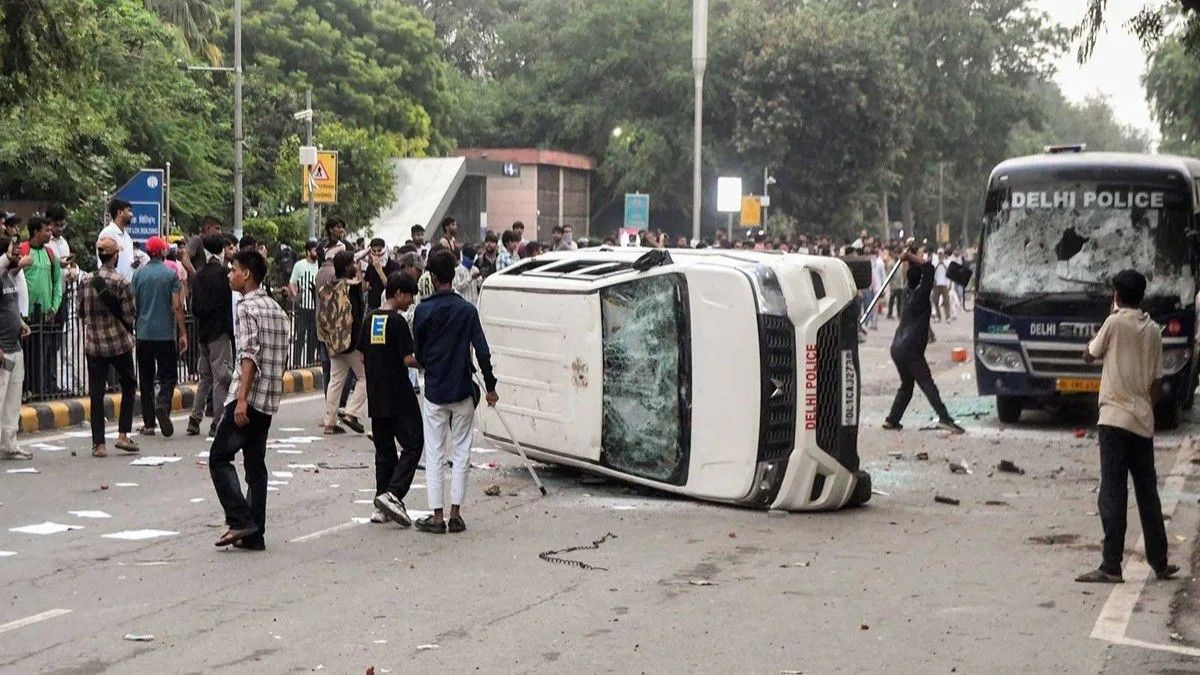
Delhi Police have registered 10 First Information Reports stemming from violence and disruptions connected to the Cockroach Janta Party's "Sansad Chalo" march, as authorities attempt to manage the narrative surrounding Monday's clashes while dismissing what officials characterise as false reports of renewed confrontation at the protest venue.
The New Delhi police command issued a statement through social media platforms refuting circulating videos that purported to document stone-pelting incidents and police enforcement action on Tuesday at Jantar Mantar, the historic protest ground in the nation's capital. Officials stressed that no such disturbances occurred on the day in question and cautioned citizens to rely exclusively on official communications rather than unverified content proliferating across digital networks.
The legal action encompasses cases filed across multiple police stations within the New Delhi administrative district. Four cases were registered at Parliament Street, three at Connaught Place, and one each at Mandir Marg, Barakhamba Road, and Kartavya Path stations. The charges address distinct incidents occurring throughout the protest period, with investigations actively progressing. One particular case involves allegations of a violent assault on a Rapid Action Force officer during Monday's demonstration, while another concerns the unauthorised operation of a drone in airspace over the New Delhi district during parliamentary sessions.
The accumulated charges invoke multiple legislative frameworks. The Bharatiya Nyaya Sanhita, India's revised criminal code, forms the primary basis alongside provisions from the Arms Act and the Prevention of Damage to Public Property Act. The charges encompass allegations of conspiracy, obstruction of state functions, physical violence against law enforcement, and destruction of public assets. Police characterised the Monday demonstrations as displaying "unruly, aggressive and violent behaviour" despite explicit warnings and existing prohibitory orders restricting assembly in the area.
The CJP initiated the "Sansad Chalo" campaign to press demands including the resignation of Union Education Minister Dharmendra Pradhan, citing alleged irregularities in national examination administration. The movement escalated into confrontation as demonstrators moved toward Parliament, prompting police intervention that resulted in the reported clashes. Authorities stated that over 250 video recordings are undergoing examination to identify participants and establish whether the violence followed pre-arranged coordination rather than spontaneous outbreak.
The protest reconvened at Jantar Mantar on Tuesday after security personnel dismantled temporary structures including protest tents and staging platforms overnight. Intensified deployment of Delhi Police and paramilitary personnel maintained vigilance throughout the site, reflecting official concern about potential renewed escalation. The continued presence represents a significant security investment in what has become a flashpoint for public political expression in central Delhi.
CJP spokesperson Ashutosh Ranka declared the agitation would persist until authorities accepted the party's core demand for Pradhan's removal. He documented that numerous individuals, particularly students and volunteer activists, sustained injuries during Monday's confrontations. Ranka additionally alleged that female participants, including Geetanjali J. Angmo, the spouse of environmental activist Sonam Wangchuk, experienced mistreatment during police operations. These claims introduce questions about proportionality in law enforcement response to civilian protest, an increasingly contentious issue across Indian metropolitan regions.
Delhi Police maintained their position that Tuesday remained incident-free, appealing to the public to exercise discernment regarding social media content and refrain from amplifying unverified materials. The authority's repeated clarifications suggest significant concern about perception management and the potential for digital misinformation to escalate tensions or prompt copycat disruptions. The disconnect between protest participants' descriptions of events and official denials reflects broader disputes over protest rights and police conduct that resonate across South Asia.
For Malaysian observers, the unfolding situation illustrates how large-scale public demonstrations intersect with digital information ecosystems and law enforcement responses in neighbouring democracies. India's handling of protest movements, particularly those targeting national education administration, provides comparative context for understanding regional approaches to civil dissent. The CJP's focus on examination irregularities addresses governance concerns that transcend borders, as nations throughout Southeast Asia grapple with educational equity and transparency in assessment systems.
The investigation's scope indicates authorities view the Monday violence as potentially coordinated rather than incidental, suggesting concerns about organized protest tactics that extend beyond spontaneous public expression. The accumulation of charges across conspiracy and damage categories suggests prosecutors may pursue cases constructing narratives of premeditated disruption. Such framing carries implications for how courts subsequently evaluate defendant culpability and inform future policy toward large assemblies.
The protest's persistence despite police intervention and the overnight removal of infrastructure demonstrates the resilience of public dissent in democratic spaces, even when authorities employ restrictive tactics. The continued presence at Jantar Mantar, traditionally associated with significant national movements, maintains symbolic importance for activism while creating ongoing operational challenges for metropolitan administration. The situation underscores tensions between facilitating legitimate political expression and maintaining public order that democratic governments regularly navigate.

