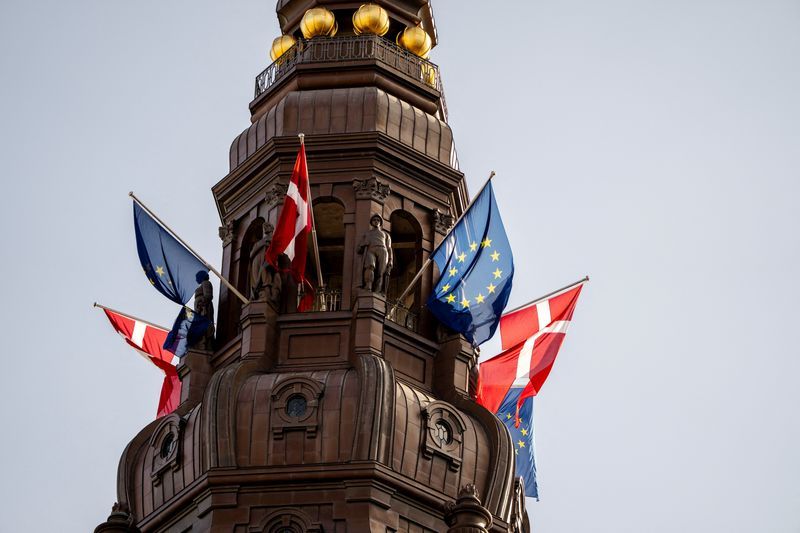
Denmark's government has entered a significant legal battle at the European Court of Justice, filing formal written arguments to support Belgium in a dispute that centres on how technology companies must treat journalistic content. The Danish Culture Ministry announced the intervention on Monday, emphasizing that the outcome of this case carries substantial implications for Danish media houses and the broader European publishing industry. By joining Belgium's defence against companies including Google, Meta, Spotify, Streamz, and Sony, Copenhagen is taking a clear position that digital platforms cannot freely use professional journalism without compensation.
The underlying dispute originated in 2023 when five major technology and streaming companies launched a lawsuit challenging Belgium's implementation of Article 15 of the Digital Single Market Directive. This European regulation grants publishers explicit rights to receive payment when their content appears on digital platforms. The tech firms argue that Belgium's interpretation of this directive conflicts with existing EU law and creates unfair commercial burdens. The case has attracted international attention because any ruling by the ECJ will set binding legal precedent across all 27 EU member states, making it one of the most consequential intellectual property disputes in recent years.
Denmark's intervention takes practical form through formal participation in oral hearings scheduled for July 6 and 7 at the ECJ. Rather than merely submitting written arguments, the Danish government sent a procedural delegation including representatives from the Culture Ministry to present Denmark's position directly to the court. This decision signals Copenhagen's conviction that the case warrants high-level political engagement. The stakes extend beyond abstract legal principles; Danish ministers have explicitly framed the matter as a test of whether the continent's media ecosystem can remain financially viable when technology companies extract value from journalism without compensation.
The Danish position rests on a straightforward but contested principle: technology platforms that profit from displaying journalistic content should bear financial responsibility to the publishers who created that content. Culture Minister Zenia Stampe articulated this stance with particular emphasis on democracy. In her public statements, Stampe warned that allowing tech giants to use media without payment would inflict direct damage on Danish journalism and, by extension, undermine democratic institutions that depend on a robust and independent press. This framing connects copyright law to fundamental questions about information quality and democratic health, arguments that resonate across Scandinavian countries where public discourse traditionally values media independence.
Denmark's specific focus at the oral hearing will be pushing the ECJ to provide clear legal definitions of what press publishers' rights actually entail under the DSM Directive and what corresponding obligations technology companies must fulfill. Rather than allowing vague or narrow interpretations, Danish lawyers will argue for explicit standards that leave no ambiguity about when platforms must pay. This technical legal strategy reflects a broader concern that Belgium's implementation, while currently being defended in court, might be gradually eroded through future disputes unless the ECJ establishes unambiguous boundaries. The Danish delegation will emphasize that tech companies cannot exploit semantic loopholes or technical arguments to circumvent the directive's core intent.
The financial implications extend across multiple sectors of the Danish economy. Newspapers and online news publishers, both large and small operations, depend on revenue from digital advertising and direct payments from platforms that distribute their content. If the ECJ rules in favour of the technology companies, Danish publishers would lose potential income streams precisely when traditional advertising revenue has already migrated toward digital platforms. Smaller regional publications would face particular hardship, as they lack the negotiating power of major national titles and depend more heavily on platform-generated traffic. The cumulative effect could accelerate the consolidation of Danish media ownership and reduce the diversity of voices in public discourse.
Denmark's intervention also reflects broader Nordic and European concerns about technological power imbalances. Over the past decade, a small number of massive technology corporations have come to control how most Europeans access information online. These companies operate business models built on aggregating and displaying content created by others, typically without direct compensation to original creators. Governments across Europe have grown increasingly concerned that this arrangement allows tech giants to extract economic value from professional journalism while journalists and publishers struggle with declining revenues. The DSM Directive represented an attempt to rebalance these power dynamics through legal mechanisms requiring payment.
The case also connects to parallel disputes over artificial intelligence. Denmark has simultaneously participated in a separate landmark European copyright lawsuit examining whether Google can legally train artificial intelligence systems using press releases and published articles without authorization or compensation. These cases form part of a broader regulatory push to ensure that emerging technologies do not simply become new mechanisms for extracting value from creative work without payment. The Danish government's involvement in both proceedings demonstrates a coordinated strategy to establish legal and economic frameworks that protect publishers as AI systems increasingly consume vast quantities of text-based content.
From a Southeast Asian perspective, Denmark's intervention offers instructive lessons about defending local content creators against global technology platforms. Many developing economies in the region have struggling journalism sectors facing similar pressures from large technology companies. If the ECJ establishes strong publishers' rights protections, it could provide a legal template that developing countries might adapt to their own circumstances. Conversely, if tech companies prevail, it may embolden platform operators to resist similar regulatory efforts in other jurisdictions, further concentrating control over information distribution in the hands of a few Silicon Valley companies.
The immediate practical question facing the ECJ involves statutory interpretation: does the DSM Directive require technology platforms to negotiate with publishers and pay for content, or does the regulation permit various technical workarounds and narrow definitions of what constitutes compensable use? Denmark's intervention pushes for the former interpretation, arguing that anything less would render the directive meaningless. The court's response will shape not only the competitive dynamics of European digital markets but also the financial viability of journalism across the continent.
Beyond the immediate legal outcome, Denmark's formal intervention demonstrates that European governments view publisher protection as a strategic priority worthy of significant diplomatic and legal resources. This commitment reflects recognition that media independence serves broader public interests that markets alone may not adequately protect. When technology companies can freely extract and redistribute professional journalism without compensation, market failures emerge that government intervention may be justified in correcting. Denmark's position essentially argues that the DSM Directive represents an appropriate exercise of democratic authority to maintain conditions necessary for journalism to survive financially.
The oral hearings in July represent a critical moment when the ECJ will hear competing visions of how digital markets should function and what obligations large technology companies bear toward content creators. Denmark's participation ensures that the perspective of smaller European nations, whose media industries face particular vulnerability to technology company dominance, reaches the court directly. The decision could reshape the economics of digital publishing across Europe and potentially influence how other jurisdictions approach similar tensions between technology platform power and creator compensation.

