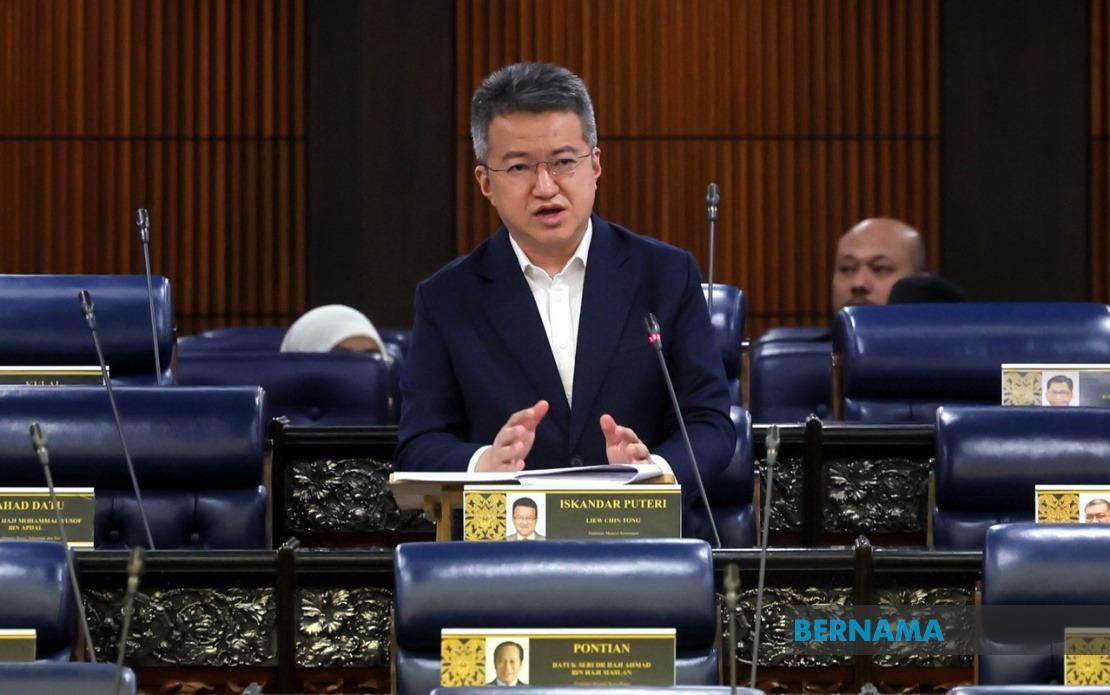
The Malaysian government has firmly refuted claims that fugitive businessman Low Taek Jho, popularly known as Jho Low, entered the country under cover as part of a Chinese delegation to conduct clandestine negotiations regarding the 1Malaysia Development Berhad scandal. Deputy Finance Minister Liew Chin Tong made the categorical denial during parliamentary Question Time, responding to queries raised by opposition lawmakers who had cited media reports of such an alleged meeting occurring in late 2024.
The inquiry came from Syed Saddiq Syed Abdul Rahman, the MUDA representative for Muar, who asked supplementary questions about the reported secret talks. The original parliamentary question, posed by Chong Chieng Jen from Stampin, sought updates on the government's progress in recovering misappropriated 1MDB funds and managing the sprawling debt obligations stemming from the massive fraud that undermined Malaysia's international standing. Liew's denial was notably brief, offering little elaboration beyond the straightforward rejection of the allegations, a response that underscores the sensitivity surrounding the 1MDB case even years after initial revelations.
The 1MDB scandal remains one of Malaysia's most consequential financial crimes, involving the misappropriation of billions of ringgit from a state development fund. The case has generated sustained international scrutiny and exposed systemic weaknesses in financial oversight mechanisms. Jho Low, the alleged architect of the scheme, remains a fugitive from Malaysian justice despite the global reach of anti-corruption investigations. His purported visibility or movements continue to generate speculation and media interest, particularly given his central role in orchestrating what investigators determined to be one of the world's largest kleptocratic fraud operations.
In addressing the broader 1MDB recovery efforts, Liew outlined the government's multifaceted approach encompassing both criminal and civil legal proceedings. He highlighted that former Prime Minister Datuk Seri Najib Tun Razak had been convicted and sentenced by the High Court on December 26, 2025, receiving a 15-year prison term alongside a RM11.38 billion fine after being found guilty on 25 separate charges involving money laundering and abuse of power to solicit bribes connected to 1MDB. This conviction represents a significant milestone in domestic accountability, though it does not resolve the broader international dimensions of the scandal.
Beyond Najib's prosecution, the government is pursuing aggressive asset recovery through parallel civil litigation. The deputy minister disclosed that authorities have filed a civil suit against Datin Seri Rosmah Mansor, the former Prime Minister's wife, seeking to recover approximately US$380 million in damages. Court filings allege that this sum represents 1MDB funds illicitly diverted to purchase high-end luxury goods including designer handbags, jewellery, and other valuable items. Such civil suits represent an important complementary strategy to criminal prosecution, as they enable the state to recover assets without necessarily requiring proof beyond reasonable doubt.
The litigation against Jho Low himself reflects the magnitude of his suspected involvement in the scheme. The government has mounted a civil claim valuing his alleged misappropriated gains at US$3.78 billion, equivalent to approximately RM15.4 billion. Criminal proceedings are simultaneously advancing, with authorities pursuing charges in multiple jurisdictions. The scale of these claims demonstrates that despite his fugitive status, Malaysian authorities remain committed to pursuing accountability and asset recovery through available legal channels.
Liew characterised the cumulative impact of the 1MDB scandal across four distinct categories of damage to Malaysia's interests. These encompass direct financial losses representing actual stolen funds, opportunity costs reflecting investments and economic development that failed to materialise due to the misappropriation, irrecoverable losses reflecting value destruction in the scandal's wake, and intangible but profound damage to Malaysia's international reputation and standing. The reputational dimension proved particularly costly, as the scandal intensified global perceptions of governance deficiencies and regulatory weakness during the administration in which the fraud occurred.
The alleged involvement of Jho Low in secret negotiations last year, if verified, would represent a dramatic development given his fugitive status and the severity of charges against him. Malaysian authorities have previously indicated that Jho Low maintained access to international networks and financial resources despite his flight from justice, suggesting capacity to conduct transactions and communications abroad. However, Liew's blanket denial of the specific allegations suggests that either no such meeting occurred or that any contact remained undisclosed to the Deputy Finance Minister.
The parliamentary exchange reflects ongoing political interest in the 1MDB saga despite the passage of time since initial revelations. Opposition lawmakers continue to scrutinise government handling of the case and recovery efforts, seeking assurances that all available avenues for accountability and financial restitution are being pursued rigorously. Such oversight remains important given the massive public funds at stake and the necessity of maintaining political pressure on recovery mechanisms.
For Malaysian citizens and the broader Southeast Asian region, the 1MDB case carries significance extending beyond individual prosecutions or financial recovery figures. The scandal exposed vulnerabilities in financial governance systems and cross-border money laundering detection mechanisms across multiple jurisdictions. Learning from the case's lessons has informed subsequent regulatory reforms and international cooperation frameworks designed to prevent similar frauds. The continued pursuit of remaining figures, particularly Jho Low, symbolises the commitment to comprehensive accountability and serves as a deterrent against future financial crimes of comparable scale.

