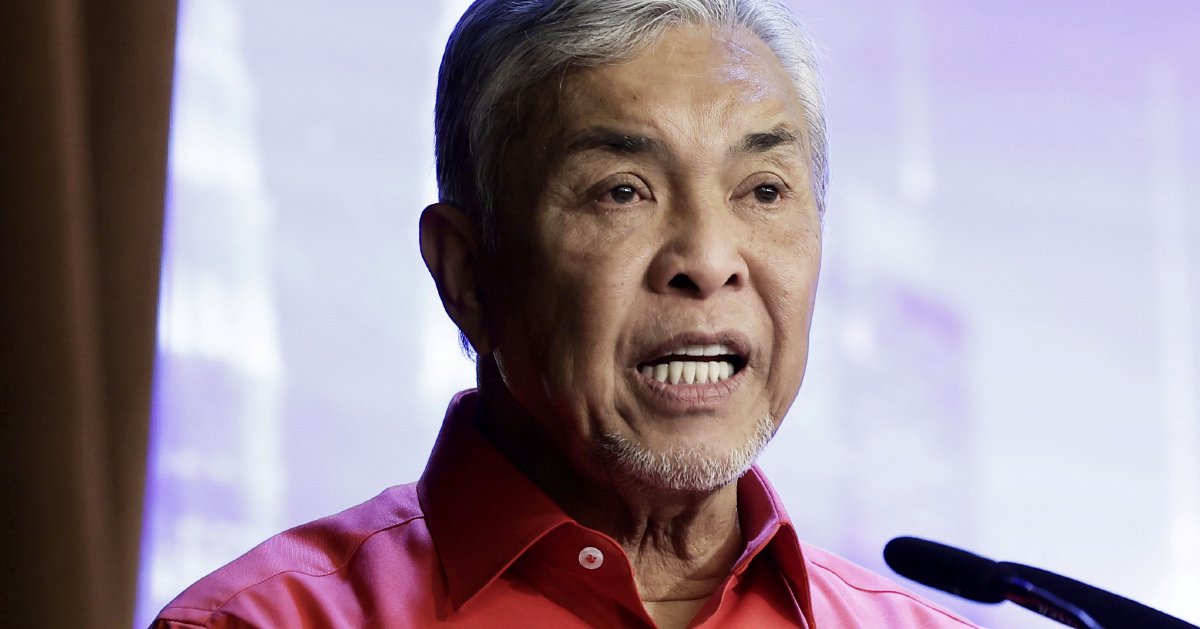
Deputy Prime Minister Datuk Seri Dr Ahmad Zahid Hamidi has called for an immediate halt to baseless accusations and unfounded perceptions targeting Lembaga Tabung Haji (TH), stressing that narratives circulating about the institution must be anchored in verifiable evidence and truthful information. His statement comes as the sovereign wealth fund continues to navigate its recovery trajectory and rebuild public confidence following years of scrutiny over its financial management and operational governance.
Zahid's appeal reflects broader concerns within government circles about the corrosive impact of misinformation on public institutions. The Tabung Haji, which serves as the primary savings vehicle for Malaysian Muslims intending to perform the hajj pilgrimage, has historically held significant cultural and religious importance to its contributors. However, the fund's reputation suffered considerable damage in recent years following revelations about investment losses, governance weaknesses, and management decisions that drew widespread criticism from depositors and analysts alike.
The Deputy Prime Minister's intervention suggests an effort to reset the narrative surrounding the fund's current operations. By calling for evidence-based discourse rather than speculation, the government appears intent on distinguishing between legitimate concerns about past mismanagement and present-day unfounded rumours that may perpetuate distrust among the institution's approximately 9 million registered members across Malaysia. This distinction is crucial for understanding the institution's trajectory and its efforts to restore credibility.
Tabung Haji has undertaken substantial restructuring and governance reforms in recent years, including changes to leadership, enhanced financial oversight mechanisms, and revised investment strategies aimed at protecting member savings. Yet these improvements often remain underreported compared to sensational claims about historical losses or alleged irregularities. The Deputy Prime Minister's comments suggest frustration with the gap between the fund's actual operational improvements and persistent public perception shaped by unverified claims and historical baggage.
For ordinary Malaysians—particularly the middle-income and lower-income households that constitute the bulk of Tabung Haji's membership—the clarity between fact and rumour carries immediate practical implications. Misinformation can discourage people from continuing contributions to their hajj savings accounts, ultimately undermining their ability to fulfil one of Islam's five pillars. Similarly, unfounded allegations may deter new depositors from joining the scheme, weakening the fund's asset base and compromising its long-term sustainability.
The timing of Zahid's statement also reflects the political dynamics surrounding public institutions in Malaysia. Tabung Haji remains a sensitive institution that touches upon religious identity, national development, and public finances simultaneously. Allegations—whether substantiated or not—generate swift media coverage and public commentary, creating feedback loops that amplify initial claims regardless of their factual foundation. This phenomenon has made it increasingly difficult for the institution's leadership to focus on operational improvements without constantly defending against accusations.
From a regional perspective, Malaysia's experience with Tabung Haji carries lessons for other Southeast Asian nations managing sovereign wealth funds and state institutions. Public trust in financial institutions depends critically on transparent communication, robust governance standards, and media literacy. When governments struggle to communicate clearly about institutional reforms, space emerges for rumour and speculation to flourish, particularly on social media platforms where verification standards remain minimal.
The Deputy Prime Minister's call for factual discourse also highlights the responsibility of media organisations and public commentators. While critical scrutiny of public institutions serves important democratic functions, distinguishing between evidence-based criticism and conjecture remains essential. The challenge intensifies when historical wrongdoing has genuinely occurred—as was the case with Tabung Haji—because it creates a reservoir of credibility for subsequent claims, even those lacking substantiation.
Moving forward, the government appears committed to allowing Tabung Haji's operational performance and reformed governance structures to speak for themselves. However, this approach requires sustained communication from institutional leadership, transparent reporting of financial results and reforms, and engagement with stakeholders to address legitimate concerns separately from baseless allegations. Malaysian Muslims who have contributed their earnings to the fund deserve clarity about its financial health, investment strategies, and future prospects—information that should flow directly from the institution rather than through speculation and rumour.
Zahid's statement represents an implicit acknowledgment that institutional reputation cannot be restored through denials alone. Rather, rebuilding trust requires demonstrating genuine change through measurable outcomes while simultaneously refusing to dignify unfounded claims with extended engagement. For Tabung Haji and its millions of members, the path forward depends on sustained commitment to governance excellence, transparent communication, and the courage to distinguish between accountability for past failures and perpetual victimisation by false narratives.

