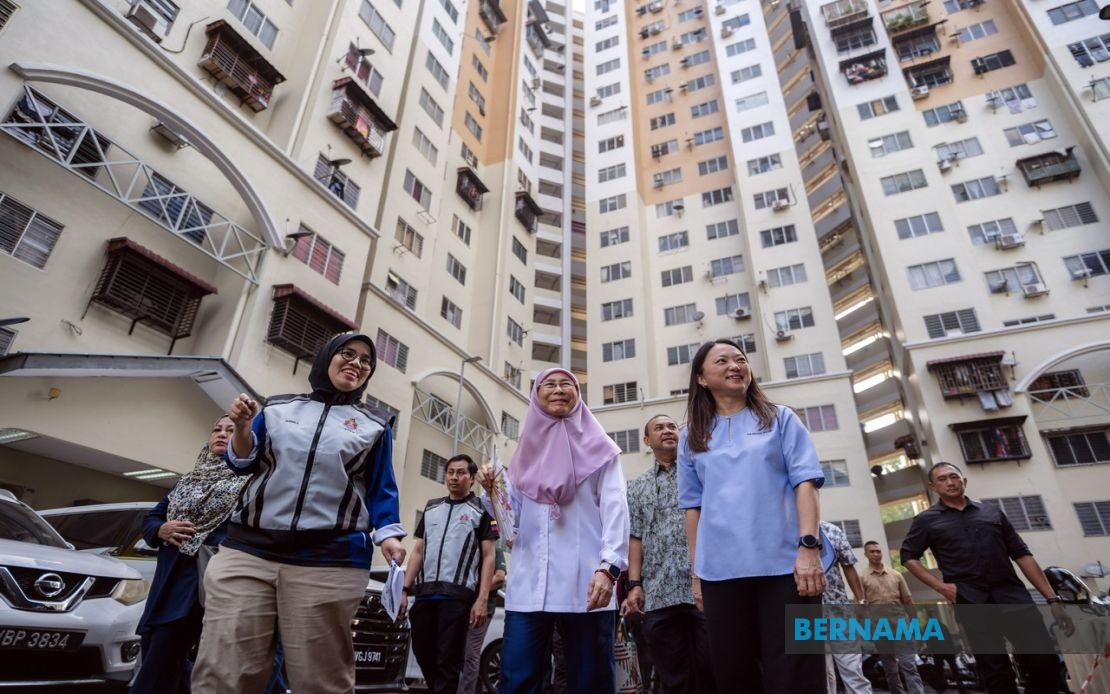
The Desa Tun Razak People's Housing Project has joined a growing list of revitalised low-cost residential facilities in Kuala Lumpur following the completion of a RM9.6 million upgrading programme. The achievement represents steady progress on a broader governmental commitment to systematically refurbish the nation's public housing stock, with 22 of 61 planned projects now finished in the Federal Territory. Minister in the Prime Minister's Department (Federal Territories) Hannah Yeoh announced the completion during an inspection of the facilities, emphasising that this milestone underscores the government's determination to move beyond temporary maintenance approaches.
The broader context reveals significant budgetary commitment to housing infrastructure. The federal government has allocated an additional RM300 million this financial year specifically to overhaul all PPR facilities across Kuala Lumpur. This decision reflects recognition that adequate maintenance planning is essential to sustaining residential quality and safeguarding occupant wellbeing. All Members of Parliament representing Kuala Lumpur constituencies have endorsed the allocation, signalling cross-party consensus on the necessity of comprehensive rather than ad hoc repair work.
For the Desa Tun Razak facility, which has housed residents since 1998 and currently accommodates over 8,000 people, the investment addresses critical infrastructure vulnerabilities. The facility had experienced multiple fire incidents during the preceding year, exposing dangerous gaps in safety systems. The upgrading project accordingly prioritised fire prevention alongside routine maintenance, with work crews replacing deteriorated electrical installations, resurfacing badly worn roadways, and substantially enhancing fire suppression capabilities. These interventions directly respond to documented safety risks rather than cosmetic concerns.
Kuala Lumpur Mayor Datuk Fadhlun Mak Ujud provided detailed breakdown of expenditure allocation. The largest portion, RM7 million, went toward comprehensive repainting of buildings and common areas—work that extends beyond aesthetic improvement to protect concrete and steelwork from tropical weathering and corrosion. Fire prevention systems and electrical infrastructure upgrades consumed RM1.68 million, addressing the acute safety issues. Road resurfacing accounted for nearly RM1 million, essential given that deteriorating pavement compounds drainage problems and creates hazards for residents, particularly elderly occupants and children. Additional work included upgrading fire riser systems and drainage infrastructure, improvements often invisible to residents but fundamental to building safety and functionality.
The systematic approach being implemented across all 61 Kuala Lumpur PPR facilities represents a departure from reactive maintenance models that have historically plagued public housing. Hannah Yeoh articulated the philosophical shift clearly: developing a project requires capital expenditure, but ensuring its longevity demands dedicated maintenance funding. Without such provision, safety standards inevitably deteriorate as building systems age. The RM300 million allocation effectively institutionalises preventive rather than emergency maintenance, a model that should reduce long-term costs and preserve asset value.
Completion of 22 projects by mid-2024 suggests reasonable pace toward the stated objective of finishing all work by year-end. The Mayor expressed confidence in this timeline, though such ambitious schedules often face implementation challenges. Weather disruptions, supply chain delays, and coordination complexities across multiple contractor teams frequently extend municipal projects beyond initial projections. Nevertheless, the demonstrated commitment suggests genuine momentum rather than rhetorical positioning.
Parking constraints at Desa Tun Razak illustrate persistent tensions within densely populated public housing environments. The facility was designed decades ago for different vehicle ownership patterns than contemporary Kuala Lumpur. The City Hall has committed to identifying vacant land for temporary parking facilities, a pragmatic interim solution acknowledging that comprehensive parking infrastructure requires different budgeting and planning cycles than building upgrades. The announcement reflects responsive governance rather than dismissing resident concerns.
Bandar Tun Razak Member of Parliament Datuk Seri Dr Wan Azizah Wan Ismail's intervention introduced stewardship messaging, appealing to residents to maintain upgraded facilities responsibly. This reflects an important reality: infrastructure improvements deteriorate rapidly when users lack investment in preservation. The appeal to foster a culture of property stewardship—both public and private—acknowledges that government investment must be complemented by community participation. PPR residents who feel ownership of their environment typically maintain facilities better than those viewing spaces as purely state-provided.
The Desa Tun Razak completion carries implications beyond its immediate 8,000 residents. As one of Malaysia's largest urban concentrations of public housing, the facility's renovation demonstrates feasible execution of major infrastructure programmes. Success here builds confidence among residents of other PPR facilities that promised upgrades will materialize. Conversely, visible neglect would undermine trust in government commitments. The project thus carries political significance alongside practical infrastructure benefits.
For Malaysian policymakers focused on affordable housing challenges, the Desa Tun Razak initiative offers instructive lessons. Maintenance funding parity with initial capital investment remains underfunded in many housing schemes. The decision to approve RM300 million for systematic upgrading reflects hard-won recognition that preventive maintenance costs substantially less than managing infrastructure failure. As Malaysia's urban population continues growing and aging housing stock multiplies, this model warrants replication across other states and municipalities facing similar challenges with aging public facilities.

