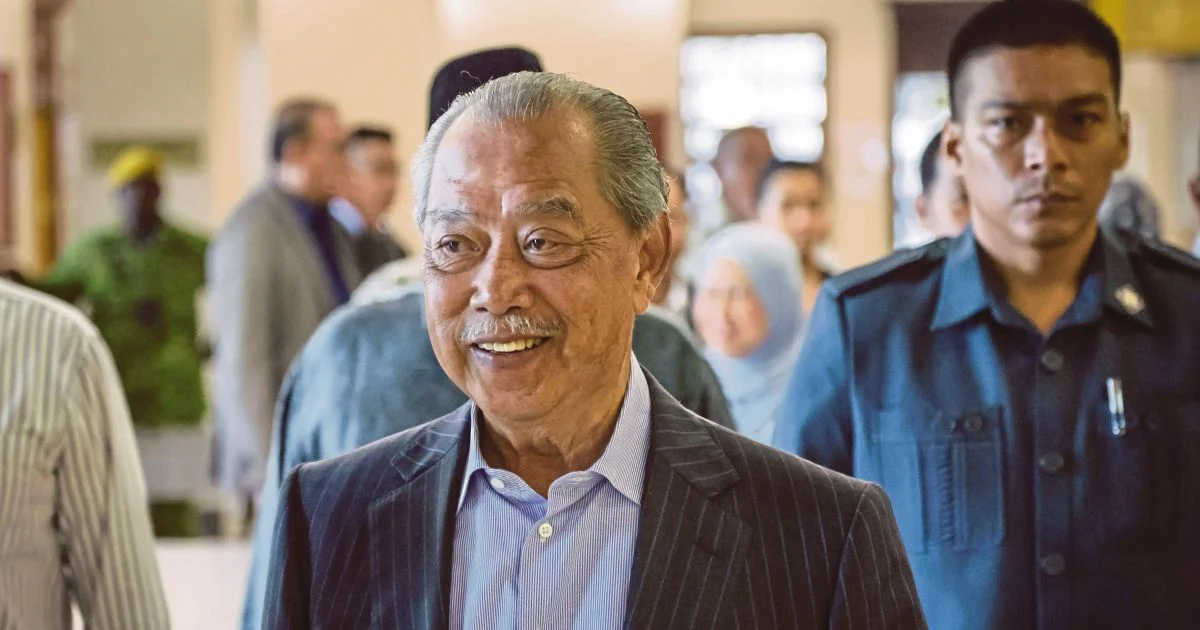
Bersatu president Tan Sri Muhyiddin Yassin has expressed confidence that Perikatan Nasional retains a realistic opportunity to form the next government in Johor, even though the opposition coalition is contesting only 33 seats in the forthcoming state election. Speaking in his parliamentary constituency of Pagoh, the veteran politician brushed aside concerns that the restricted number of candidacies might limit PN's ability to secure a majority and govern the state.
The decision to field a leaner slate represents a significant strategic calculation for PN, which has been attempting to rebuild its political presence following several electoral setbacks across Malaysia in recent years. By contesting fewer seats, the coalition may be attempting to concentrate resources and campaign efforts on winnable constituencies where ground support appears strongest. This approach differs markedly from the traditional strategy of maximizing candidate numbers across all available positions.
Muhyiddin's optimism reflects PN's assessment of internal political dynamics within Johor's legislature. The state, which historically has been dominated by Barisan Nasional, has seen shifting allegiances and defections that could potentially create opportunities for alternative governing coalitions. The Bersatu president may be banking on post-election negotiations or shifts in political alignments rather than expecting to win an outright majority through the ballot box alone.
Johor's political landscape has grown increasingly fragmented in recent years, with multiple factions and competing interests making straightforward electoral mathematics less predictive of final outcomes. State assemblies in Malaysia have witnessed numerous instances where coalition-building and negotiation following elections determined governance arrangements that differed from simple vote tallies. Muhyiddin's confidence may therefore rest partly on PN's ability to negotiate with independent candidates or persuade elected representatives from other camps to support its administration.
The coalition's reduced candidate roster also signals acknowledgement of ground realities and resource constraints. Rather than spread thin across all 56 state seats with limited campaign machinery, PN appears to have calculated that concentrating on 33 carefully selected constituencies offers better prospects for converting votes into wins. This selective approach requires sophisticated analysis of constituency demographics, voting patterns, and organizational capacity.
For Malaysian observers, PN's electoral positioning in Johor carries broader implications for the opposition's overall trajectory and viability as an alternative government. Perikatan Nasional has struggled to establish itself as a coherent national force since its formation, with component parties maintaining distinct organizational structures and occasionally competing agendas. How the coalition performs in Johor will influence perceptions of its institutional strength and ability to mount serious challenges to ruling parties.
The state election also reflects deeper questions about voter preferences in Johor, a state whose demographic composition and economic interests differ notably from other Malaysian regions. Johorians have traditionally favored stability and strong governance credentials, factors that historically benefited Barisan Nasional. Whether PN can convincingly present itself as a credible alternative government remains a key test.
Muhyiddin's assertion of confidence appears designed to maintain coalition morale and project determination to supporters and observers. In Malaysian politics, public expressions of optimism from party leaders often serve important functions in maintaining organizational cohesion, especially during challenging campaign periods. However, his remarks also suggest genuine calculations about where negotiations and political developments might lead if election results produce a fragmented legislature.
The PN strategy in Johor warrants close examination for what it reveals about coalition dynamics within the broader opposition movement. By limiting the number of candidates, Perikatan Nasional creates space that other opposition parties might exploit or allows room for independent candidates to contest without facing direct PN opposition. Such coordination, whether explicit or implicit, could theoretically increase total opposition representation without individual parties fielding full slates.
For regional observers in Southeast Asia, Malaysia's evolving opposition politics offer insights into how democratic systems manage coalition-building and alternating power. Johor's election will provide empirical data on whether opposition coalitions can successfully employ selective contestation strategies to achieve meaningful electoral results. The outcome will also inform debates about how Malaysia's political parties adapt to changing voter preferences and institutional constraints.
Muhyiddin's comments underscore that Malaysian electoral outcomes often depend on factors beyond raw vote counts, including political negotiations, seat distributions between coalition partners, and the mechanics of how legislative majorities form. PN's confidence in forming government despite contesting only 33 seats suggests the coalition is either interpreting available data as highly favorable in those constituencies or anticipating that post-election political mathematics will break favorably for its ambitions. Either way, Johor's election will represent a significant checkpoint in assessing whether PN can rebuild itself as a credible governing alternative and whether Malaysian voters show appetite for opposition administration at the state level.

