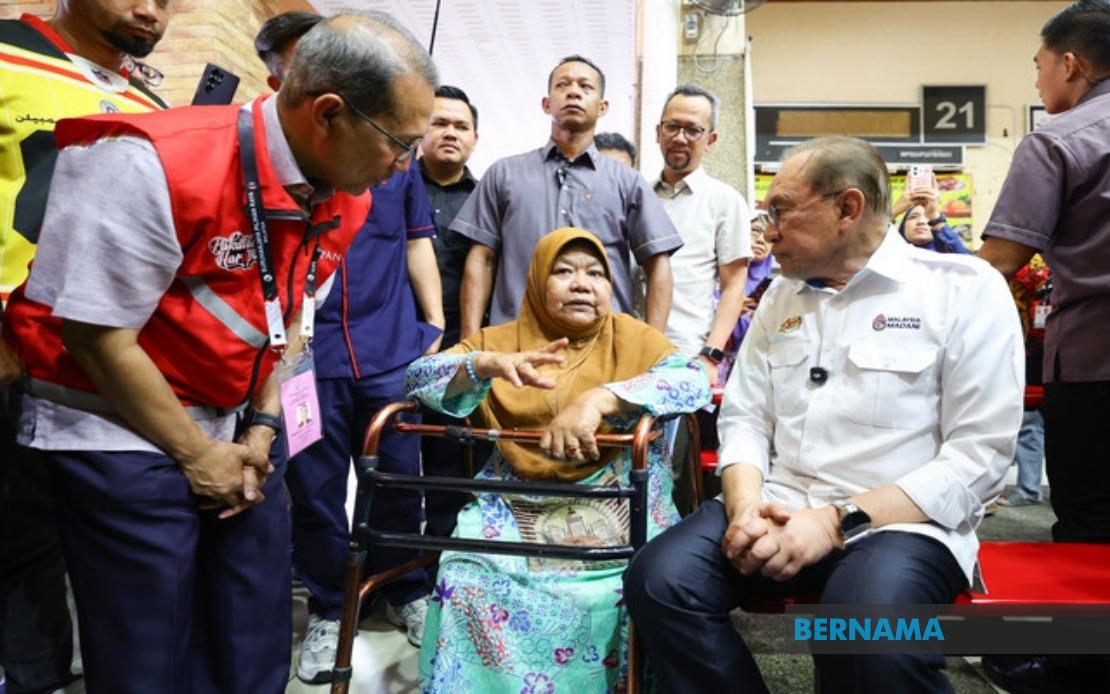
Determination and resolve overcame both weather and physical hardship when 68-year-old Jumaah Mohd Alif navigated her three-wheeled motorcycle through drizzle in Seremban to realise a long-held ambition. The woman, who has lived with disability after losing her left leg in an accident three and a half decades ago, travelled from her village in Kampung Gedung Lalang to Benteng Ampangan, driven by news that Prime Minister Datuk Seri Anwar Ibrahim would be visiting the area. For her, the prospect of meeting Malaysia's leader in person justified undertaking the journey despite inclement weather and the mobility challenges she faces daily.
Jumaah's story reflects broader questions about accessibility and representation within Malaysia's political landscape. Her willingness to travel considerable distances and contend with adverse conditions underscores how meaningful personal contact with national leadership remains for ordinary citizens, particularly those from marginalised communities. The encounter also highlights the significance that persons with disabilities place on being seen and acknowledged by those in positions of power, suggesting that such moments carry symbolic weight beyond the immediate interaction itself.
The Prime Minister was in Negeri Sembilan on campaign business for the ruling Pakatan Harapan coalition ahead of the state election scheduled for early August. As chairman of the coalition, Anwar has been actively canvassing across constituencies to consolidate support during what remains a competitive electoral period. His presence in communities like Benteng Ampangan forms part of a broader mobilisation strategy intended to maintain the coalition's recent electoral momentum in the state. For supporters and constituents, these campaign visits offer rare opportunities for direct engagement with senior government figures.
Jumaah's perspective on the encounter revealed the personal significance of such moments. She explained to reporters that prior to this occasion, she had only observed the Prime Minister from a distance or through television broadcasts. The transition from viewing a national figure through a screen to speaking with him face-to-face represented a meaningful transition in her lived experience of national politics. This shift from observer to participant demonstrates how campaign visits and public appearances can reshape citizens' sense of connection to their government and its representatives.
Beyond the personal narrative, Jumaah's journey raises important considerations about accessibility within Malaysia's political and civic spaces. A woman managing a three-wheeled motorcycle in wet weather to attend a campaign event illustrates both the determination of persons with disabilities to participate in public life and the potential barriers that may discourage such participation. Her willingness to persist despite these challenges speaks to the strength of her commitment, yet also invites reflection on whether the systems and infrastructure surrounding public political events adequately accommodate those with mobility limitations.
During her exchange with Anwar, Jumaah articulated concerns that resonate within the disabled community and among elderly populations nationwide. She expressed hope that the government would maintain its commitment to supporting senior citizens and persons with disabilities, suggesting that access to social welfare and support services remains a priority concern for vulnerable demographics. The framing of her wish indicates that for many Malaysian citizens from these groups, political engagement itself becomes an opportunity to advance advocacy for their material needs and social recognition.
The Negeri Sembilan state election campaign represents a significant political moment for the ruling coalition, which has sought to consolidate advantages following national elections held in previous years. The Election Commission set July 28 as the date for early voting, with the main polling day scheduled for August 1. Throughout this campaign period, various political figures and organisations have been conducting grassroots outreach to persuade voters to support their preferred candidates and platforms. Campaign visits to towns and villages serve not only to promote specific political messages but also to generate local media coverage and demonstrate commitment to communities outside urban centres.
Jumaah's determination to meet the Prime Minister despite difficult circumstances encapsulates a broader theme within Malaysian electoral politics: the continued relevance of personal leadership and direct community contact. In an era of digital communication, television broadcasts, and social media, the value placed on face-to-face encounters between citizens and political leaders remains substantial. For individuals like Jumaah, such meetings carry emotional weight and provide validation of their status within the national political community.
The incident also offers perspective on disability representation within Malaysian public discourse. While persons with disabilities constitute a significant demographic within the country's population, their visibility within mainstream political narratives often remains limited. Jumaah's story, by bringing her lived experience into news coverage and public attention, contributes to broader conversations about accessibility, inclusion, and the needs of vulnerable communities. Her decision to undertake a challenging journey in adverse weather conditions to meet the Prime Minister demonstrates that disabled citizens have not withdrawn from civic and political participation despite potential barriers.
Looking forward, Jumaah's encounter with Anwar during the Negeri Sembilan campaign visit exemplifies the kinds of grassroots interactions that shape public perception of political leaders and government responsiveness. How such moments are received and acted upon by government officials can influence public confidence in institutions and political processes. For the Prime Minister's team, the encounter represents an opportunity to demonstrate engagement with all segments of society, including those whose voices are sometimes overlooked in mainstream political discourse.
The broader significance of this encounter lies in its reflection of how personal stories and individual acts of civic participation contribute to the texture of electoral politics in Malaysia. While Jumaah's journey was motivated by a personal desire to meet the nation's leader, it simultaneously carries implications for questions of accessibility, disability representation, and the government's commitment to serving all citizens equitably. As the Negeri Sembilan state election proceeds through its campaign phase toward voting day on August 1, such interactions between leaders and constituents will continue to shape the political landscape and public perception of those seeking electoral support.

