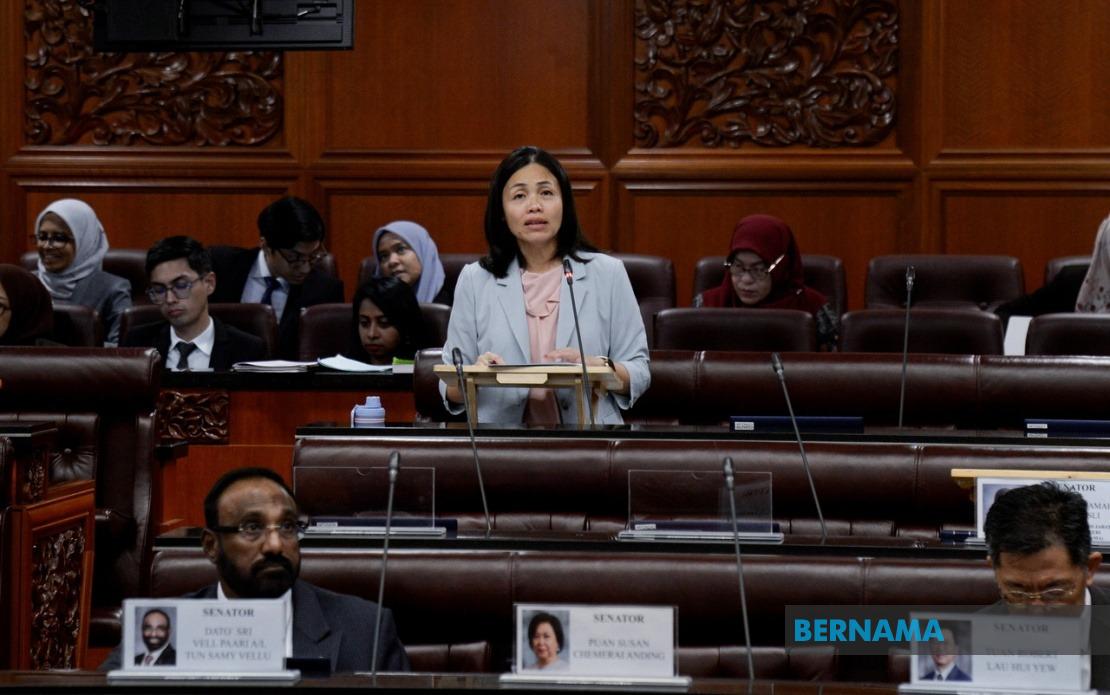
Malaysia's Dewan Negara has given its approval to the Communications and Multimedia Commission (Amendment) Bill 2026, marking a significant step in restructuring how the country's digital communications sector is governed and regulated. The upper house voted in favour of the legislation following deliberations among 11 senators, with the measure designed to strengthen MCMC's institutional role and operational capacity in managing the increasingly complex telecommunications landscape.
The amendment addresses governance architecture by introducing a critical restriction: the chairperson of MCMC can no longer be a sitting politician or member of either house of Parliament. Deputy Minister of Communications Teo Nie Ching, who led the bill through its final parliamentary phase, framed this change as essential to insulating the regulator from political interference and ensuring appointments are made on merit and professional qualification rather than factional considerations. This provision reflects growing international recognition that telecommunications authorities function most effectively when shielded from immediate political pressure, allowing regulators to make enforcement decisions based on public interest rather than electoral cycles.
The practical impact of MCMC's expanded mandate became evident in enforcement statistics presented during parliamentary debate. The commission has removed more than 222,000 pieces of online gambling content in the first seven months of 2026, demonstrating sharply escalating digital enforcement activity. This figure sits within a trajectory of dramatic increases: from just two pieces of content removed in 2022, the numbers climbed to 18,814 in 2023, then 189,484 in 2024, and 289,486 across the whole of 2025. The acceleration reflects both growing sophistication in detecting illegal content and intensified collaboration between MCMC and social media platform operators who increasingly proactively identify and remove prohibited material.
Beyond gambling content removal, the commission has also blocked access to 6,982 gambling websites across the period from 2022 through late July 2026, working from official enforcement requests originating with the Royal Malaysia Police and other law enforcement agencies. It is important to note that MCMC operates in a supporting capacity within Malaysia's gambling enforcement ecosystem; primary legal jurisdiction rests with the police, while MCMC furnishes technical assistance, digital forensics capabilities, and internet access restrictions based on formal agency requests. This division of labour allows the regulator to focus on its technical competencies while respecting the investigative and prosecutorial roles of law enforcement.
The broader legislative framework contained within the 17-clause amendment targets the regulatory foundations of digital infrastructure development. By amending Section 16 of Act 589, the bill clarifies and expands MCMC's function in establishing and overseeing standards for digital infrastructure and online platforms—a responsibility that has become increasingly critical as telecommunications technology underpins economic activity, public services, and social interaction across Malaysia. The legislation was initially passed by the Dewan Rakyat on July 15, giving it a clear mandate from the lower house before progressing to upper house consideration.
During parliamentary debate, Senator Datuk Abdul Halim Suleiman articulated why such institutional strengthening matters at this particular moment. He characterised the communications and multimedia sector not merely as an economic segment but as strategic national infrastructure akin to energy, water, or transportation networks. This framing carries implications for how regulators approach their role: treating communications as strategic infrastructure demands not just technical competence but also institutional autonomy, professional independence, and accountability to the public rather than to shifting political coalitions. The success of regulatory reform, Suleiman suggested, depends less on the formal powers granted by legislation and more on MCMC's demonstrated capacity to exercise those powers with professionalism, transparency, and genuine effectiveness in protecting citizen interests.
Senator Muhammad Hasbie Muda added another dimension to parliamentary consideration, emphasising that meaningful reform requires attention to appointment processes and the qualifications of commissioners themselves. His intervention highlighted a crucial recognition: expanding regulatory powers achieves little if the individuals wielding those powers lack requisite expertise or operate without sufficient accountability mechanisms. This perspective aligns with contemporary global best practice in regulator design, where institutional independence is paired with rigorous selection protocols, capacity building, and transparent performance oversight. Hasbie's comments suggested the legislative community views the appointment restriction as only one component of broader institutional professionalisation.
For Malaysian readers and regional observers, the MCMC amendment signals an important shift in how the country conceptualises digital governance. The restriction on political leadership, combined with enhanced enforcement statistics and expanded statutory functions, positions Malaysia alongside other developed economies investing in independent, technically proficient regulatory bodies. The approach differs markedly from models where telecommunications oversight remains embedded in ministerial portfolios, subject to cabinet-level political dynamics. By contrast, MCMC now operates with greater insulation, though it remains accountable to Parliament through legislative oversight and to the public through transparent reporting.
The practical consequences extend to multinational communications companies operating across Southeast Asia. Strengthened regulatory independence often correlates with clearer, more predictable rule-making and enforcement, reducing the arbitrary risk that regulatory decisions might shift with political changes. For consumers, the enhanced digital enforcement capability—as demonstrated by the gambling content removal figures—suggests MCMC can more aggressively pursue harmful online activities without waiting for each individual police referral, potentially offering faster protection against fraud, illegal betting platforms, and other digital threats.
Looking forward, the amendment establishes a template that other Malaysian regulatory sectors might consider. As digital technologies permeate healthcare, financial services, energy, and education, the underlying principle—that technical complexity demands specialised, independent regulatory institutions insulated from routine political control—carries relevance across multiple domains. The MCMC model suggests a pathway whereby Malaysia can maintain ministerial oversight and accountability while delegating day-to-day regulatory decisions to professionally managed agencies led by merit-selected leaders.
The bill's passage also reflects parliamentary consensus around digital governance priorities. The significant engagement from senators across the debate, combined with bipartisan support for the measure, indicates that regulating online harms and strengthening institutional capacity transcend typical partisan divides. This consensus matters for implementation: regulators function most effectively when their foundational legislation enjoys broad political support, reducing the risk that future governments might unpick institutional reforms for factional advantage.
As Malaysia navigates an increasingly digital economy and society, the MCMC amendment represents investment in the technical and institutional infrastructure required to manage that transition. The explicit commitment to merit-based, apolitical leadership reflects lessons learned both domestically and internationally about what distinguishes effective regulators from those captured by political interference. Whether this institutional model achieves its aspirations will depend substantially on how government executes the appointment process and whether MCMC receives adequate resources and operational support to fulfil its expanded mandate.

