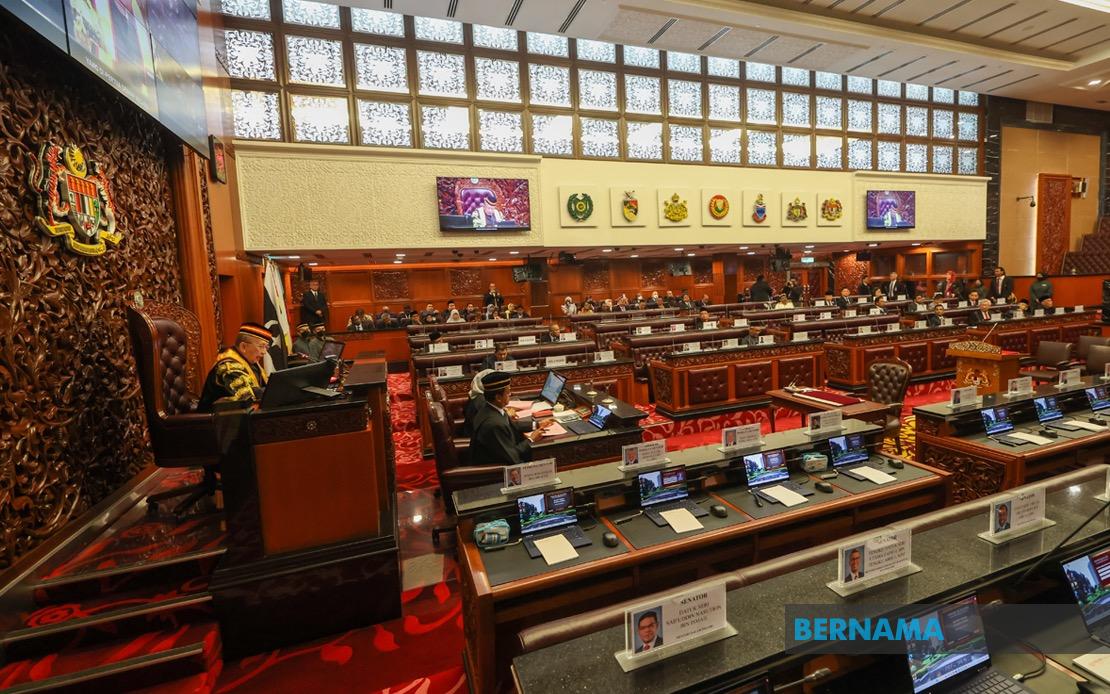
Malaysia's Dewan Negara wrapped up its second sitting of the current parliamentary session on August 4 after ten days of deliberations, having successfully passed two significant pieces of legislation aimed at modernising the nation's institutional frameworks. The National Trust Fund (KWAN) Bill 2026 and the Statistics Bill 2026 represent efforts to tighten governance mechanisms and establish more rigorous legal standards for managing public funds and collecting national data. Deputy Finance Minister Liew Chin Tong introduced the KWAN legislation, which seeks to impose stricter controls over fund withdrawals and enhance transparency in managing the trust mechanism. Meanwhile, Deputy Economy Minister Datuk Mohd Shahar Abdullah presented the Statistics Bill, designed to create a contemporary and comprehensive legal architecture governing how Malaysia collects, manages and utilises national statistical information.
The ten-day sitting, which commenced on July 20, reflected government priorities across multiple economic and governance domains. Throughout the proceedings, ministers and senior officials outlined policy responses to safeguard citizens' welfare and maintain economic momentum despite external pressures. The government made explicit commitments to implement protective measures in response to geopolitical tensions affecting West Asia, emphasising that policy frameworks would prioritise securing critical supply chains, preventing runaway inflation, supporting local industries and fortifying Malaysia's broader economic foundation. These pledges underscored official concern that regional instability could transmit shocks through global commerce networks affecting Malaysia's trading position.
Prime Minister Datuk Seri Anwar Ibrahim addressed parliamentary concerns about the Retirement Fund (Incorporated), known as KWAP, following its announcement of a net profit of RM12.9 billion for the recent reporting period. The prime minister advocated for balanced assessment of the fund's performance, recognising both its positive returns and the cautionary insights derived from its investment in eFishery, an aquaculture technology venture. This acknowledgement signals that while KWAP has generated substantial returns, the government recognises that not all investments yield expected outcomes and future capital deployment requires more rigorous screening methodologies to protect pensioners' retirement security.
State postal services featured prominently in parliamentary discussion, with government representatives confirming that Pos Malaysia would pursue an aggressive transformation agenda designed to eliminate operating losses. The strategy encompasses rationalising the existing network, accelerating digital service channels and maintaining strict cost discipline across operations. Additionally, officials revealed that the government is examining mechanisms to establish a dedicated Postal Service Fund, potentially providing long-term financing certainty for the entity's modernisation efforts. This contemplated approach reflects recognition that the postal sector requires sustainable financial architecture rather than reliance on periodic government bail-outs.
Energy security emerged as a critical concern during July 23 deliberations, with the government detailing comprehensive measures intended to fortify Malaysia's resilience in petroleum and natural gas supply. Officials outlined assessments underway regarding the necessity of establishing a strategic petroleum reserve, weighing budget implications against operational logistics, organisational governance and global benchmarking of such reserves. The government simultaneously highlighted that Malaysia had recently completed a twenty-year fuel supply agreement with Russia encompassing petrol, diesel, crude oil and liquefied natural gas, positioning this arrangement as complementary to the National Energy Transition Roadmap objectives. This dual-track approach, emphasising both strategic reserves and diversified supply partnerships, reflects sophisticated thinking about energy independence during a period of unpredictable international relations.
Investment attraction remained a centrepiece of the sitting's narrative, with particular emphasis on Japan's expanding role in Malaysia's electrical and electronics manufacturing sector. Between 2021 and 2025, Japanese companies committed RM10.5 billion across forty-six distinct projects, commitments expected to generate 9,009 employment opportunities across skilled and semi-skilled categories. This investment concentration in high-technology manufacturing aligns with Malaysia's strategic objective of transitioning toward capital-intensive, knowledge-based industrial development rather than competing on labour costs alone. The government presented these Japanese investments as evidence that Malaysia remains an attractive destination for multinational corporations seeking manufacturing locations combining regulatory stability with technical competence.
Competitiveness rankings occupied attention on July 27 when Datuk Mohd Shahar reported that Malaysia maintains trajectory toward becoming one of the world's twelve most competitive economies upon completion of the thirteenth Malaysia Plan scheduled for 2030. This assessment relied partly on Malaysia's improved positioning in the 2026 World Competitiveness Ranking, suggesting that policy reforms undertaken during recent years are producing measurable dividends. The government acknowledged that reaching the targeted competitive ranking requires sustained implementation of structural reforms affecting education, infrastructure, regulatory efficiency and innovation ecosystems. Officials recognised that competitiveness rankings reflect complex judgements about institutional quality, and that Malaysia's trajectory depends on continuous refinement of policies across multiple domains.
Financial sector governance received attention through Bank Negara Malaysia's announcement of a new Performance Measurement Framework for Development Financial Institutions, scheduled for implementation from July 1, 2027. The revised framework promises more sophisticated assessment methodologies evaluating not merely financial returns but developmental impact, governance standards and operational effectiveness. This initiative reflects international thinking about development finance, acknowledging that institutions chartered with development mandates require evaluation criteria transcending conventional banking metrics. The framework redesign suggests recognition that Malaysian development banks must balance profitability with demonstrable contributions to priority sectors including green technology, small business financing and rural economic development.
Electric vehicle infrastructure planning proceeded without government price controls on public charging services, with policy anchored in private sector participation and market mechanisms. As of May 31, Malaysia had deployed 6,416 public charging stations nationwide, indicating accelerating infrastructure development as the EV market matures. Government avoidance of price controls represents faith that competition among charging providers would produce efficient pricing without requiring administrative intervention. This philosophical stance contrasts with some neighbouring jurisdictions imposing state control over charging infrastructure, positioning Malaysia's approach as market-oriented energy transition policy.
Fiscal consolidation remained a triumph highlighted throughout the sitting, with Finance Ministry reports confirming that the federal fiscal deficit has narrowed consecutively for five years following comprehensive economic and fiscal reforms. Liew disclosed that expenditure controls implemented during the first half of the current year achieved nearly RM5 billion in spending restraint without undermining delivery of essential public services, demonstrating that fiscal discipline need not sacrifice governmental effectiveness. Federal debt remained within constitutionally mandated limits, indicating that Malaysia's long-term borrowing trajectory remains sustainable. These fiscal achievements provide essential context for parliamentary confidence that the government possesses adequate financial latitude for investing in strategic priorities including infrastructure, education and healthcare without risking long-term debt unsustainability.
The sitting concluded with the Dewan Negara president adjourning proceedings to a date subsequently to be announced, reflecting parliamentary convention that legislators do not establish reconvening schedules at sitting's conclusion. The ten days of deliberations demonstrated that Malaysia's parliamentary system retains capacity for substantive discussion of complex governance and economic questions, with upper house scrutiny providing valuable opportunity for detailed examination of executive policy proposals prior to implementation. The passage of two major bills and extensive government briefings on economic strategy suggested that parliamentary oversight remains meaningful rather than perfunctory, reinforcing institutional checks on executive authority.

