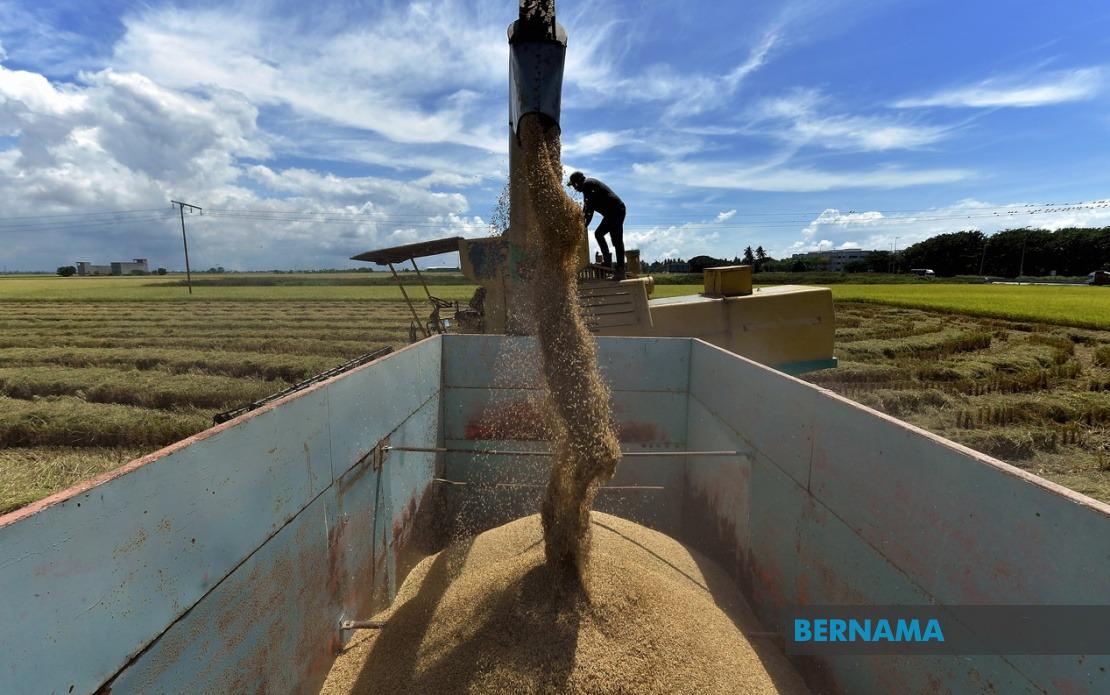
Parliament's lower house has endorsed sweeping amendments to Malaysia's rice industry regulations, approving the Control of Padi and Rice (Amendment) Bill 2026 after wide-ranging debate across government and opposition benches. The legislation represents the most significant overhaul of enforcement mechanisms in the sector since 1994, signalling heightened governmental concern over illicit trading and supply chain vulnerabilities in one of the country's most strategically important agricultural commodities.
The centrepiece of the Bill involves a substantial recalibration of financial penalties designed to deter organised misconduct. Individual offenders now face maximum fines of RM250,000, while corporate entities and companies confront exposure to penalties of up to RM1 million. Deputy Minister of Agriculture and Food Security Datuk Chan Foong Hin framed these increases as overdue corrections to a regulatory framework that had remained virtually unchanged for three decades, allowing the prescribed punishment ceilings to become economically meaningless as the rice trade itself expanded into a multi-billion-ringgit enterprise.
Chan's reasoning reflected a fundamental enforcement challenge: seizure data consistently demonstrated that smuggling networks and illegal diversion of domestic white rice stocks generated enormous illicit profits, yet the prescribed penalties—last adjusted in 1994—had become negligible relative to the gains from misconduct. The Deputy Minister characterised the revised penalty structure as essential recalibration to ensure that legal consequences meaningfully discourage serious offences rather than becoming merely a minor cost of doing business for well-capitalised criminal operators. This administrative logic has gained traction among observers concerned that Malaysia's food import dependence makes it unusually vulnerable to supply disruption through industry-level fraud or collusion.
Laymakers from across the political spectrum engaged substantively with the legislative mechanics, though their interventions revealed differing priorities within a broad consensus favouring stronger regulation. Datuk Idris Ahmad of Perikatan Nasional representing Bagan Serai argued that enhanced penalty provisions would prove insufficient without parallel institutional development, proposing that prosecution guidelines be formally codified and that prosecutors handling rice-sector cases receive specialised training to ensure court submissions adequately reflect the seriousness of supply-chain offences. His contribution underscored a recognised gap between legislative intent and courtroom practice in complex commercial enforcement.
Opposition lawmakers focused on distinct vulnerabilities within the regulatory ecosystem. Tan Hong Pin from the Pakatan Harapan bloc representing Bakri challenged the government to revisit the penalty quantum itself and advocated for establishing an independent oversight body with remit to periodically evaluate whether Padiberas Nasional Berhad—the state-linked entity tasked with market regulation—was adequately addressing cartel formation and anti-competitive behaviour. The proposal implicitly flagged concerns that formal penalty increases might prove counterproductive if underlying supervisory capacity remained limited or if the primary enforcement agency itself required accountability mechanisms.
Demands for supply-chain transparency emerged as a secondary theme in parliamentary deliberation. Azli Yusof representing Shah Alam advocated implementation of comprehensive digital traceability systems spanning the entire padi and rice supply chain, arguing that real-time tracking would curtail both leakages and disruptions that undermine market stability. More concretely, Manndzri Nasib representing Tenggara proposed mandatory QR-code labelling on individual rice bags, enabling both consumers and enforcement authorities to track inventory movement instantaneously and thereby dramatically simplifying detection of mislabelling, hoarding, or suspicious stock repositioning.
These technological interventions address a structural feature of rice markets that distinguishes them from many other commodities: the combination of essential-goods status, price sensitivity among lower-income households, and complex domestic-versus-export marketing channels creates conditions where supply disruptions—whether accidental or deliberately engineered—carry pronounced political consequences. Malaysian policymakers have grown increasingly attentive to risks of market manipulation in rice specifically, given the commodity's centrality to food security rhetoric and its historical association with periods of public anxiety about availability and affordability.
The legislation also explicitly frames enhanced enforcement as protection for smallholder padi farmers, whose market position remains structurally vulnerable to manipulation by larger commercial entities. Chan positioned the amendment package as a safeguard preserving farmer livelihoods against market distortion, acknowledging the political economy reality that rice producers constitute a consequential electoral constituency and that their income security carries implications extending beyond agricultural policy into broader rural development. This framing reflects recognition that enforcement intensity and penalty structure communicate governmental commitment to protecting agricultural producers from predatory conduct by downstream buyers or parallel traders.
The parliamentary debate proceeded via voice vote, suggesting absence of substantive organised opposition, though the relatively detailed engagement by opposition speakers indicates the measures attracted scrutiny rather than mere routine passage. The broad acceptance likely reflects convergence around concern over supply-chain integrity and acknowledgment that the 1994 regulatory framework had become obsolete relative to contemporary industry dynamics and trafficking sophistication. Food security has emerged across Southeast Asia as a heightened policy priority following pandemic-era supply disruptions and increasing awareness of climate vulnerability to staple crop production.
Implementation will determine whether the legislative amendments translate into meaningful deterrence. Malaysian enforcement capacity in agricultural markets faces well-documented resource constraints, and coordination between federal authorities and state-level agricultural bodies has historically proven inconsistent. The passage of strengthened penalties therefore represents necessary but not sufficient progress; effective suppression of smuggling and market abuse will require sustained institutional investment and coordinated prosecution strategy that the debate itself flagged as presently inadequate.
The Bill's approval signals governmental recognition that food-supply resilience demands active policy intervention in agricultural markets rather than passive reliance on commercial actors' compliance. For Malaysia's farming sector and consumers dependent on stable rice availability, the measures represent an incremental strengthening of regulatory foundations, though their real-world impact will emerge only through implementation and enforcement persistence over subsequent years.

