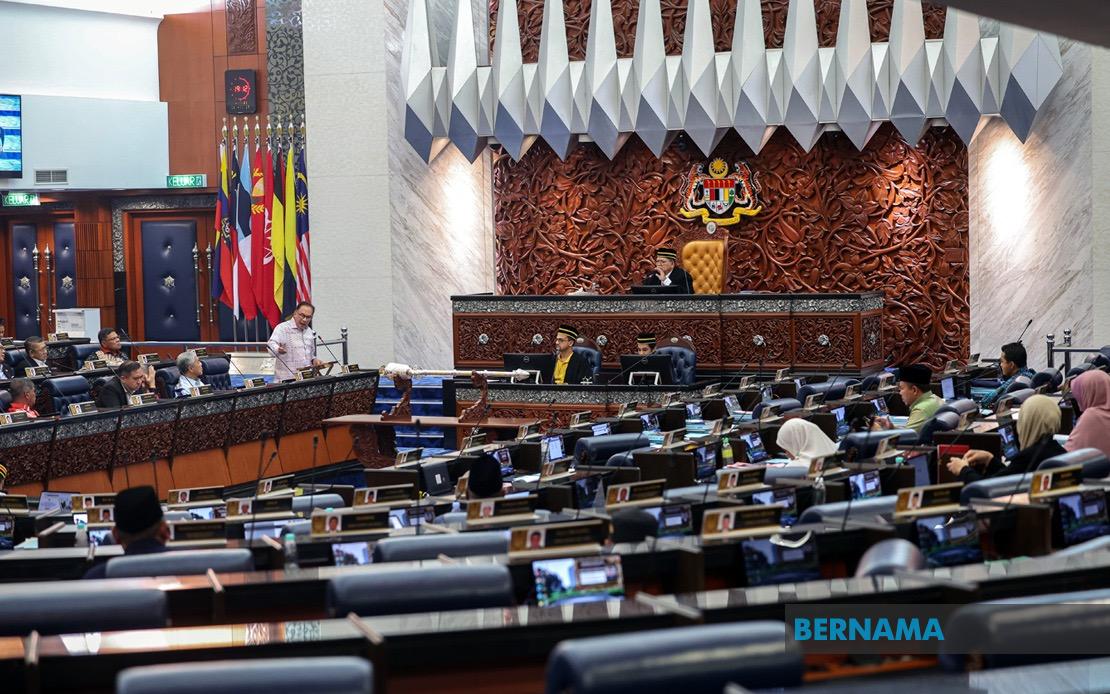
Parliament's lower house has given its approval to amendments overhauling the Employment Insurance System legislation, establishing a progressive fine regime designed to compel employers to declare open positions with the Social Security Organisation (PERKESO). The measure passed by majority voice vote on June 30 after receiving support from legislators representing both government and opposition benches, with 13 members participating in deliberations before the vote took place.
The legislative reform introduces financial sanctions structured to escalate with each infraction. Under the revised framework, a first-time violator faces a penalty of RM1,000, whilst repeated non-compliance triggers progressively steeper fines of RM3,000 for a second breach and RM5,000 for any subsequent offence. This tiered approach represents a substantial modification from earlier proposals, which had contemplated a maximum sanction of RM10,000—a figure ultimately deemed excessive following industry consultations. The amendments specifically address Clause 11 and Subsection 45F(4) of the legislation, having cleared the upper house on March 12 before reaching parliament's full chamber.
Deputy Human Resources Minister Datuk Khairul Firdaus Akbar Khan framed the initiative as an equilibrium between accountability and practical business operations. He emphasised that the legislative revisions prioritise education and voluntary compliance mechanisms, with enforcement positioned as a secondary measure applied only when organisations fail to respond to initial corrective guidance. Companies will receive compliance notices offering opportunity to rectify non-reporting behaviour before any financial penalties materialise, distinguishing this enforcement approach from punitive-first models that industry had criticised.
The policy framework emerges from extensive stakeholder engagement spanning multiple economic sectors. PERKESO conducted widespread consultation sessions with employer associations and business communities nationwide, soliciting feedback on implementation feasibility and operational burden. This consultative process directly influenced the final penalty structure, with the cap reduced from RM10,000 and the initial fine moderated to RM1,000, reflecting legitimate concerns from employers about disproportionate sanctions. The government's willingness to adjust its proposals based on business input demonstrates recognition that effective labour market policy requires cooperation rather than antagonism from the commercial sector.
Parliamentary debate revealed nuanced support coupled with practical reservations about implementation. Members highlighted the critical importance of simplified, accessible reporting systems, arguing that burdensome administrative requirements would undermine compliance intentions and inadvertently penalise small enterprises lacking sophisticated human resources infrastructure. The reporting mechanism's user-friendliness emerged as a recurring theme, with legislators emphasising that data collection serves crucial national objectives including unemployment reduction, improved job matching between employer needs and worker capabilities, and evidence-based labour market policymaking.
Among contributors, Azahari Hasan representing Padang Rengas stressed that efficient notification procedures directly enhance Malaysia's employment ecosystem by enabling PERKESO to perform sophisticated job-matching functions that intermediary bodies cannot replicate through traditional channels. His intervention underscored the legislation's broader significance beyond mere compliance enforcement—the requirement facilitates government intervention in labour market dynamics, potentially identifying skill gaps, geographic employment disparities, and sectoral workforce imbalances.
Nurul Amin Hamid raised concerns that enforcement capability would diverge substantially across Malaysia's diverse geography and business landscape. His Padang Terap constituency encompasses rural and semi-urban areas where awareness of legislative obligations remains comparatively low. Whilst welcoming the graduated penalty approach as proportionate, he cautioned that rural enterprises might inadvertently violate notification requirements through ignorance rather than deliberate non-compliance. This observation highlights the necessity for complementary awareness campaigns targeting smaller businesses and provincial employers who lack dedicated compliance personnel.
Symmetrical emphasis on transparency and equitable access characterised opposition-bloc contributions. Syerleena Abdul Rashid advocated for centralised government job advertisement portals ensuring that employment opportunities reach candidates through transparent mechanisms rather than informal networks or restricted channels. Such centralisation improves social mobility by preventing information asymmetries that advantage well-connected job seekers whilst disadvantaging others. The integration of PERKESO notification requirements with transparent government portals could amplify these egalitarian outcomes.
The legislation addresses a persistent structural challenge in Malaysia's labour market—the information disconnect between employer demand and job seeker supply. Despite headline employment figures suggesting reasonable labour market function, significant frictions persist in matching workers with appropriate opportunities. PERKESO's notification requirement aims to quantify job vacancies systematically, enabling better policy responses and reducing inefficient unemployment wherein suitable workers remain unplaced whilst employers struggle to fill positions. The penalty structure provides practical incentive for compliance without imposing confiscatory financial burdens likely to trigger business resistance.
Implementation success depends substantially on PERKESO developing genuinely user-friendly digital reporting infrastructure. If the notification system remains cumbersome or technically inaccessible, even well-intentioned employers may struggle with compliance, and enforcement becomes counterproductive. The government's commitment to guidance and engagement sessions before imposing penalties suggests recognition that sustainable compliance emerges from capability and goodwill rather than coercion alone. This approach aligns with contemporary international labour policy emphasising cooperative regulation over adversarial enforcement.
For Malaysian employers, particularly smaller enterprises, the amendments present manageable compliance obligations within a supportive policy framework. The graduated penalty structure respects business realities whilst establishing expectations around transparency that ultimately benefit the broader economy. Employers utilising PERKESO's notification system gain access to targeted recruitment channels and government-facilitated job-matching services, offsetting any administrative burden.
The legislative approval represents measured progress in formalising Malaysia's labour market infrastructure. By requiring systematic reporting of job vacancies, authorities develop empirical data essential for responsive workforce development policies and targeted unemployment reduction initiatives. The graduated enforcement approach, balanced with education and compliance guidance, positions this legislation as pragmatic rather than punitive—an important distinction that influences genuine adoption by the business community upon implementation.

