Novak Djokovic's pursuit of tennis history may finally find clearer passage at the U.S. Open, where the absence of Jannik Sinner through injury and Carlos Alcaraz's prolonged recovery from a wrist problem have removed two of his most formidable obstacles. The 39-year-old Serbian champion is targeting what would be a 25th Grand Slam singles title, a milestone that would stand alone atop the all-time record and surpass Margaret Court's long-standing 24-title tally. While Djokovic's recent Grand Slam record has been frustratingly modest by his standards—he has not won a major since capturing the U.S. Open in 2023—this year's circumstances may yet provide the opening he has lacked.
The landscape of men's tennis has shifted dramatically over the past two years, with Alcaraz and Sinner seizing dominance and combining to claim 10 of the last 11 Grand Slam titles. Their emergence has repeatedly derailed Djokovic's attempts to break clear of Court, with the pair defeating him five times across the last six major tournaments. His most recent near-miss came at the Australian Open earlier this year, where Alcaraz prevented him from capturing the title he desperately sought. These repeated setbacks have tested the resolve of one of sport's greatest champions, yet Djokovic appears unbowed as he prepares for what may represent his best remaining chance to etch his name definitively into the record books.
What distinguishes Djokovic's mindset heading into Flushing Meadows is an almost defiant self-belief rooted in his Serbian heritage. In a new documentary released ahead of the year's final major, Djokovic articulated the concept of "inat"—a Serbian cultural value emphasizing a stubborn refusal to accept doubt or defeat. He framed his quest for a 25th title not as a mathematical pursuit but as a visceral commitment to proving wrong those who view his window of opportunity as closed. For a competitor who has built his legacy on playing through pain and adversity, this psychological foundation may prove as valuable as any physical preparation.
Djokovic's injury concerns and limited preparation time would ordinarily represent substantial vulnerabilities heading into a major tournament. At 39, the physical demands of a month in New York would test even players a decade younger. Yet the circumstances surrounding his principal rivals have conspired to grant him unexpected breathing room. Sinner's withdrawal due to a knee injury eliminates one of the few players capable of overpowering Djokovic on hard courts. Alcaraz, while the defending champion and still a threat, arrives with considerable uncertainty hanging over his fitness after missing more than four months of competition. The defending champion has demonstrated an uncanny ability to perform at his highest level on the sport's grandest stages, but extended layoffs inevitably create questions about whether competitive sharpness can be fully restored.
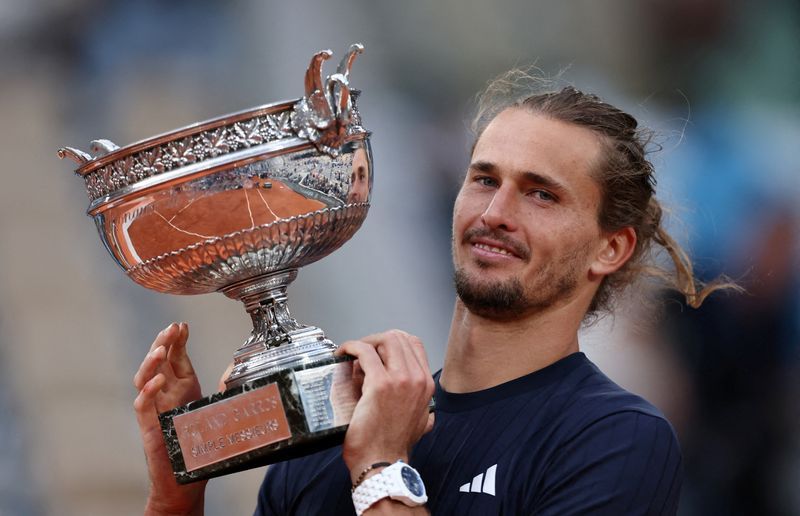
Alexander Zverev has emerged as the most pressing obstacle standing between Djokovic and his record-breaking 25th title. The German finally captured his maiden Grand Slam at the French Open earlier this year, validating years of potential and suggesting his breakthrough was not merely circumstantial. His subsequent appearance in the Wimbledon final underscored that his elite-level tennis now carries genuine substance. For a player who has long possessed the tools to win majors but lacked the consistent big-match execution, this sudden success represents a qualitative shift. Zverev's form and momentum make him a more dangerous proposition than any player Djokovic has faced in his recent quests for major titles.
Roger Federer, offering perspective from his unique vantage point as tennis royalty, has publicly expressed unwavering confidence in Djokovic's capacity to capture yet another major. Speaking to reporters in New York, Federer emphasized that Djokovic's presence in any tournament draw automatically elevates his championship prospects. The Swiss master's assessment rested not on sentiment but on decades of observing Djokovic perform at the highest level across every surface and against every conceivable opponent type. Federer identified self-belief as the animating force behind Djokovic's continued play at an age when most competitors have long since retired.
The American contingent at the U.S. Open presents a secondary narrative worth monitoring, as the host nation seeks to end a 23-year drought without a men's singles champion. Ben Shelton, the Canadian Open victor, has suddenly thrust himself into genuine contention following his victory in Montreal earlier this month. However, his trajectory remains difficult to parse with confidence. Following a premature Wimbledon exit, he rebounded with a major title, yet his performance in Cincinnati subsequently proved underwhelming. Former champion Andy Roddick, speaking on his 'Served' podcast, identified Shelton's ability to maintain intensity and consistency through the opening week as the critical variable determining whether he can sustain momentum through the tournament's second week. Frances Tiafoe, the Cincinnati runner-up, represents another credible American hope, while defending finalist Taylor Fritz will harbor legitimate ambitions of capturing his country's first major champion in over two decades.
Federer's remarks about Djokovic contained a deeper observation about hunger and motivation. The Swiss legend noted that Djokovic's continued participation in professional tennis suggests an internal conviction that remains intact despite the mounting evidence that his window for breaking the record has narrowed considerably. This psychological element—the difference between playing to compete and playing to achieve something historically significant—often determines outcomes in major tournaments. For Djokovic, every match at the U.S. Open carries heightened stakes and meaning beyond the immediate result.
Young talents like Arthur Fils and Rafael Jodar will seek to capitalize on the disrupted form of the established superstars, while Felix Auger-Aliassime, who reached the U.S. Open semi-finals last year, hopes to build upon what remains his most impressive major run. The Canadian lefthander sits at a crossroads in his career, where accumulating major tournament success becomes increasingly important to establishing himself as a genuine contender rather than a promising talent perpetually on the cusp. The 2024 U.S. Open tournament offers multiple competing narratives: Djokovic's historical quest, Zverev's consolidation as a major champion, Alcaraz's comeback credibility, and the American hope for domestic success. Each storyline carries weight and intrigue, making the event one of the year's most compelling sporting contests.

