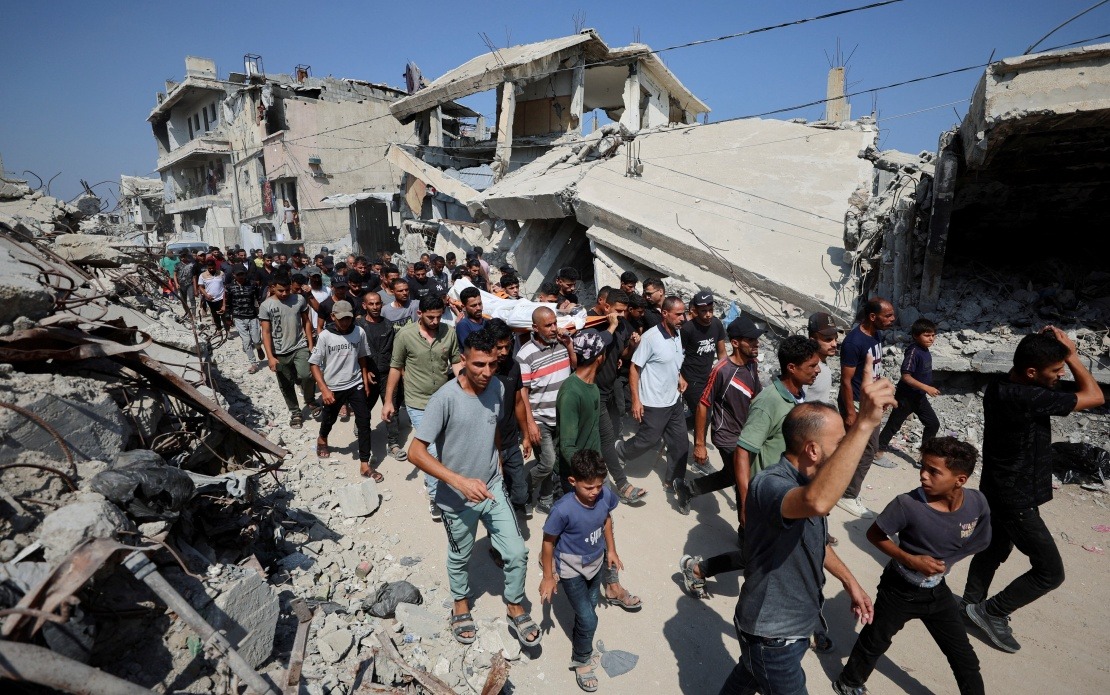
The humanitarian organisation Doctors Without Borders (MSF) has issued a stark rebuke of Israel's military system, denouncing the closure of multiple cases that resulted in the deaths of its personnel and their family members during the Gaza conflict. The decision, reached nearly two years after the group initially requested formal investigations, represents what MSF characterises as a systemic failure to ensure accountability for actions that may constitute war crimes under international humanitarian law.
The timeline of MSF's struggle for justice underscores the obstacles facing international humanitarian organisations seeking accountability within Israel's legal framework. After first petitioning for investigations into the deadly incidents, MSF was compelled to escalate its efforts by appealing to Israel's High Court of Justice regarding the Military Advocate General's apparent inaction. The ultimate closure of these cases without criminal proceedings signals to MSF and international observers that the military's internal review mechanisms cannot deliver genuine accountability for civilian casualties.
Among the incidents spurring MSF's complaint was a November 2023 attack on an MSF-operated convoy that resulted in the deaths of two individuals connected to the organisation's operations in Gaza. One of the deceased, Alaa Al Shawa, held dual status as both a volunteer coordinator and a staff supporter working alongside MSF medical teams at the Al-Shifa Hospital complex. This particular case exemplifies the direct targeting or fatal miscalculation that affected MSF's operational capacity during the conflict.
A second tragic incident unfolded in February 2024 when an Israeli military operation struck an MSF-run shelter facility located in Khan Younis. The attack claimed the lives of an MSF staff member's wife and daughter-in-law while injuring six additional persons sheltering at the facility, a majority of whom were women and children. These casualties highlight the vulnerability of civilians in proximity to humanitarian operations and raise questions about targeting procedures and verification protocols.
Crucially, MSF maintains that all necessary precautions were undertaken to prevent such incidents. The organisation states it had formally shared the identities and locations of its personnel with Israeli military command structures and ensured its vehicles bore clearly visible identification markings. These disclosures, standard practice under international humanitarian law protocols, were intended to grant MSF operations protection from military operations. The persistence of fatal incidents despite these measures forms the foundation of MSF's argument regarding either deliberate targeting or catastrophic operational failures.
The scale of loss within Gaza's healthcare sector underscores why these individual cases matter beyond the immediate tragedy. MSF has documented that 15 of its staff members have been killed by Israeli forces since October 2023, representing a fraction of the approximately 1,700 healthcare workers who have perished during the same period. This decimation of medical capacity has crippled Gaza's ability to provide basic healthcare services to a besieged population, creating a humanitarian catastrophe extending far beyond immediate combat casualties.
MSF's characterisation of the case closures as demonstrating "no prospect of accountability within the Israeli legal system" carries significant implications for international humanitarian accountability mechanisms. The statement suggests that relying on Israeli military or civilian courts to investigate allegations against Israeli forces may prove systematically inadequate, a conclusion with ramifications for how the international community approaches accountability in this conflict.
The organisation has explicitly called for international intervention, demanding that an impartial, independent investigative body undertake comprehensive review of incidents involving MSF personnel. This position reflects a broader humanitarian consensus that military systems investigating their own forces face inherent conflicts of interest that compromise investigative integrity. For Malaysian and regional readers, this dispute highlights the fundamental tension between national sovereignty and international accountability standards that frequently arise in conflict situations.
MSF has anchored its criticism within the broader context of what it describes as Israel's "ongoing genocide against Palestinians in Gaza," linking individual case closures to systemic patterns of alleged violations. This framing positions the failure to investigate MSF staff deaths not as isolated administrative oversights but as symptomatic of insufficient accountability mechanisms that allow widespread violations to proceed without consequence. The organisation's assertion that "no military objective justifies the wholesale sacrifice of civilians" articulates a fundamental principle of international humanitarian law that remains contested in practice.
According to Gaza's Health Ministry statistics provided during this reporting period, the conflict has claimed approximately 73,417 Palestinian lives since October 2023, with 174,360 additional persons wounded. These figures, though disputed by Israeli authorities regarding methodology, represent casualties on a scale that demands serious accountability mechanisms. The ministry separately reported that ceasefire violations alone have resulted in 1,283 deaths and 4,248 injuries, indicating the humanitarian toll continues mounting.
For Southeast Asian nations and Malaysia specifically, this situation presents cautionary lessons about the sufficiency of internal military accountability systems when investigating allegations involving international humanitarian organisations. The case demonstrates how powerful states can effectively shield military forces from external scrutiny, raising questions about the viability of international humanitarian law in asymmetric conflict situations. Malaysian policymakers and civil society observers should consider how Malaysia, as both a UN member and a nation with humanitarian commitments, engages with accountability mechanisms in international conflicts.
The closure of MSF cases without investigation represents a critical juncture in efforts to establish accountability norms for military conduct toward humanitarian personnel. If international organisations working in conflict zones cannot secure investigations into the deaths of their staff members despite proper identification and coordination, the practical protections offered by international humanitarian law become questionable. This erosion of accountability frameworks affects not only MSF but the entire humanitarian assistance infrastructure that depends upon reasonable assurances of safety and justice.

