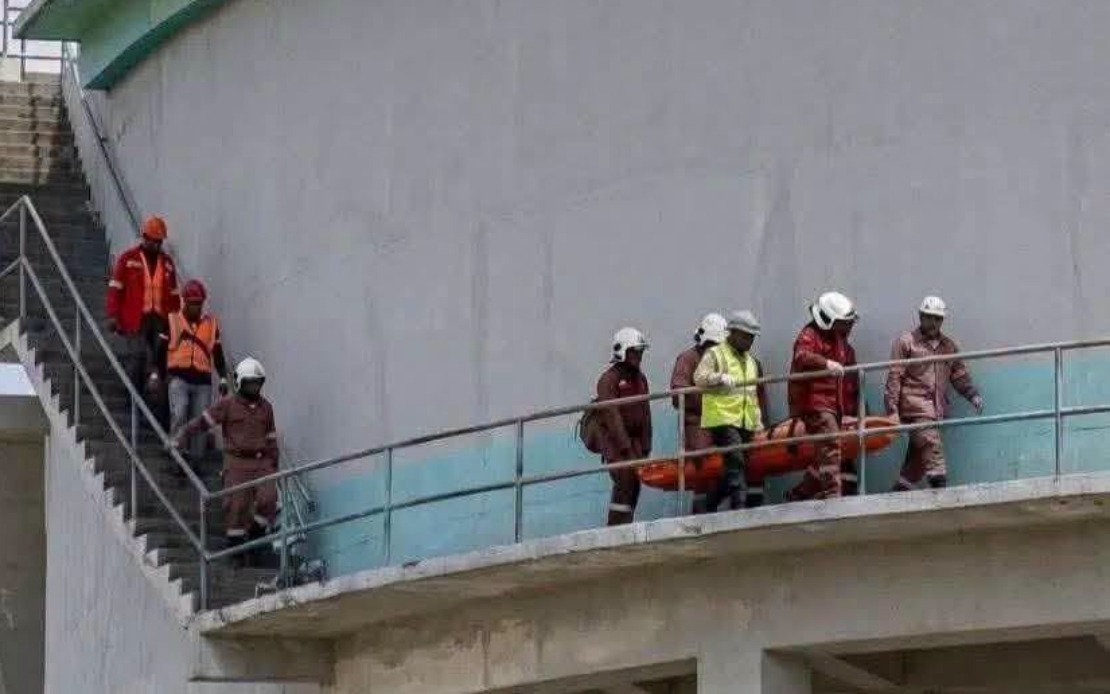
A fatal workplace accident at a water tank cleaning operation in Sungai Buloh has triggered a formal investigation by Malaysia's Department of Occupational Safety and Health (DOSH), with authorities warning of potential enforcement action if safety violations are uncovered. The incident, which claimed the life of an industrial trainee at Menara Saujana Perdana 1 on June 16, has become the focus of a comprehensive probe spanning multiple aspects of occupational safety compliance.
DOSH director-general Hazlina Yon confirmed that teams from the Selangor office have already visited the location and issued orders preventing any interference with the accident scene. The ongoing investigation encompasses witness interviews and a detailed examination of circumstances surrounding the trainee's death, with particular emphasis on whether companies involved breached occupational safety and health legislation. The inquiry is being conducted under Sections 15, 17 and 18 of the Occupational Safety and Health Act 1994, provisions that establish the legal obligations of employers, self-employed persons and other parties to safeguard worker wellbeing and protect anyone who might be affected by work-related activities.
The incident underscores a persistent weakness in Malaysia's handling of confined space work, an inherently dangerous activity that demands exceptional precautions. Water tank cleaning represents a textbook confined space hazard, combining atmospheric risks, limited entry and exit points, and potential exposure to toxic residues or oxygen depletion. Yet such operations frequently proceed with inadequate safety protocols, suggesting systemic gaps between legal requirements and workplace practice across the country. The death of a trainee is particularly troubling, implying that someone with limited experience was assigned hazardous work without sufficient protective measures or expert supervision.
Hazlina's statement contains an implicit rebuke of industry practices, with emphasis on the responsibility of employers to conduct thorough risk assessments before any work begins. The requirement for relevant work permits—formal documentation authorizing confined space entry under specific conditions—is not merely bureaucratic procedure but a proven mechanism for preventing incidents. Yet evidence from this case suggests such permits may not have been obtained or properly enforced. Similarly, her reminder that control measures must be implemented before workers enter confined spaces indicates these safeguards were likely absent or inadequate in this instance.
The training gap identified in Hazlina's statement points to a broader problem affecting Malaysia's industrial sector. Industrial trainees and new workers frequently enter hazardous situations without adequate preparation, often because employers prioritize speed and cost savings over comprehensive safety induction. The DOSH director specifically mandated that trainees involved in high-risk work receive proper occupational safety and health training, detailed briefings about specific hazards they will encounter, and supervision by individuals with recognized competence in confined space work. The failure to meet any of these conditions constitutes a violation, yet all three typically remain unmet in low-cost operations across Southeast Asia.
Malaysia's legal framework actually provides robust protection if properly enforced. The Occupational Safety and Health Act 1994 explicitly places responsibility on employers to identify risks associated with every work activity before it commences, with particular scrutiny for high-risk operations. This forward-looking requirement means employers cannot claim ignorance about hazards; they must actively research and document what dangers exist for any task their workers perform. Confined space work in particular demands written procedures that all workers must understand and follow, along with evidence that these procedures have been communicated and acknowledged.
The emphasis on vendor and contractor accountability reflects a common enforcement challenge in Malaysia. Large construction and industrial companies often subcontract specialized work to smaller firms with minimal safety infrastructure, creating a chain of responsibility where the primary employer claims limited oversight. Hazlina's statement makes clear this arrangement does not diminish the main company's legal obligation to ensure everyone involved—whether directly employed or contracted—receives adequate protection. This principle has significant implications for property developers and building owners who commission cleaning and maintenance work; they cannot escape liability by hiring third parties.
The incident also highlights the vulnerability of industrial trainees within Malaysia's labor system. Many trainees lack formal employment contracts, union representation, or clear reporting channels for safety concerns. Their temporary status and focus on gaining experience can make them reluctant to raise objections when supervisors cut corners or skip procedures. Employers exploit this dynamic, assigning trainees to dangerous tasks that permanent workers might refuse. The death recorded in this investigation represents both a human tragedy and a symptom of systemic exploitation within Malaysia's occupational training ecosystem.
DOSH's investigation will likely examine whether the employer possessed a valid confined space entry permit, whether atmospheric testing was conducted, whether rescue equipment was available at the site, and whether workers had received competence certification for confined space work. If violations are confirmed, the department can pursue prosecution under the Occupational Safety and Health Act 1994, potentially resulting in substantial fines and criminal liability for company officers. Similar cases in Malaysia have resulted in penalties exceeding RM500,000, though prosecution rates remain disappointingly low relative to the number of workplace incidents reported annually.
For Malaysian employers and workers, this investigation carries immediate relevance. Organizations conducting any confined space work—whether water tank cleaning, sewage system maintenance, or vessel inspection—must immediately review their procedures against DOSH guidelines. Workers should understand they have the right to refuse unsafe work without penalty and can report violations to DOSH's complaint system. The department maintains regional offices throughout Malaysia and operates a 24-hour hotline for incident reporting.
The broader implications for Southeast Asia are equally significant. Malaysia's occupational safety standards are among the region's highest, yet even here fatal accidents continue occurring in preventable circumstances. Other countries in the region often have weaker frameworks and enforcement capacity, meaning confined space work in Vietnam, Cambodia, or Indonesia carries even greater risks. This incident demonstrates that written laws alone provide insufficient protection; effective safety requires cultural change within organizations, with senior management visibly committed to prevention and workers empowered to challenge unsafe practices without fear of consequences.

