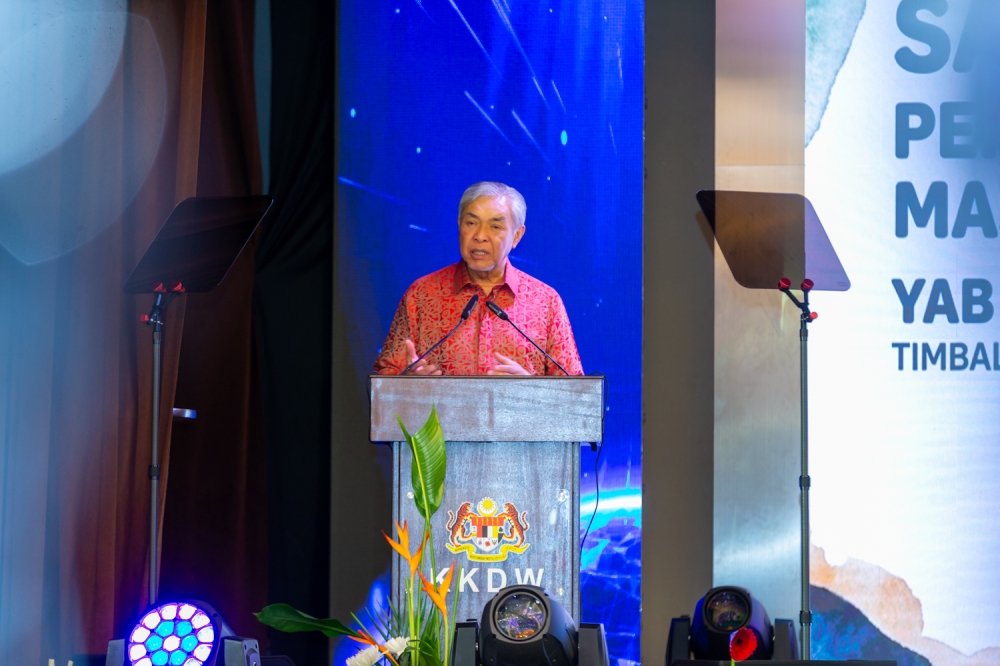
Deputy Prime Minister Datuk Seri Ahmad Zahid Hamidi has publicly rejected widespread social media allegations suggesting that top leaders from Barisan Nasional, Perikatan Nasional, GPS, and GRS convened for secret discussions, describing the claims as unfounded gossip. Speaking in Putrajaya on July 21, the senior politician sought to dispel growing speculation about possible political realignments that had circulated online, emphasizing instead his steadfast dedication to maintaining the existing unity government arrangement.
The emergence of these claims reflects the persistent volatility within Malaysia's political landscape, where coalition configurations remain fluid and frequently subject to rumour and conjecture. Since the establishment of the current unity government framework, observers have continuously monitored potential shifts in party alignments, particularly given historical patterns of electoral realignment and the competing interests of different political groupings. Such reports, whether accurate or speculative, invariably generate uncertainty among stakeholders and the broader business and investor community, who depend on stable governance structures for planning and confidence.
Zahid's strong denial carries particular weight given his prominent position within the administration and his role as custodian of Barisan Nasional, historically Malaysia's dominant political coalition. His explicit confirmation of support for the unity model signals continuity in government operations and suggests no imminent fracturing of the legislative support that underpins the current administration. For Malaysian readers and observers tracking parliamentary dynamics, these reassurances matter substantially, as coalition stability directly influences the government's capacity to enact legislation, manage fiscal policy, and pursue long-term developmental initiatives.
The circulation of such unverified political claims on social media platforms underscores broader challenges facing Malaysia's information ecosystem. Viral allegations, even when baseless, can trigger market fluctuations, erode investor confidence, and distract policymakers from substantive governance priorities. The deputy premier's direct rebuttal demonstrates an awareness of these cascading consequences and signals a deliberate effort to contain political uncertainty through transparent denial rather than silence.
Barisan Nasional, Perikatan Nasional, GPS, and GRS collectively represent distinct regional and ideological interests within Malaysian politics. Barisan Nasional remains the traditional establishment coalition; Perikatan Nasional emerged as a competitive force drawing support from different demographic segments; GPS maintains dominance in Sarawak with its own federal ambitions; while GRS controls Sabah's political apparatus. Any genuine coalition-building exercise involving all four entities would constitute a seismic realignment with profound implications for parliamentary mathematics and governmental legitimacy.
The unity government itself, formed following the 2022 general election results, represented a pragmatic compromise designed to ensure stable governance amid fractured electoral outcomes. Rather than perpetual coalition-shuffling or deadlocked minority administrations, this arrangement prioritized functional stability. Zahid's reinforcement of commitment to this model suggests calculations that maintaining the status quo serves the interests of his party and coalition partners better than pursuing alternative configurations at present.
For Southeast Asian observers, Malaysia's coalition dynamics offer instructive lessons in parliamentary governance under conditions of electoral fragmentation. Unlike two-party systems where power alternates predictably, Malaysia's multi-party landscape demands continuous negotiation, alliance-building, and compromise. The unity government represents one approach to managing this complexity, though it requires constant attention to maintain coherence and prevent defections or realignments that could destabilize legislative majorities.
The social media environment amplifies political rumours in ways that previous generations of Malaysian politics never experienced. Unverified allegations spread instantaneously, reaching millions of readers who may lack context to evaluate their credibility. Zahid's direct public response constitutes a strategic communication choice, preferring immediate denial to allowing speculation to fester unchecked. This approach reflects modern political communication realities where silence often permits narratives to solidify among populations already prone to scepticism toward official announcements.
Domestically, questions about coalition stability intersect with voter concerns regarding corruption, economic management, and delivery of public services. While political gossip captures headlines, most Malaysians prioritize tangible governance outcomes: fiscal discipline, infrastructure development, educational standards, and healthcare quality. The unity government's legitimacy ultimately rests not merely on coalition mathematics but on demonstrable capacity to address substantive policy challenges and maintain public trust through transparent administration.
Zahid's statement also carries implicit reassurance to component parties within existing coalitions, particularly those concerned about potential poaching of their members or constituencies by rival groupings. By affirming unity government stability, he signals that current arrangements offer sufficient advantages to justify continued participation, potentially precluding defections driven by fears of abandonment or marginalization. This political management dimension extends beyond public communication into internal coalition dynamics and party discipline mechanisms.
Looking forward, Malaysian political observers should anticipate continued monitoring of coalition stability, particularly as the administration confronts challenging fiscal positions, inflationary pressures, and demand for enhanced social spending. Political realignments historically correlate with economic stress and perceived government failure to deliver expected services. The unity government's durability will ultimately depend on its capacity to navigate these pressures whilst maintaining sufficient internal cohesion to prevent opportunistic party-switching or coalition collapse driven by electoral calculations ahead of the next general election cycle.

