Dr Maszlee Malik, the Pakatan Harapan candidate vying for the Puteri Wangsa state seat in Johor, recently undertook an unconventional campaign activity that blended constituent engagement with direct personal experience. He accepted a challenge from social media users to pilot a Perodua Myvi along a heavily travelled corridor spanning from Kampung Melayu Tebrau through to Ulu Tiram. The initiative reflected an emerging campaign strategy where politicians attempt to validate public grievances by subjecting themselves to the same conditions that everyday commuters endure.
The choice of vehicle was deliberately symbolic. The Myvi, widely marketed as the "King of the Road" and beloved by Malaysian drivers for its affordability and maneuverability, became an instrument for testing infrastructure quality. By selecting this mass-market compact car rather than an official vehicle, Maszlee signalled an intention to experience conditions as ordinary residents do. The drive itself covered multiple troublesome stretches including passages through Pandan and Kangkar Tebrau, areas that residents have frequently flagged on digital platforms for substandard road surfaces and unpredictable traffic patterns.
Maszlee's assessment of the route proved candid. He characterised the road condition using a vivid nautical metaphor, likening the driving experience to navigating a traditional wooden boat on water. The repeated jolting and swaying caused by uneven asphalt and structural defects conveyed the cumulative discomfort that commuters absorb daily. Beyond the physical sensation of poor pavement, he also confronted the secondary infrastructure challenge of severe congestion during peak travel hours. This multi-layered understanding transcends the passive reception of complaints and moves toward embodied knowledge of constituent dissatisfaction.
The former education minister and former Member of Parliament for Simpang Renggam employed this hands-on research to frame infrastructure deficiencies not as isolated inconveniences but as systemic urban planning failures. He identified rapid residential development in localities such as Taman Daya and Taman Pelangi Indah as the underlying cause, noting that expansion had proceeded without commensurate investment in supporting road networks. This diagnosis suggests that solving the problem requires not merely patching potholes but reconceiving how development approvals interact with infrastructure capacity. The observation carries particular relevance for Malaysian towns experiencing similar growth patterns.
Maszlee's proposed solutions emphasised collaboration across government entities rather than individual heroic action. He advocated engaging the Public Works Department (JKR), urban planners, and other stakeholders in comprehensive long-term planning initiatives. His experience in federal ministerial positions informed his assessment that addressing infrastructure requires understanding bureaucratic processes and coordination mechanisms. This measured framing avoids populist promises while signalling technical competence. For voters evaluating candidates, such positioning indicates awareness of institutional constraints facing state-level administrators who must often navigate federal agency jurisdictions.
The Puteri Wangsa constituency in which this campaign activity occurred presents a complex electoral landscape. With 128,723 registered voters, the seat will witness a five-way contest. Maszlee competes against Rashifa Aljunied representing MUDA, Teow Chia Ling from Barisan Nasional, Nicholas Paul Vincent from Parti Bersama Malaysia, and Wang Wee Siong as an independent candidate. The fragmented field means candidates require not merely broad appeal but targeted engagement with specific voter concerns to accumulate sufficient plurality support.
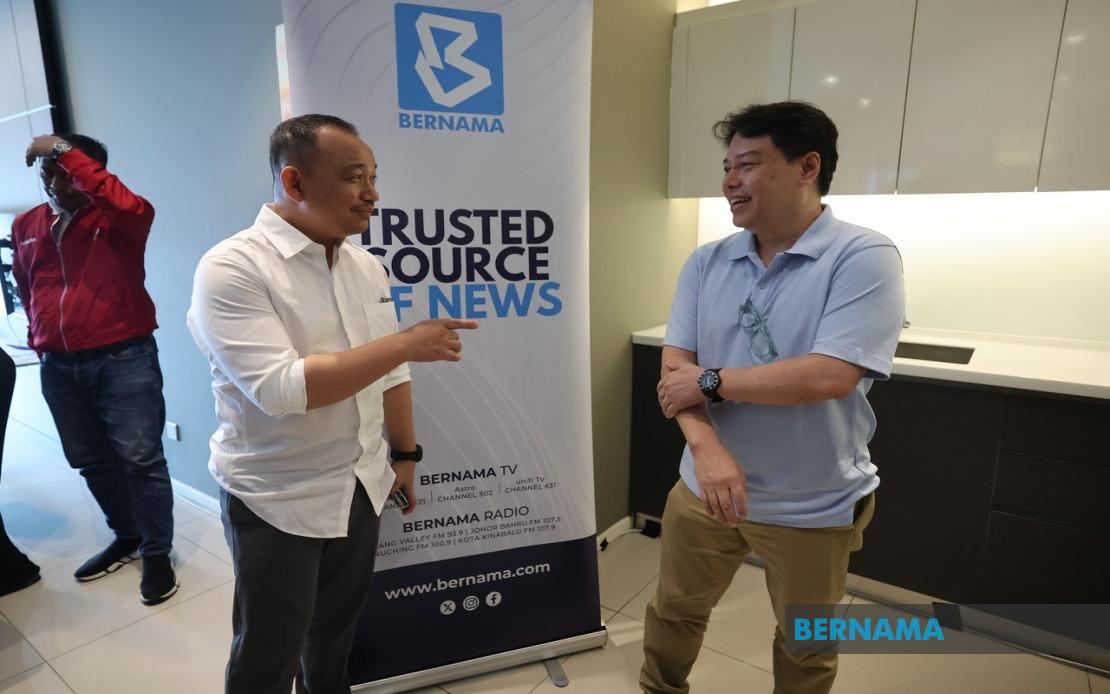
The timing of this campaign gesture coincided with Maszlee's visit to BERNAMA's operations centre during the coverage of the 16th Johor state election. This institutional backdrop lent media visibility to the challenge-acceptance, transforming a social media interaction into documented political narrative. The convergence of grassroots digital engagement with traditional news infrastructure exemplifies how contemporary Malaysian campaigns operate across multiple communication channels simultaneously.
Maszlee's emphasis on listening to constituents before determining priorities articulated a consultative campaign philosophy. He signalled that his prior ministerial experience equipped him to implement solutions rather than merely sympathise with problems. This positioning addresses a common voter concern in Malaysian politics: whether candidates possess the practical capacity and institutional knowledge to translate campaign promises into tangible improvements. For Johor voters experiencing genuine infrastructure deficits, such assurances carry material weight.
The Myvi challenge campaign method reveals broader shifts in Malaysian electoral engagement. Rather than relying solely on ceramah speeches or policy documents, candidates increasingly employ experiential activities that invite voters to see them engaging directly with public concerns. This approach carries both genuine utility, allowing politicians to authentically understand conditions, and performative dimensions, as visual documentation reaches audiences through social media and news coverage. The effectiveness of such tactics depends partly on whether subsequent actions verify the professed commitments.
Infrastructure quality constitutes a perennial grievance across Malaysian constituencies, yet frequently receives secondary priority relative to higher-level political narratives. Maszlee's decision to centre his campaign engagement on road and traffic conditions reflected strategic calculation that constituent satisfaction with daily services influences electoral outcomes. Johor voters navigating congested routes during commutes experience repeated, tangible impacts from infrastructure decisions in ways that national-level policies may not immediately address.
The Johor state election scheduled for July 11, with early voting on July 7, would determine whether Maszlee's campaign strategy and infrastructure-focused positioning resonated with Puteri Wangsa voters. The constituency's voter roll of over 128,000 comprised primarily ordinary citizens and a small contingent of police personnel and their families, a demographic profile reflecting broader Johor suburban development. For such voters, assessment of candidates often hinged on perceived understanding of and commitment to resolving infrastructure constraints affecting daily life.
Maszlee's infrastructure-centric campaign approach potentially resonates beyond Johor state politics. Many Malaysian urban and semi-urban constituencies confront similar road deterioration and traffic congestion resulting from development outpacing infrastructure expansion. The willingness to experience these conditions directly rather than merely acknowledge them through policy statements represents a communication strategy applicable across diverse electoral contexts. Whether voters ultimately reward such engagement through electoral support would illuminate contemporary Malaysian political preferences regarding candidate authenticity and constituent connection.

