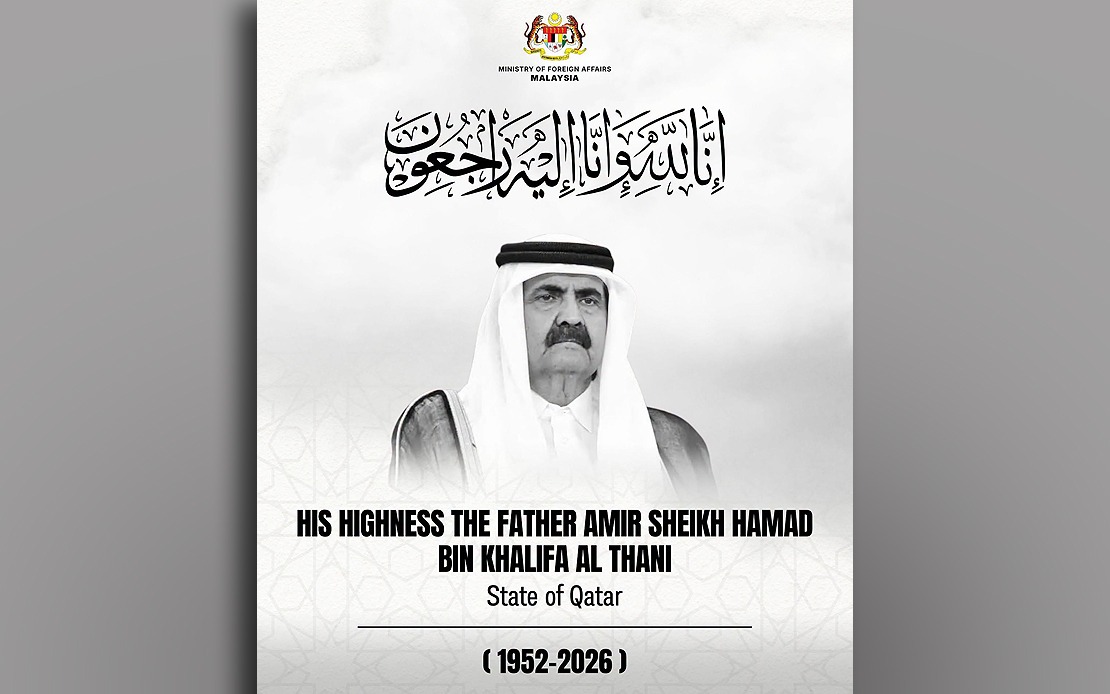
Malaysia has dispatched its Higher Education Minister to pay respects during Qatar's period of national mourning following the death of Sheikh Hamad bin Khalifa Al Thani, the Father Amir of the Gulf state. Datuk Seri Dr Zambry Abdul Kadir will represent the Malaysian government at condolence ceremonies scheduled for July 13 and 14, as the Gulf nation observes an extended period of grief and reflection for its revered former leader.
The Qatari government has declared four days of official mourning across the country, commencing from Sunday July 12. During this significant period, all ministerial departments, government agencies, and public institutions throughout Qatar will remain closed, underscoring the profound respect accorded to the late Father Amir and the seriousness with which the nation observes this loss.
The formal condolence proceedings will take place at Lusail Palace, where the current Amir of Qatar, Sheikh Tamim bin Hamad Al Thani, will receive tributes from international heads of state, members of the Qatari ruling family, diplomatic dignitaries, and citizens. The three-day reception programme, running from July 13 through 15, represents a structured opportunity for world leaders and representatives to express their sympathies and acknowledge the legacy of Sheikh Hamad bin Khalifa Al Thani.
Malaysia's participation in these ceremonies reflects the importance placed on bilateral relations between the two nations. Through the Foreign Ministry's official statement, released on Monday, the Malaysian government conveyed deep sorrow regarding the passing and emphasised the country's unwavering support for Qatar during this solemn period. The diplomatic gesture demonstrates Malaysia's commitment to strengthening ties with one of Southeast Asia's significant trading and investment partners in the broader Middle Eastern region.
Sheikh Hamad bin Khalifa Al Thani, who served as Father Amir before passing authority to his son, played a transformative role in Qatar's modern development. His tenure witnessed the nation's emergence as a regional powerhouse, marked by substantial economic diversification, strategic investments in infrastructure, and increased global diplomatic engagement. The representation at the state mourning underscores Malaysia's recognition of his considerable influence on Middle Eastern geopolitics and his contributions to advancing bilateral relationships with nations across Asia and beyond.
For Malaysia, participation in such high-profile diplomatic ceremonies serves multiple purposes beyond ceremonial obligation. It reinforces bilateral bonds with Qatar, a nation that has become increasingly significant within the Malaysian economic and political sphere. The dispatch of a senior cabinet minister rather than a lower-ranking official signals the gravity with which Kuala Lumpur regards its relationship with Doha and demonstrates respect for the historical importance of Sheikh Hamad bin Khalifa Al Thani's leadership.
Qatar's relationship with Malaysia extends across multiple dimensions, including trade, investment, education, and cultural exchange. Malaysian companies maintain substantial business interests within Qatar, whilst Qatari investment in Malaysian real estate, infrastructure, and financial sectors remains considerable. Occasions such as state mournings provide diplomatic opportunities to engage with leadership and strengthen institutional relationships that underpin these economic ties.
The timing and scale of Qatar's state mourning reflect the elevated status accorded to former leaders within Gulf Arab tradition and governance structures. The decision to close all government operations during this period represents far more than a simple pause in administrative activity; it symbolises the entire nation's collective acknowledgment of loss and the enduring legacy of leadership that shaped modern Qatar.
For regional observers, Malaysia's active participation in Qatar's mourning ceremonies demonstrates the interconnected nature of Southeast Asian and Middle Eastern diplomatic relations. Such engagement reinforces multilateral networks that operate across religious, cultural, and geopolitical boundaries, contributing to broader regional stability and mutual understanding. The representation by Dr Zambry Abdul Kadir, whose portfolio encompasses higher education, also acknowledges Qatar's substantial investments in educational partnerships with Malaysian institutions and the ongoing academic collaboration between both nations.
The condolences extended through official channels reflect broader patterns of diplomatic reciprocity that characterise Malaysia's foreign policy approach. By honouring the passing of prominent regional figures and demonstrating solidarity with mourning nations, Malaysia positions itself within networks of mutual respect and support that transcend immediate bilateral interests. Such gestures accumulate over time, building reservoirs of goodwill that facilitate cooperation on future matters of shared concern, whether economic, security-related, or developmental in nature.

