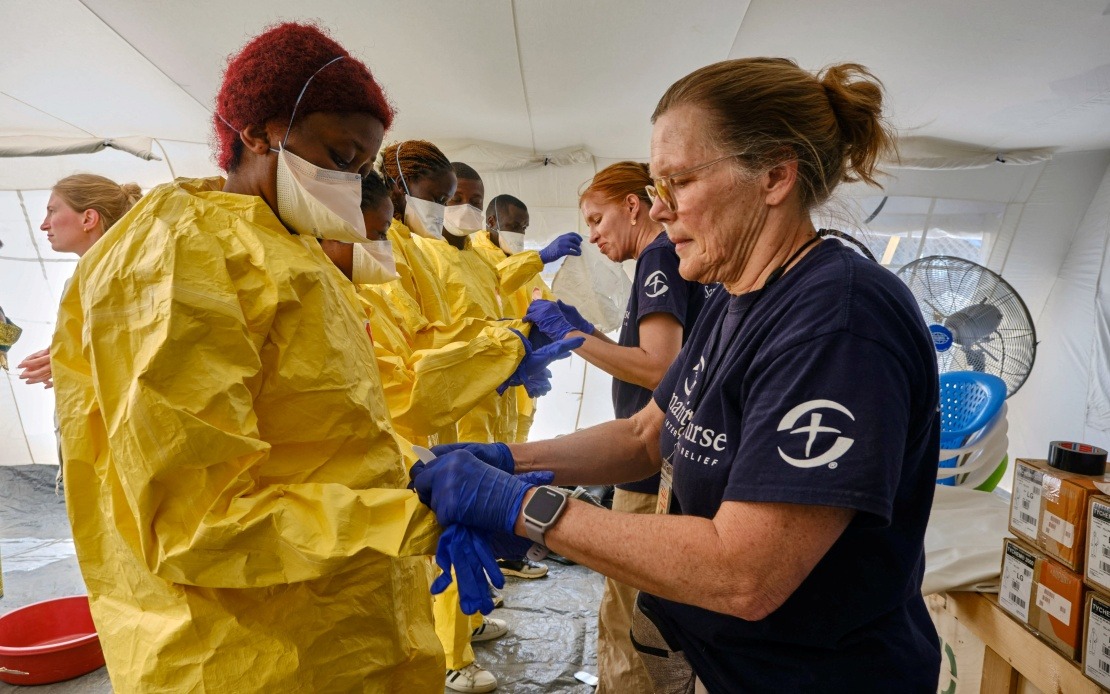
The Democratic Republic of the Congo is confronting a mounting public health crisis as confirmed Ebola cases climbed to 2,905 with 1,269 fatalities, according to figures released by the health ministry on Friday. The rapid escalation in the official tally underscores both the scale of the current outbreak and the logistical challenges facing a nation already stretched by healthcare infrastructure gaps and conflict-related disruptions.
The sharp increase in reported figures stems significantly from administrative consolidation rather than a sudden surge in new infections alone. Eastern provinces Ituri and North Kivu integrated their harmonised databases into the national system on Wednesday, bringing previously uncounted cases into the official record. This reconciliation of data—while explaining the dramatic jump—also reveals the fragmented nature of disease surveillance across the sprawling Central African nation. The ministry reported 97 confirmed cases and 62 deaths specifically on Wednesday, but emphasised that the overall increase reflected archival gaps rather than solely reflecting the preceding 24-hour period.
Progress on the treatment front shows modest gains amid the broader crisis. A total of 519 patients have successfully recovered from the virus, while 722 others currently remain under isolation or receiving ongoing medical care. These figures suggest that while fatality rates remain devastating, certain patients do recover when provided adequate supportive treatment, highlighting the importance of early intervention and robust healthcare capacity.
During a Thursday visit to Kisangani, the capital of Tshopo province—which represents a newly affected area in this outbreak—Prime Minister Judith Suminwa Tuluka identified a critical barrier to treatment success. Many patients arrive at health facilities only after developing severe symptoms, by which point clinical outcomes deteriorate substantially. This delayed presentation reflects multiple factors: limited health literacy in rural areas, weak communication networks, geographic isolation from medical centres, and lingering mistrust of health institutions. The Prime Minister's recognition of this bottleneck suggests the government understands that pharmaceutical interventions alone cannot control this outbreak without simultaneous improvements in community engagement.
In response, the government pledged to intensify community education and awareness initiatives aimed at encouraging individuals with suspected symptoms to seek medical evaluation earlier in the disease course. Such preventive outreach, though less visible than laboratory or treatment infrastructure, may ultimately prove decisive in curtailing transmission. Early detection enables prompt isolation, contact tracing, and treatment—interrupting chains of transmission that otherwise perpetuate community spread.
Resource allocation reflects these priorities. The government has committed US$50 million to the Ebola response, with earmarked investments in laboratory capacity, medical equipment, community-based surveillance networks, and direct patient care. For a nation with severely constrained fiscal resources, this represents a significant budgetary commitment, though observers have noted that funding gaps remain acute and external donor support remains critical to sustaining operations.
A breakthrough in vaccine development offers potential long-term protection against future outbreaks of this particular Ebola strain. The University of Oxford announced on Friday that the first volunteer has received the ChAdOx1 BDBV vaccine in what the institution describes as the world's first human trial of a vaccine specifically designed against the Bundibugyo ebolavirus strain driving the current DRC outbreak. This represents a watershed moment in vaccinology, as previous Ebola vaccines targeted the Zaire strain, which caused earlier West African epidemics.
The candidate vaccine emerged from collaborative development between Oxford's Oxford Vaccine Group and Pandemic Sciences Institute, reflecting the increasingly networked nature of global vaccine research. The Serum Institute of India has manufactured and stockpiled approximately 620,000 doses of ChAdOx1 BDBV, with 4,000 doses designated specifically for the investigational trial. This pre-positioned manufacturing capacity, secured before trial completion, represents an optimistic wager that the vaccine will prove safe and effective—a strategy that accelerates deployment if trials succeed but creates inventory risk if they do not.
The initial phase of human testing will recruit approximately 50 healthy adult volunteers and focuses on foundational questions: whether the vaccine causes unacceptable adverse effects and whether it generates appropriate immune responses. These Phase 1 outcomes provide the scientific foundation for subsequent larger trials assessing efficacy in field conditions. Subject to regulatory approval from relevant authorities, Oxford is already preparing more extensive clinical studies in partnership with institutions in Uganda, signalling confidence in the development pathway and commitment to testing the vaccine in regions proximate to where Ebola circulates.
For Southeast Asia and the broader Indo-Pacific region, the DRC outbreak and vaccine development carry indirect significance. While Ebola has not established endemic transmission in Asia, regional health systems remain vulnerable to emerging infectious diseases, as the COVID-19 pandemic demonstrated conclusively. The DRC crisis exemplifies how disease surveillance fragmentation, delayed case identification, and limited treatment capacity can transform localised outbreaks into sustained epidemics. Malaysian and Southeast Asian policymakers have observed these shortcomings and the international response, informing ongoing efforts to strengthen regional disease surveillance networks and cross-border communication mechanisms.
The vaccine development narrative also illustrates shifting geopolitics of pharmaceutical manufacturing and global health security. The Serum Institute's role in producing vaccines designed by British researchers and tested in African populations reflects interdependent supply chains, yet also exposes vulnerabilities when sovereign interests diverge. For Malaysia and other middle-income nations pursuing self-sufficiency in critical medicines, the DRC-Oxford partnership offers lessons about the utility of early manufacturing commitments and the value of regional capacity building.
Moving forward, the DRC response will require sustained coordination between national authorities, international partners, and affected communities. The Prime Minister's emphasis on community engagement alongside the government's substantial fiscal commitment suggests recognition that Ebola control demands integrated approaches rather than purely technocratic solutions. The vaccine trial represents scientific progress, yet effective outbreak containment in coming months will depend equally on strengthening health system capacity, improving patient access to diagnosis and care, and building community trust in public health institutions.

