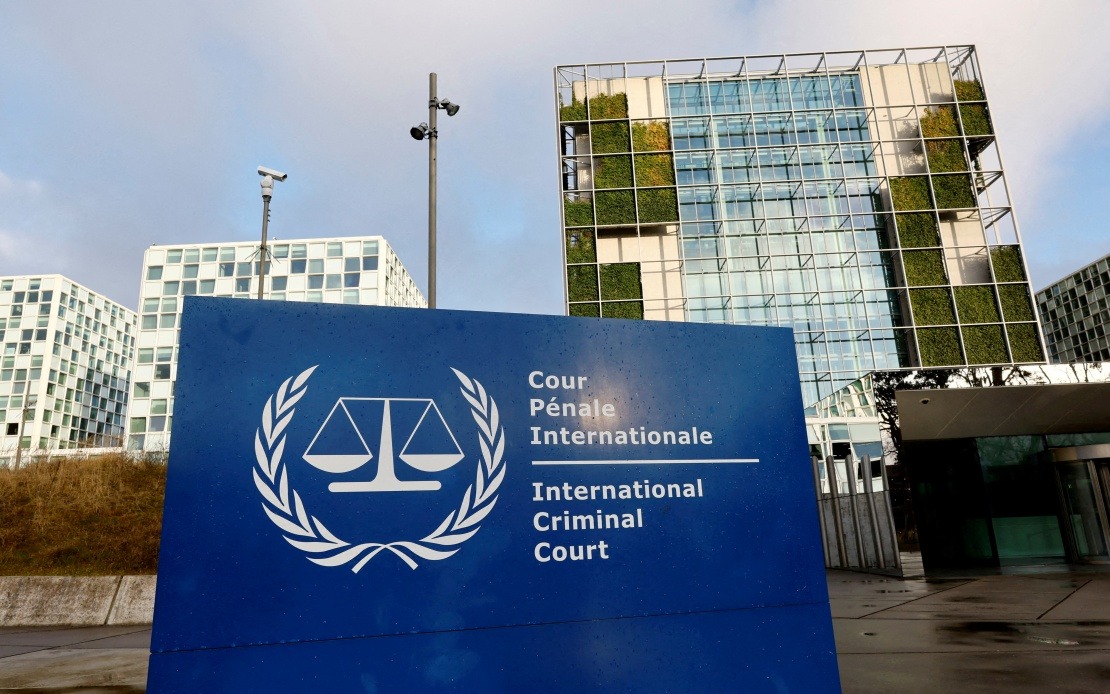
The Netherlands' leading legal academics have raised alarm over Washington's escalating confrontation with the International Criminal Court, characterising the American effort to constrain the tribunal as a fundamental threat to the architecture of international justice. The criticism reflects growing concern among European jurists that the United States is using economic and diplomatic pressure to weaken an institution designed to prosecute the world's gravest crimes, potentially destabilising the system of international law that has underpinned global stability since 1945.
On July 13, the United States Department of State announced a comprehensive initiative to counter what it described as an existential threat posed by the ICC to American sovereignty and interests. The department's statement portrayed the Hague-based court as an unacceptable challenge to US authority, claiming the institution overreaches by asserting jurisdiction to investigate and prosecute American military personnel and government officials engaged in activities the United States deems to be in its national interest. This declaration represents the most forceful articulation yet of Washington's position on the court.
Alette Smeulers, a professor of international crimes at the University of Groningen, warned that the American campaign reflects a profoundly misguided understanding of the ICC's actual powers and mandate. She emphasised in an interview with Xinhua that the court operates within strictly defined legal parameters, capable of prosecuting only the most egregious offences—those meeting the threshold of crimes against humanity, genocide, and war crimes—and only when nations have voluntarily submitted to its jurisdiction through ratification of the Rome Statute. The ICC cannot simply seize cases at will; its authority depends on the consent of member states or referrals from the United Nations Security Council, where the United States maintains veto power.
The Dutch academic characterised the American position as not merely inaccurate but dangerous in its implications. Should major powers successfully dismantle institutions like the ICC out of self-interest, Smeulers argued, the international system would inevitably devolve into a framework where might determined right, and the strongest nations could act with impunity unconstrained by legal accountability. This represents a sharp inversion of the post-Second World War consensus that established multilateral institutions and binding international law as preferable to anarchic great-power competition.
The current tensions between Washington and the court represent an intensification of existing friction. In December of the previous year, the United States imposed sanctions against two ICC judges, accusing them of engaging in what American officials termed "politicised actions" directed against Israel. These sanctions marked an unprecedented step—targeting judicial officers of an international institution with economic measures typically reserved for hostile states or terrorism suspects. The move signalled a willingness to employ coercive measures against the court's personnel.
Kyra Wigard, an assistant professor of law at Utrecht University, expressed incredulity at the American approach of imposing sanctions on judges, characterising such measures as fundamentally absurd. Sanctions, she noted, represent an instrument of last resort employed against entities engaged in terrorism or interstate warfare. Their application to members of an independent judiciary—individuals charged with impartially interpreting international law—represents a category error that confuses punishment with persuasion and transforms judicial independence into a casualty of geopolitical conflict.
Smeulers expanded on the potential ramifications of the American campaign, suggesting it could exercise substantial influence not only on the ICC's operational capacity but on the entire ecosystem of international legal institutions and norms. She disclosed that the United States has signalled its intention to pressure other nations to withdraw from the Rome Statute, effectively withdrawing from ICC membership. Such a coordinated effort to reduce the court's membership and legitimacy would fundamentally compromise its ability to function and would signal to other states that major powers regard international legal obligations as optional commitments that can be abandoned when inconvenient.
The Netherlands, as the host nation of the ICC and a state with deep institutional investment in multilateral law, finds itself in a delicate position. As a NATO ally of the United States and a strategic partner on many security issues, the Netherlands nonetheless maintains principled commitment to international judicial institutions as essential to global order. The criticism from Dutch academics reflects this tension between alliance relationships and institutional integrity.
For Malaysia and other Southeast Asian nations, the broader significance of this dispute merits careful consideration. Many ASEAN members have ratified the Rome Statute and participate in the ICC framework. A successful American campaign to weaken or disable the court would reverberate across the region, potentially undermining accountability mechanisms for serious international crimes and signalling that powerful nations need not submit themselves to the same legal structures that constrain smaller states. The principle of sovereign equality before international law—a cornerstone of the post-colonial international order—would be fundamentally compromised.
The confrontation also reflects deeper questions about the architecture of international justice and whether institutions can maintain legitimacy when major powers view them with suspicion. The ICC's supporters argue that no court can function effectively without the cooperation of powerful states, making American participation or at minimum American forbearance essential. Yet this dependency creates asymmetrical vulnerabilities where states disagreeing with particular rulings or investigations can threaten the institution's existence.
The Dutch scholars' intervention into this debate represents one of the few clear articulations from major European allies that the American campaign, while reflecting legitimate concerns about sovereignty, has crossed into territory that threatens foundational principles of international order. Their warnings deserve serious consideration not as expressions of anti-American sentiment but as expert assessment that dismantling international legal institutions, however imperfect, creates far greater risks than the alleged threats these institutions pose.

