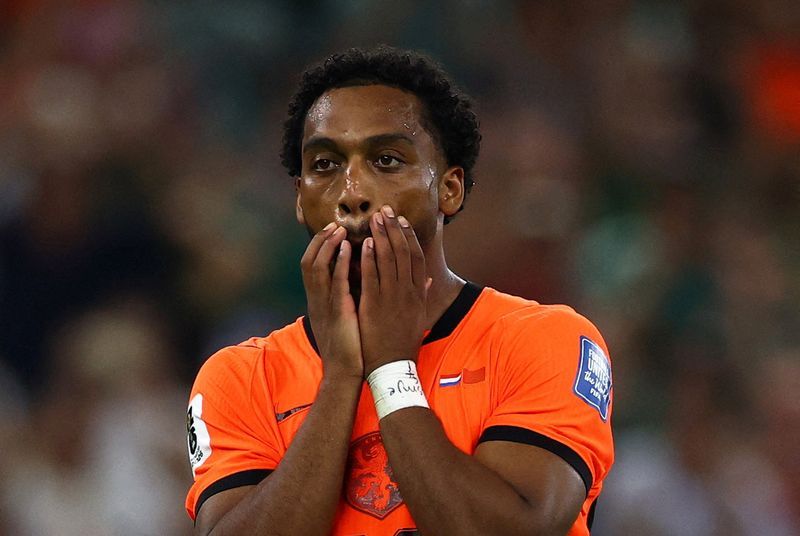
Three Netherlands players targeted for racist abuse online following their team's shock penalty shootout elimination by Morocco in the World Cup have prompted Dutch football authorities to take formal action. Justin Kluivert, Quinten Timber, and Crysencio Summerville missed spot-kicks as their nation fell 3-2 in the shootout after a 1-1 draw in their last-32 encounter in Monterrey, leaving them vulnerable to a wave of hateful comments across social media platforms.
The Royal Dutch Football Association (KNVB) confirmed the discriminatory attacks and signalled its intention to escalate the matter through established legal channels. Rather than treating the incidents as isolated social media grievances, the organisation has committed to filing a report with Meld Online Discriminatie, the Dutch mechanism designed specifically to document and investigate online discrimination cases. This formal approach reflects growing recognition across European football that such abuse requires institutional responses rather than mere condemnation.
The reporting process in the Netherlands follows a structured pathway that distinguishes it from merely publicising complaints. Once Meld Online Discriminatie receives a submission, their legal team undertakes a detailed assessment to determine whether the flagged content meets the threshold for criminal prosecution. If the examination concludes that statements constitute punishable offences, the organisation can escalate matters to the Public Prosecution Service, potentially triggering formal criminal investigations that may result in charges.
The Dutch federation's statement emphasised the fundamental contradiction between football's inclusive mission and discriminatory conduct. Officials stressed that the sport's capacity to unite diverse populations across continents stands in direct opposition to the divisive nature of racist harassment. This framing positions the issue beyond individual player protection, instead asserting that discrimination undermines football's broader social purpose and values.
The incident represents part of a troubling pattern in recent international football tournaments where players on the losing side of penalty shootouts have absorbed organised racial abuse. The precedent that most closely mirrors this situation occurred during the 2021 European Championship final, when England's Marcus Rashford, Bukayo Saka, and Jadon Sancho endured similar coordinated racist attacks following their team's shootout defeat to Italy. That case demonstrated both the severity of such campaigns and the possibility of meaningful legal consequences.
Following the Euro 2020 final, British law enforcement mounted an aggressive investigation that resulted in multiple arrests. The prosecutions yielded tangible convictions, with some individuals receiving custodial sentences and others handed suspended jail terms. This outcome signalled that online racist abuse could trigger serious legal jeopardy, yet the persistence of such harassment in subsequent tournaments suggests that deterrent effect remains limited.
The Morocco victory itself represented one of the World Cup's most significant upsets, elevating the North African nation to the semi-finals and making them only the second African team ever to reach that stage. Yet rather than celebrating this historic achievement, portions of the online discourse devolved into racist targeting of the Dutch players responsible for their team's defeat. This dynamic reveals how major sporting moments can become flashpoints for broader social tensions, with athlete vulnerability to abuse increasing precisely when public attention peaks.
For Malaysian and Southeast Asian readers, the recurring pattern of post-match racist abuse carries particular relevance given the region's growing football engagement and increasingly diverse player representation in European leagues. As Southeast Asian footballers gain greater prominence in European competitions, understanding how host countries and international bodies respond to racial harassment becomes pertinent to player safety and career development. The case also illustrates how digital platforms enable rapid organisation of hate campaigns that cross national borders, requiring coordinated international responses rather than isolated domestic measures.
The KNVB's decision to pursue formal complaints rather than accepting such behaviour as an inevitable consequence of high-profile defeats sets an important precedent. By treating online racist abuse with the same seriousness accorded to on-pitch incidents, football associations signal that digital spaces are not exempt from the sport's disciplinary and ethical frameworks. This approach acknowledges that modern athletes face harassment environments far more extensive than previous generations, encompassing instantaneous global reach through social media.
The underlying challenge remains enforcement consistency across jurisdictions and platforms. While Dutch and British authorities have demonstrated capacity to investigate and prosecute online abuse, similar coordination appears absent in many other countries. This fragmented landscape allows perpetrators in less actively prosecuting regions to participate in international hate campaigns with reduced personal risk. Addressing this vulnerability will require not only individual national action but also international agreements on standards and cooperation mechanisms.
Moving forward, the Netherlands case may influence how other football associations respond to future incidents. The formal documentation process through Meld Online Discriminatie creates a pathway that other organisations can reference, potentially establishing precedents for more systemic approaches to digital racism. However, the persistence of such abuse despite previous convictions and high-profile prosecutions suggests that legal consequences alone prove insufficient without broader cultural change within online communities and platforms themselves.

