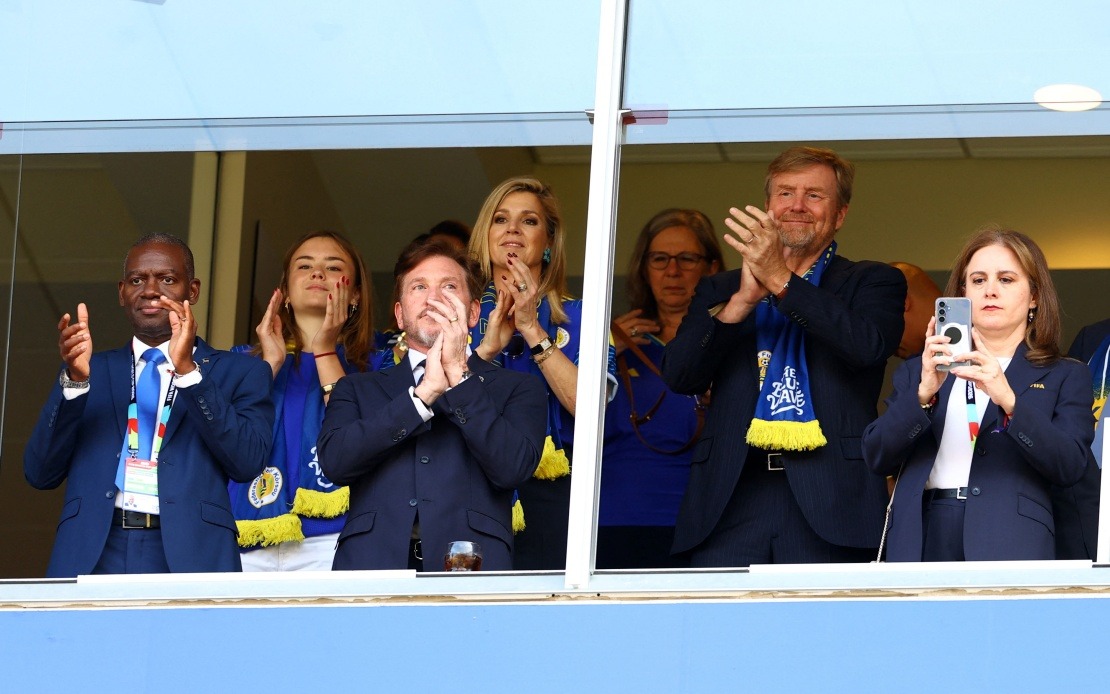
King Willem-Alexander and Queen Máxima of the Netherlands orchestrated a remarkable dual celebration on Saturday, attending World Cup matches for both the Netherlands and Curaçao within hours of each other across two major American cities. The ambitious itinerary underscored the unique position of the Dutch monarch, who serves as head of state not only for the European nation but also for several Caribbean territories, including Curaçao, thereby granting the royal couple a distinctive connection to two separate national football teams competing in the tournament.
The monarchs began their sporting odyssey in Houston, where they witnessed the Netherlands deliver a dominant performance against Sweden, securing a commanding 5-1 victory. The result represented a substantial recovery from the Dutch team's earlier 2-2 draw against Japan, signalling their growing momentum in the group stage. This match had particular significance as it was attended jointly by Willem-Alexander and Máxima alongside Emperor Naruhito and Empress Masako of Japan, who were on an official state visit to the Netherlands at the time, creating a rare international royal gathering around football.
After their Houston experience, the royal couple travelled to Kansas City to observe Curaçao's encounter with Ecuador. The Caribbean nation, competing at only their second World Cup, produced a memorable display to secure a goalless stalemate. For an island nation with a modest football infrastructure compared to traditional powerhouses, the 0-0 result represented a significant achievement, particularly against an Ecuadorian side with greater tournament experience. The draw kept Curaçao's World Cup hopes alive heading into their final group stage fixture.
The royals' commitment to supporting both teams extended beyond mere attendance. At both venues, Willem-Alexander and Máxima dressed in the official colours of each nation—traditional orange for the Netherlands and Curaçao's distinctive blue—visibly demonstrating their dual allegiances. This sartorial gesture resonated with supporters of both teams and highlighted the genuine investment the monarchy held in their respective performances.
Following the Kansas City match, the Dutch royal couple joined the Curaçao squad in the dressing room for celebrations, dancing and sharing in the team's satisfaction with their resilient draw. Footage released by Curaçao's football federation captured these intimate moments, revealing the personal connection between the royals and the island nation's representatives. Such engagement transcended typical ceremonial monarchy appearances, instead showcasing a hands-on involvement that energised the team.
In remarks to broadcasters, King Willem-Alexander articulated his enthusiasm for the unusual situation presented by the World Cup. He noted that having both the Netherlands and Curaçao competing simultaneously afforded them "double the number of teams we can cheer on," describing the tournament as "very special" for this reason. His sentiment captured the complex but rewarding position of serving as head of state for multiple football-competing nations, transforming what might be seen as a potential conflict of interest into an opportunity for genuine celebration.
The king further expressed his hope that both teams would progress deep into the tournament, acknowledging that each had realistic pathways to advancement. The Netherlands, having recovered from their Japanese stalemate with the rout of Sweden, positioned themselves favourably ahead of their final group game against Tunisia. A positive result against the African nation would likely secure their passage to the knockout stages, where their experience and talent suggested they remained among the tournament favourites.
Curaçao's path to the next round, while mathematically possible, presented greater challenges. The island nation would require victory against Ivory Coast in their concluding group fixture to harbour realistic hopes of advancing. Nevertheless, their performance against Ecuador demonstrated that even smaller footballing nations could compete respectably at the World Cup's highest level, a narrative that resonated throughout the Caribbean and smaller nations globally.
The royal couple's World Cup journey illustrated the evolving nature of monarchical engagement with national sports, where constitutional ties to multiple football-competing nations created opportunities for personal diplomacy and cultural celebration. For Malaysia and other Commonwealth nations, the spectacle offered insights into how constitutional monarchies navigate representing diverse populations and territories with distinct sporting identities.
Furthermore, the double-header highlighted the geographical reach of the World Cup and its capacity to draw even heads of state into cross-continental travel within a single day, demonstrating football's unique power to command attention and participation from the highest levels of society. The event also underscored how small island nations like Curaçao, despite limited resources, could achieve competitive performances on world football's grandest stage, inspiring other emerging football nations throughout the Caribbean, Pacific, and Southeast Asia.

