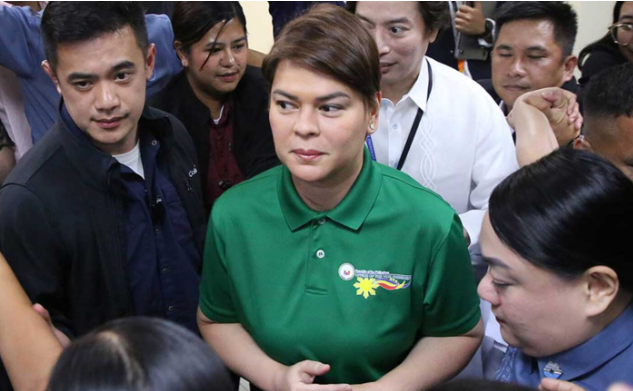
The impeachment trial of Vice President Sara Duterte entered a critical phase on Tuesday as her legal team challenged the foundational credibility of the prosecution's case, with Duterte herself reasserting that the allegations of an assassination plot remain entirely unsupported by concrete evidence. Speaking before proceedings commenced on July 14, the Vice President reiterated her consistent position that the charges alleging she orchestrated threats against President Ferdinand R. Marcos Jr, First Lady Liza Marcos and former Speaker Martin Romualdez rest on flimsy and internally contradictory documentation rather than substantive proof.
The most significant development on the trial's fourth day involved detailed cross-examination of Jeremy Lotoc, the National Bureau of Investigation-Bangsamaro Autonomous Region in Muslim Mindanao Regional Director, who had been presented as the prosecution's second witness. Defence attorney Mark Vinluan exposed what he characterized as fundamental inconsistencies within the NBI's own files, particularly discrepancies between affidavit dates and corresponding docket numbers in the bureau's official records. These technical but potentially damaging irregularities speak to broader questions about the thoroughness and reliability of the investigative groundwork supporting the charges against Duterte.
Duterte's statement on Tuesday employed pointed language to frame the trial as an exercise in conflating invention with reality. She characterized the prosecution's approach as one of "repeatedly claiming threats when none existed, inventing an assassin where there was none, and fabricating evidence to support those claims." By drawing explicit connections between these alleged fabrications and damage to institutional credibility, Duterte positioned her defence not merely as personal vindication but as a matter affecting public trust in governance itself. Her lawyers' ability to demonstrate documentary inconsistencies lends rhetorical force to this broader characterization.
The specific article under examination during this phase—Article IV of the impeachment complaint—concerns the alleged assassination plot that Duterte herself had publicly revealed, creating an unusual dynamic where the Vice President becomes simultaneously the original revealer and the accused regarding the same controversial matter. This layered complexity distinguishes the current proceedings from conventional impeachment prosecutions and provides Duterte's legal team with unusual argumentative openings when challenging the narrative construct underlying the charges.
Progress through the trial infrastructure has proceeded slowly, with the prosecution having presented only two witnesses thus far while having eleven full days allocated for their presentation of evidence on Article IV alone. With barely half of their designated timeframe consumed and only a fraction of their witness list exhausted, the prosecution's pace suggests extended proceedings ahead. The Senate impeachment court has established a total trial duration of ninety-two days, a timeline that could extend the proceedings well into early 2027, transforming what might otherwise be a focused constitutional proceeding into a marathon legal engagement consuming substantial parliamentary time and public attention.
For Malaysian and Southeast Asian observers, the Duterte trial illustrates broader tensions affecting executive accountability mechanisms in the region. When impeachment procedures—designed as ultimate constitutional checks on executive overreach—become vehicles for intense partisan conflict, questions emerge about institutional legitimacy and public confidence in legal institutions. The Philippine case demonstrates how even serious constitutional machinery can become clouded by evidentiary disputes and procedural questions that shift focus from substantive allegations toward documentary scrutiny.
Duterte's emphasis on adherence to the rule of law and factual grounding represents a strategic repositioning of the defence narrative. Rather than disputing facts directly, her statements attack the evidential foundation itself, arguing that speculation and manufactured narratives cannot substitute for proven wrongdoing. This approach makes the prosecution's burden heavier: merely presenting witnesses becomes insufficient if those witnesses' testimony rests on documents bearing internal inconsistencies or if the investigative chain of custody appears compromised.
The Vice President's continued non-attendance at trial proceedings remains notable and tactically significant. By choosing not to appear personally, Duterte maintains distance from the proceedings while her legal team actively contests evidence and credibility, a bifurcated strategy that allows her to avoid direct examination while ensuring vigorous defence participation. This absence also sends subtle signals about her assessment of the trial's legitimacy and her confidence in her team's ability to undermine the prosecution case through technical and evidentiary arguments.
The trial's institutional implications extend beyond Duterte herself. The extended timeline, the evidentiary gaps acknowledged even in court, and the prosecution's measured pace of witness presentation collectively raise questions about the adequacy of preparation and investigation preceding the formal charges. These procedural realities will likely inform how Philippine political actors approach future impeachment mechanisms, potentially affecting the willingness of Congress to employ these constitutional tools.
For regional observers, the Duterte trial underscores how deeply polarized Philippine politics has become, with even constitutional proceedings serving as extensions of broader political conflict. The detailed focus on documentary inconsistencies and investigative procedures, while legally necessary, also reflects the prosecution's difficulty in presenting overwhelming evidence of criminal intent. If the case falters on technical and evidentiary grounds rather than on substantive denial of the alleged conduct, it will raise persistent questions about the adequacy of pre-impeachment investigation and the wisdom of proceeding with charges lacking documentary coherence. These dynamics carry implications for how Southeast Asian democracies balance demands for executive accountability against institutional integrity and the rule of law.

