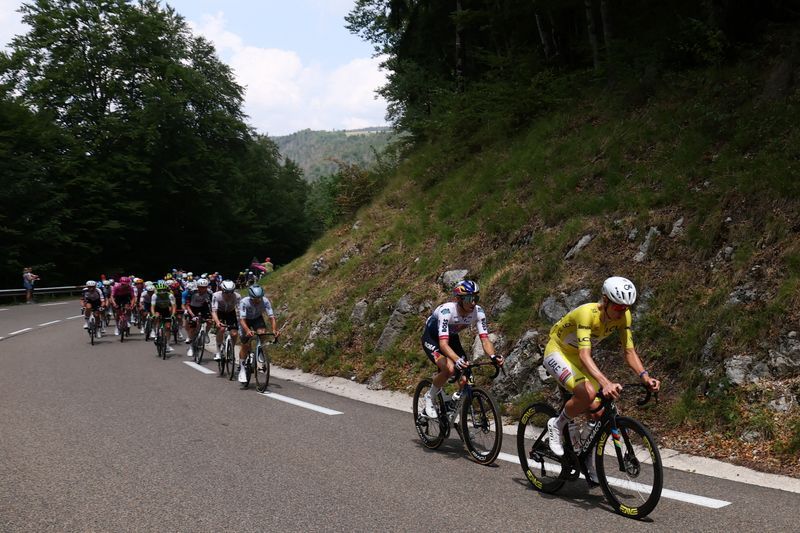
Jonathan Vaughters, the former professional cyclist and team principal of Cannondale-EF, has entered the debate surrounding early-morning anti-doping controls at the Tour de France, defending the practice as a necessary safeguard against performance-enhancing drug use. His intervention comes after riders including race leader Tadej Pogacar and Jonas Vingegaard were subjected to unannounced testing at 2am and 5am respectively during the 15th stage of the race, an occurrence that sparked complaints from competitors who argued that disrupting their sleep cycles posed both fairness and safety concerns.
Vaughters' perspective carries considerable weight within cycling circles given his firsthand experience with the sport's doping problems. The American rider competed professionally through the late 1990s and early 2000s, a period when performance-enhancing drug use was endemic throughout the professional peloton. He was a teammate of Lance Armstrong on the U.S. Postal Service team before later acknowledging his own use of banned substances, including EPO, during his career. Following his retirement from racing, Vaughters became instrumental in the U.S. Anti-Doping Agency's investigation into Armstrong, providing crucial testimony that contributed to the American's unprecedented downfall and the stripping of his seven Tour de France titles in 2012.
In a statement released on social media, Vaughters made a stark assertion about the potential impact of rigorous night-time testing protocols. He argued that administering tests at 2am would have been particularly effective in detecting peptide-based substances such as EPO and human growth hormone, as well as testosterone micro-dosing regimens. More provocatively, he suggested that had the UCI implemented such testing in 2001, "we'd all have been suspended and saved the sport 25 years of drama." This candid admission highlights both the prevalence of doping during that era and the regulatory failures that permitted it to persist unchecked for so long.
The timing of Vaughters' comments underscores a fundamental tension within professional cycling. After his retirement, he founded what is now known as the Cannondale-EF team, deliberately positioning the organization as a champion of clean racing and clean sport advocacy. This reinvention from former doper to anti-doping advocate demonstrates the sport's ongoing effort to rehabilitate its image following the Armstrong scandal and the broader revelations about systemic doping that emerged in the 1990s and 2000s.
The practical dispute over testing methodology hinges on a biological reality that anti-doping authorities have grappled with for decades. Micro-dosing of banned substances, particularly EPO and human growth hormone, allows athletes to obtain performance benefits while minimizing detection risks because these compounds clear the body within hours. Daytime-only testing schedules therefore inadvertently create windows of opportunity for athletes to evade detection through careful timing of drug administration. This pharmacological advantage has prompted international anti-doping bodies to adopt surprise testing at unconventional hours despite the predictable objections from competitors.
Riders competing at the Tour de France have articulated legitimate grievances about the practical consequences of early-morning testing. Vingegaard, tested at 2am during the stage preceding a crucial mountain climb, reported losing approximately 40 minutes of sleep, a deprivation that may have contributed to his subsequent crash and collarbone fracture. Pogacar similarly complained of managing only four hours of sleep following his 5am test, while stage winner Remco Evenepoel characterized the entire practice as "inhuman," reflecting broader frustration within the professional peloton about the disruption to their carefully managed recovery protocols.
The International Testing Agency, which administers doping controls on behalf of the Union Cycliste Internationale, has acknowledged the disruptive nature of night-time testing while maintaining its necessity. The ITA explicitly stated that it remains "conscious that night-time testing may be disruptive to riders' rest and recovery," but countered that effective anti-doping enforcement must occasionally extend beyond conventional daytime hours "in limited and justified circumstances." This measured response reflects the genuine dilemma confronting cycling governance: balancing the imperatives of detection and fairness against the physiological needs of athletes competing in one of sport's most demanding competitions.
Vaughters' intervention reframes the debate by introducing a historical perspective that resonates beyond the immediate controversy. His suggestion that earlier implementation of such testing could have prevented two decades of cycling's most damaging period appeals to the sport's desire to move beyond its tainted past. For Malaysian and Southeast Asian cycling enthusiasts following the Tour de France, this discussion carries broader implications about the credibility of professional cycling as a sport. The continued vigilance required to prevent doping, even at the cost of disrupting competitors' sleep, demonstrates that cycling's anti-doping infrastructure remains perpetually reactive rather than preventative.
The former rider's argument also highlights a generational reckoning within professional cycling. Vaughters represents the transitional cohort of athletes who competed during cycling's most egregious doping era but subsequently pivoted toward advocacy for clean sport. His acknowledgment of complicity combined with his current defense of strict testing protocols suggests a philosophical acceptance that stringent measures, however inconvenient, represent the necessary price for restoring the sport's integrity. This positioning may influence how the cycling community ultimately resolves the tension between athlete welfare and anti-doping effectiveness, particularly as younger riders who never experienced the Armstrong era assume greater prominence in professional racing.
The debate ultimately reflects cycling's ongoing struggle to establish trust with its audience following systematic deception that lasted decades. Early-morning testing, despite its inconveniences, symbolizes cycling's commitment to transparency and rigorous enforcement. For regional audiences in Southeast Asia, where cycling is gaining popularity as both a spectator sport and grassroots activity, these institutional safeguards provide assurance that competition at the highest levels represents genuine athletic achievement rather than sophisticated pharmaceutical advantage.

