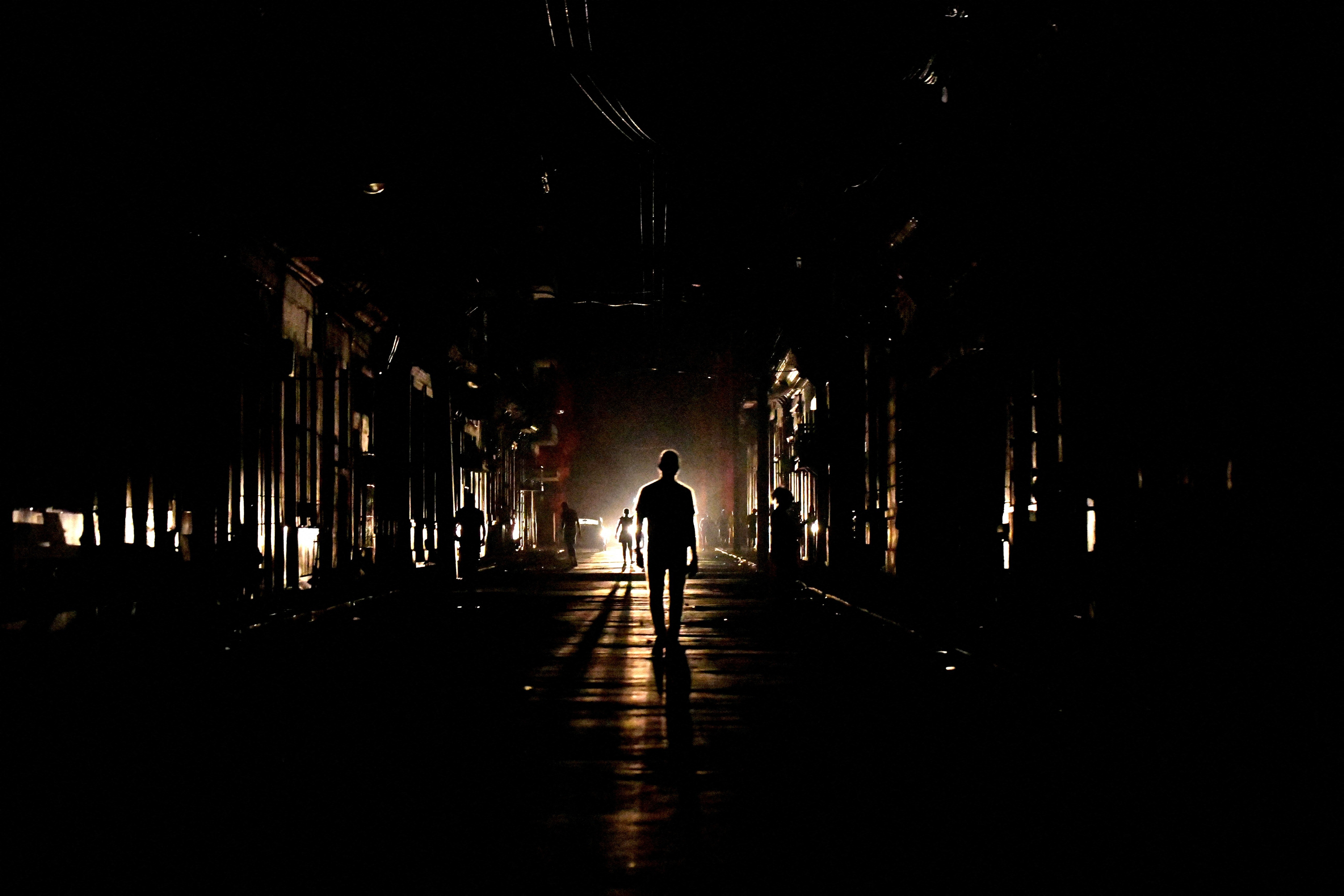
Eastern Libya descended into darkness on Thursday evening when a widespread power failure left major cities and towns across the region without electricity, underscoring the nation's deepening infrastructure crisis. Benghazi, the country's second-largest city, suffered substantial outages affecting large residential and commercial zones, while neighbouring communities in Marj also lost power supply. The blackout highlighted the fragile state of Libya's electrical grid at a time when the country is already grappling with multiple security and administrative challenges.
The electricity failure extended beyond a single location, sweeping through numerous communities in Libya's eastern territories. Footage from affected areas documented entire neighbourhoods shrouded in darkness, with streets and public spaces left without illumination. The scope of the outage suggested a systemic failure within the power generation or transmission infrastructure rather than a localised incident. Residents across multiple cities found themselves cut off from a basic service that many nations take for granted, compounding existing frustrations with public service delivery.
The Electricity Ministry, operating under the authority of the House of Representatives-backed eastern government, moved quickly to respond to the crisis. Officials announced that several generation units had been brought back online, allowing the power network to begin a gradual recovery. The ministry prioritised restoring electricity to critical facilities, including Benghazi's 1,200-bed hospital, which required immediate power restoration to maintain essential medical services. Additional neighbourhoods in Benghazi's southern districts also received priority reconnection as the recovery operation progressed.
Technical teams were deployed across the entire power infrastructure ecosystem to address the breakdown. Engineers focused on three critical areas: generation facilities that produce electricity, transmission lines that transport power across regions, and distribution networks that deliver electricity to individual homes and businesses. The recovery process was deliberately paced to prevent overwhelming the grid during restoration, a technique known as load balancing that protects the power system's stability. Without such caution, rapidly reconnecting entire districts could trigger cascading failures that would plunge the region back into darkness.
Investigators began examining the underlying causes of the outage even as restoration efforts continued. Determining what triggered the blackout would be essential for preventing future incidents, yet the investigation proceeded amid broader institutional challenges facing Libya's fractured state. The circumstances surrounding the failure suggested either equipment degradation, maintenance shortcomings, or operational errors within a system struggling under years of underinvestment and conflict-related disruptions.
Libya's electricity infrastructure exists within a broader context of institutional breakdown and political division. The nation has endured two competing power centres since the overthrow of Muammar Gaddafi in 2011, creating parallel governmental structures that fragment authority and complicate unified policy implementation. The internationally recognised Government of National Unity, headed by Prime Minister Abdul Hamid Dbeibah, operates from Tripoli and maintains nominal control over western Libya. Meanwhile, a rival administration appointed by the House of Representatives and led by Osama Hammad operates from Benghazi in the east, creating a de facto partition of state functions including electricity provision.
This administrative split has profound consequences for public services. Each government operates distinct electricity ministries and utilities, fragmenting resources and preventing the coordinated investment necessary to maintain reliable power systems. Western cities including Zawiya and Sorman have recently experienced armed conflict, adding to the security pressures that constrain infrastructure maintenance and capital spending. Additionally, drone attacks targeting oil facilities in Zawiya have exacerbated energy sector vulnerabilities, threatening both fuel supplies for power generation and the revenues needed to fund the electrical grid.
The blackout represents the latest manifestation of Libya's multi-layered crisis. Beyond the immediate loss of electrical power, the incident reflects systemic institutional weakness and the human cost of prolonged political stalemate. Citizens dependent on electricity for basic needs—refrigeration, water pumping, medical equipment, communication—faced immediate hardship. Businesses lost productive capacity, hospitals faced operational challenges despite emergency power systems, and the elderly and vulnerable populations experienced particular suffering during the outage.
International efforts to resolve Libya's political divisions have made limited progress. The United Nations Support Mission in Libya has consistently sought to mediate between the rival administrations and create conditions for delayed national elections. Libyan citizens view elections as potentially transformative, hoping that legitimate democratic processes could consolidate state authority, end armed factionalism, and enable coherent governance. Yet political disputes continue to stall electoral processes, leaving the infrastructure and public services crisis to fester unresolved.
The electricity failure in eastern Libya carries broader significance for the region and wider international community. Libya's instability creates refugee flows, enables terrorist group operations, and disrupts oil production affecting global energy markets. The inability of Libya's political factions to cooperate even on basic service delivery demonstrates how state fragmentation prevents addressing citizen needs. For observers across the Middle East and Africa, Libya exemplifies the long-term consequences of state collapse and the difficulty of reconstruction when legitimate authority remains contested.
Restore operations may eventually return power to affected areas, but the incident exposes fundamental questions about Libya's governance capacity. Technical solutions to the blackout exist—replacing equipment, upgrading lines, training personnel—but implementing these requires stable institutions with unified command structures and sustained funding. As long as competing governments operate parallel systems, comprehensive infrastructure rehabilitation remains difficult. The Thursday blackout thus functions as a symptom of deeper institutional disease rather than an isolated technical failure.

