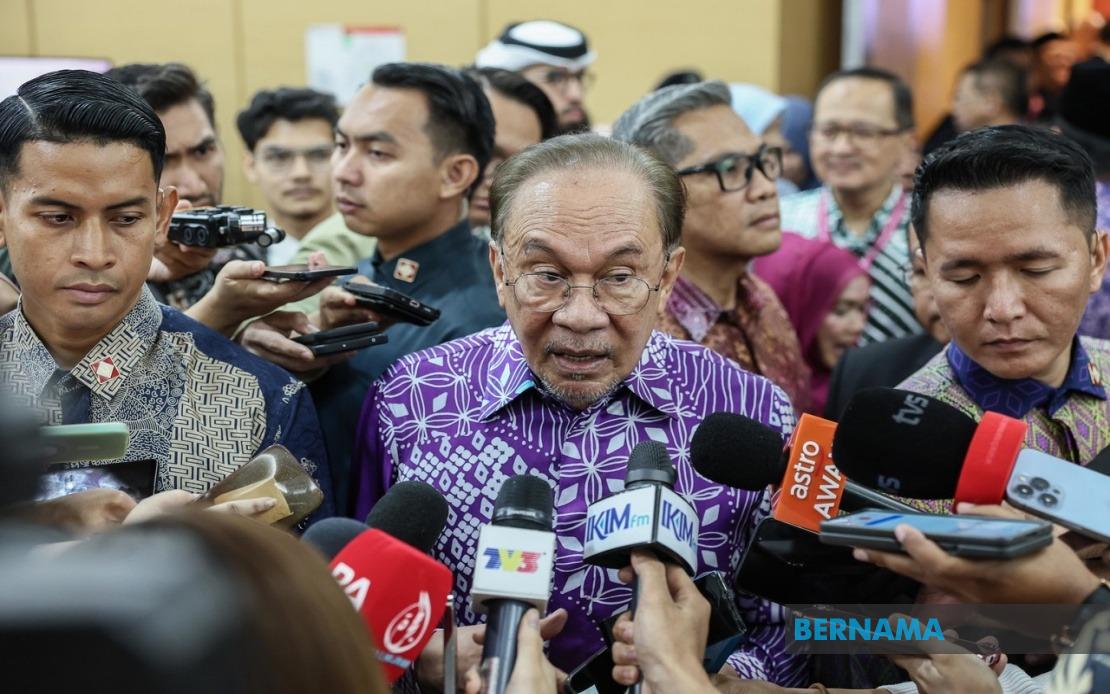
Prime Minister Datuk Seri Anwar Ibrahim has delivered a pointed reminder to policymakers and business leaders that Malaysia's economic trajectory cannot be measured solely through growth statistics and technological metrics. Speaking at the Humane Economy Global Discourse (HEGD) 2026 in Kuala Lumpur on July 23, the Premier argued that the nation's development agenda must return to its foundational purpose: enhancing the lives and dignity of ordinary Malaysians rather than pursuing expansion for its own sake.
The timing of Anwar's remarks reflects mounting global concerns about the human cost of unchecked technological and economic advancement. As artificial intelligence, renewable energy systems, advanced manufacturing capabilities, and biotechnology reshape economies worldwide, countries face a critical choice about the values underpinning these transformations. Anwar positioned Malaysia as a nation conscious of this crossroads, one willing to maintain competitiveness and attract investment without surrendering ethical moorings.
The fundamental tension Anwar identified—between treating the economy as a servant of human flourishing versus as an endpoint in itself—represents a philosophical divide increasingly evident in development debates across Southeast Asia. Many nations in the region have prioritised rapid industrialisation and GDP expansion, sometimes at the expense of environmental sustainability, labour protections, and equitable wealth distribution. By explicitly rejecting this hierarchy, Anwar signalled a potential recalibration in how Malaysia frames its economic priorities and measures success.
The Prime Minister's call to reconnect economic life with moral purpose carries particular resonance in Malaysia's context. The nation navigates complex challenges including income inequality, regional disparities between urban and rural areas, and questions about whether growth benefits reach all communities equitably. These concerns have animated recent political discourse and public sentiment. Anwar's framing suggests that future economic policies should be evaluated not merely by aggregate growth figures but by their tangible impact on living standards, access to quality education and healthcare, and opportunities for social mobility.
Technological transformation presents both opportunity and risk in this framework. Artificial intelligence and automation promise productivity gains and new industries, yet without deliberate governance structures and workforce transition planning, they risk displacing workers and widening inequality. Renewable energy and biotechnology offer solutions to environmental and health challenges, but only if designed with accessibility and affordability for ordinary citizens in mind. Anwar's emphasis on moral purpose implicitly calls for proactive policy design ensuring technological benefits are widely shared rather than concentrated among elites.
The presence of Minister in the Prime Minister's Department (Religious Affairs) Dr Zulkifli Hasan at the forum underscores the government's view that moral and spiritual dimensions inform economic governance. This integration of religious affairs into economic discourse reflects Malaysia's particular context, where Islam provides a civilisational and ethical framework for many citizens. Islamic economic principles emphasising justice, fair dealing, and social welfare alignment naturally with Anwar's argument that profit and productivity cannot operate divorced from human values.
Prof Datuk Dr Saadiah Mohamad, Chairman of Forum Ekonomi Manusiawi (FEM) and director of HEGD 2026, represents the institutional infrastructure emerging around humane economy concepts. This forum provides intellectual space for reconceptualising development beyond conventional metrics. Such platforms matter because they can influence policy direction, investor behaviour, and public discourse. Malaysia's participation signals that mainstream policymakers increasingly recognise limitations in purely quantitative measures of progress.
For Southeast Asian economies watching Malaysia's trajectory, Anwar's message carries strategic implications. The region competes fiercely for investment and technological talent, yet faces mounting pressure regarding environmental sustainability, labour standards, and social cohesion. A framework explicitly linking growth to human dignity could differentiate Malaysia as an attractive destination for responsible investors seeking long-term stability rather than maximum extraction. It also offers a potential counter-narrative to perspectives viewing development as inherently dehumanising.
The practical translation of this philosophy into concrete policy remains the crucial test. Reorienting an economy toward moral purpose requires difficult choices: regulatory frameworks that constrain certain profitable activities, investment in social infrastructure over short-term returns, and mechanisms ensuring wealth distribution. These decisions inevitably generate resistance from incumbent interests and ideological opponents. However, Anwar's public articulation of these principles creates political space and accountability for their implementation.
Malaysia's economic future will also depend on whether this moral framework extends beyond rhetoric to institutional design. Central bank policies, labour regulations, environmental standards, and corporate governance rules must embody the values Anwar espouses. International partnerships and investment agreements should be evaluated against these standards. Educational curricula should cultivate citizens understanding development's human dimensions. Only through such comprehensive alignment can economic growth genuinely serve humanity rather than subordinate it.
The Humane Economy Global Discourse itself represents an emerging global movement questioning whether conventional development models serve societies well. As artificial intelligence, climate change, and technological disruption reshape labour markets and social structures worldwide, nations increasingly ask whether growth alone ensures prosperity. Malaysia's engagement with this discourse positions it within forward-thinking governance circles while offering domestic audiences a vision of development respecting both material advancement and human values. This integration of economic pragmatism with moral clarity may ultimately prove Malaysia's most distinctive competitive advantage.

