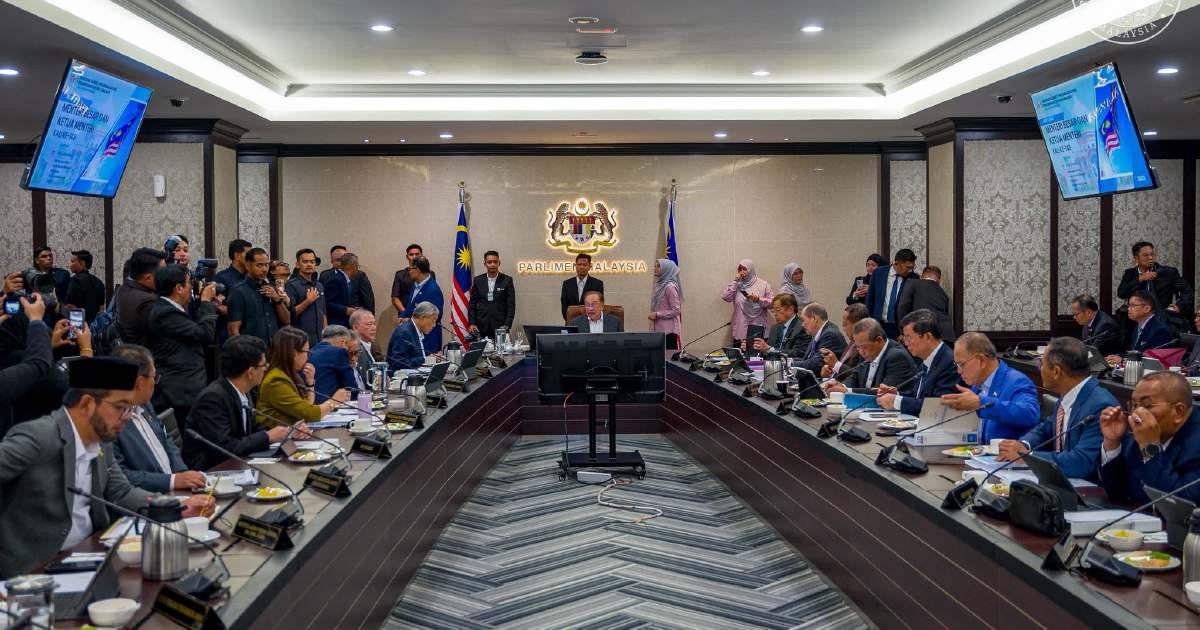
Prime Minister Datuk Seri Anwar Ibrahim convened the 149th gathering of Malaysia's state leaders at Parliament in Kuala Lumpur, directing their attention toward reinvigorating economic performance as regional and international uncertainties threaten growth trajectories. The meeting with Menteris Besar and Chief Ministers underscored the federal government's determination to coordinate policy responses across jurisdictions, recognising that economic resilience requires unified action between federal and state authorities.
The timing of the conclave reflects mounting concerns about how geopolitical instability could ripple through Malaysia's interconnected economy. The ongoing conflicts in the Middle East, while geographically distant, carry immediate implications for energy prices, shipping routes, and investor confidence in emerging markets. Malaysian policymakers remain acutely aware that supply chain disruptions, insurance cost volatility, and potential tourism fluctuations stemming from regional unrest could undermine domestic growth prospects during an already delicate economic period.
Economic revival emerged as the predominant theme, signalling that the federal administration views the current juncture as critical for steering the nation toward sustainable expansion. Malaysia has experienced uneven growth patterns, with certain sectors and states outperforming others, creating divergent economic conditions across regions. By bringing state leaders into collaborative dialogue, the government sought to ensure that recovery strategies account for regional particularities while maintaining overarching national objectives.
State governments hold considerable sway over land use, development approvals, and local investment climates—factors that directly influence business confidence and capital allocation. The 149th meeting provided a forum for identifying bottlenecks that impede economic activity and for harmonising state policies with federal initiatives. This coordination is particularly crucial for sectors such as manufacturing, agriculture, and tourism, which operate across state boundaries and require regulatory consistency.
The emphasis on strengthening rather than merely stabilising the economy suggests a forward-looking approach rather than defensive posturing. Rather than simply weathering external shocks, the government appears committed to capitalising on opportunities for structural improvement and competitive advantage. This orientation aligns with longer-term ambitions to elevate Malaysia's position within the global supply chain hierarchy and attract high-value investments in emerging sectors.
The Parliament venue itself carried symbolic weight, emphasising that economic recovery is not merely an executive function but a matter requiring legislative support and whole-of-government commitment. Senior state leaders, as chief executives within their jurisdictions, command substantial fiscal and regulatory levers that influence investment flows and employment generation within their territories. Their participation signifies acknowledgment that federal-state cooperation is indispensable for translating national economic strategies into local reality.
Middle East tensions introduce an additional layer of complexity for Malaysian policymakers already managing multiple economic challenges. The region accounts for significant portions of global crude oil supply, and any sustained disruption could elevate energy costs for Malaysian manufacturers and consumers alike. Beyond energy, Malaysia's financial markets and currency valuations remain sensitive to broader shifts in global risk sentiment. When international investors reassess their emerging market exposure amid geopolitical tensions, economies perceived as vulnerable experience capital outflows and currency depreciation.
Tourism, a critical revenue source for numerous Malaysian states, faces particular vulnerability during periods of international instability. Travel advisories, heightened security concerns, and general apprehension about international conflict deter discretionary spending on overseas holidays. States heavily dependent on tourism revenue—including Pahang, Johor, and Sabah—face potential income pressures that could constrain their ability to fund development projects and services.
The meeting's focus also reflects appreciation for how interconnected modern economies have become. Decisions made in distant regions cascade through supply chains, affecting manufacturing output, employment, and consumer spending within Malaysia. By assembling state leaders under the PM's direction, the government signalled its intention to develop coordinated responses that anticipate downstream effects and position the nation to adapt rapidly should external conditions deteriorate significantly.
Identifying concrete recovery mechanisms likely featured prominently in discussions. Whether through infrastructure investments, business incentive packages, labour market initiatives, or sectoral stimulus measures, state leaders presumably departed with specific mandates to implement complementary policies. The federal-state architecture requires this alignment; isolated initiatives at either level produce suboptimal outcomes, but coordinated action amplifies impact.
The 149th meeting also demonstrated the government's commitment to regular structured dialogue with state leaders, maintaining lines of communication necessary for responsive policymaking. As economic conditions shift and external pressures evolve, periodic forums allow for policy recalibration and rapid response to emerging challenges. This forum-based approach contrasts with ad hoc crisis management and reflects institutional maturity in handling complex, multi-jurisdictional governance challenges.
Looking forward, Malaysia's economic recovery trajectory will depend partly on factors beyond government control—global oil prices, international demand for manufactured goods, and stability in key trading partners. However, the convening of state leaders underscores that policymakers understand the importance of maximising controllable factors: regulatory clarity, infrastructure quality, and investor confidence. By coordinating across federal and state governments, Malaysia attempts to create conditions where domestic economic vitality can flourish despite external headwinds.

