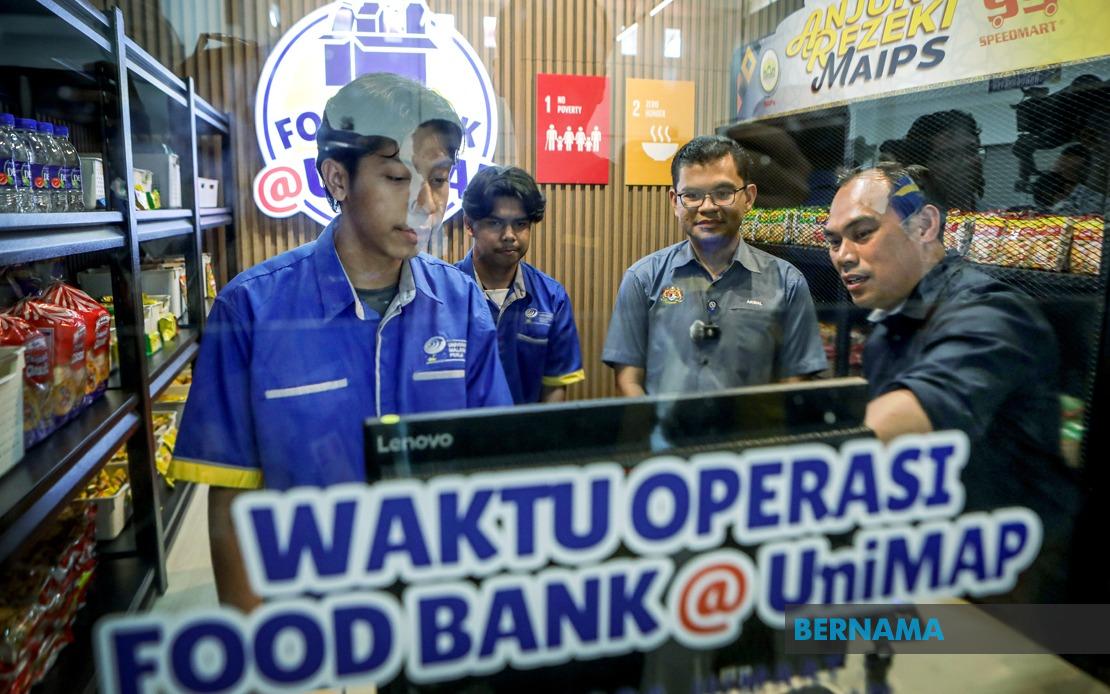
The Malaysian Economy Ministry is moving to secure additional funding and support for the People's Income Initiative – Food Entrepreneur Initiative, commonly known as IPR-INSAN, recognising the positive impact it has delivered to lower-income business owners and cash-strapped consumers. Economy Minister Akmal Nasrullah Mohd Nasir announced the ministry's intention to request a programme extension from the Ministry of Finance following an on-site assessment at Universiti Malaysia Perlis that demonstrated the scheme's real-world effectiveness in bridging economic gaps across campuses.
The IPR-INSAN programme represents a targeted intervention designed to tackle multiple policy objectives simultaneously: creating income-generating opportunities for B40 entrepreneurs whilst ensuring students and campus residents access nutritious meals at prices they can actually afford. Rather than relying solely on traditional retail or food service models, the initiative employs vending machine technology to create a structured marketplace that reduces overhead costs and expands the customer base for participating entrepreneurs. This hybrid approach has proven particularly valuable in university settings where both student purchasing power and available business space are constrained.
During his visit to the Perlis university campus, Akmal Nasrullah examined two operational vending machine installations established within student residential colleges and inspected complementary welfare initiatives including a food bank and MADANI Dapur Siswa, a subsidised student dining facility. These facilities collectively form an ecosystem designed to address food insecurity and support entrepreneurship development among marginalised communities. The minister's hands-on assessment revealed that the ground-level implementation aligns with the policy's intended outcomes and provided him with concrete data to justify the extension request to his cabinet counterpart in the finance portfolio.
The empirical results from UniMAP's two operational sites offer compelling evidence of the programme's viability. Norleyana Nordin, operating a homemade food business through the Tuanku Abdul Rahman Residential College vending machine, achieved average monthly revenue of RM2,178.80, with her peak performance reaching RM4,905 in January. At the parallel location in Tuanku Tengku Fauziah Residential College, entrepreneur Noor Hasfalela Mohd Noor recorded substantially stronger performance, generating average monthly sales of RM4,595 and reaching as high as RM10,012 in January, followed by RM5,049 in February and RM4,868 in April. These figures demonstrate that the vending machine platform generates income levels that are meaningful within the B40 bracket, providing genuine livelihood improvement rather than marginal supplementation.
The success metrics extend beyond raw sales figures to encompass operational accessibility and market reach. Traditional food business models require capital investment in storefront rental, equipment, utilities, and extensive regulatory compliance—barriers that effectively exclude low-income entrepreneurs from market participation. By providing ready-made vending infrastructure on university campuses where foot traffic is concentrated and regulated, IPR-INSAN eliminates these initial hurdles and creates a functioning marketplace where entrepreneurs compete on product quality and price rather than capital resources. The systematic business platform transforms informal home-based food production into a legitimate, traceable commercial operation.
For the university community itself, the programme delivers measurable consumer benefits. Students gain access to reliable sources of home-cooked, affordable meals at times convenient to their schedules, particularly outside standard dining facility hours. The pricing structure—enabled by reduced middleman involvement and operating costs—makes nutritious food accessible to students from lower-income families who might otherwise struggle to maintain adequate nutrition whilst managing academic demands. This welfare dimension aligns with broader government objectives to support tertiary education accessibility by reducing the total cost of student life.
The university's institutional support for IPR-INSAN reflects a growing recognition among Malaysia's higher education sector that campuses have a role to play in economic inclusion and community development. UniMAP's collaboration with the programme—allocating premium residential college locations for vending machines, coordinating with student volunteers, and actively monitoring outcomes—demonstrates how universities can serve as implementation partners for government economic policy beyond their traditional teaching and research missions. This model could potentially be replicated across Malaysia's university system, dramatically expanding the programme's reach.
From a policy perspective, the Economy Ministry's push for extension addresses several contemporary economic challenges simultaneously. Youth unemployment, particularly among school-leavers from disadvantaged backgrounds, remains a persistent concern in Malaysia. Programmes that transition informal, household-based economic activities into structured, income-generating ventures create employment pathways outside traditional formal sector channels. The IPR-INSAN approach is particularly relevant given Malaysia's ongoing digital transformation agenda, as it demonstrates how technology adoption can democratise entrepreneurship rather than concentrating economic opportunities among already-privileged groups.
The timing of the extension request also reflects post-pandemic economic recovery priorities. Small food businesses faced acute challenges during movement restrictions, and many have struggled to rebuild customer bases. Supporting entrepreneurs to access new distribution channels through institutional partnerships represents a targeted stimulus approach that costs significantly less than broad-based subsidies whilst generating concentrated benefits for participating vendors. The success stories from UniMAP provide the ministry with persuasive evidence to present to finance officials evaluating competing resource allocation requests.
Looking forward, the programme's scalability depends on securing continued funding and identifying additional institutional partners willing to dedicate physical space and operational oversight. Shopping malls, hospitals, factories, and government office complexes represent potential expansion sites where concentrated daily foot traffic and captive customer populations could support similar vending operations. Each new location would require careful site assessment and partner coordination, but the UniMAP model demonstrates that such implementation challenges are manageable when institutional commitment exists.
The broader significance of the IPR-INSAN extension request lies in its implicit endorsement of targeted, evidence-based poverty reduction over purely redistributive approaches. Rather than simply transferring cash or subsidising goods, the programme invests in creating sustainable income-generation capacity for entrepreneurs whilst delivering consumer welfare improvements. As Malaysia pursues its medium-term economic objectives, this model of inclusive growth—where technology and institutional partnerships serve lower-income populations—may gain prominence in policy discussions across multiple portfolios beyond the Economy Ministry.

